12 December 2006

As I said before about Pinochet...

... good grief, old man!

Everybody's writing about the death of Augusto Pinochet, so I can only add a few things of my own, nothing especially original. Pinochet, in short, was the following (in rough order):

  • a submissive soldier and a mediocre but obedient officer (that's how he earned the trust of his superiors and climbed up the hierarchy)
  • a traitor of his lawful commander, president Salvador Allende, who appointed him Commander in Chief of the Army
  • a traitor of his country, which he promised freedom and gave political terror and enduring economic inequality, by allying with the CIA and delivering Chile to the neoliberal fundamentalism of the Chicago Boys
  • a traitor of his superior, general Carlos Prats, who recommended him to Allende, and whom Pinochet had killed in Buenos Aires
  • a murderer, directly and by proxy, of thousands of his compatriots
  • a torturer of tens of thousands
  • a pioneer in the road that would lead to Argentina's Dirty War and other dictatorships in our poor Latin America
  • a thief, to the point that even today what he stole is resurfacing by bits
  • a scheming old son of a bitch, who gave himself political immunity after the end of his rule, and feigned illness and senility when it was removed, every time he was about to be investigated by justice
  • a dreadful shadow looming over Chile, even as he's about to become ashes, who'll probably divide his country for generations
As appropriate to such a monster, the government of Chile didn't give him a state funeral; but president Michelle Bachelet, who was herself tortured and had her father killed by the dictatorship, consented to a military funeral with honours, as if a commander that rebels against his legitimate ruler and turns the military into a despicable band of murderers deserves any honour. Bachelet has also said that Chile must look for reconciliation and unity. Reconciliation with violent fascists? With supporters of ideological persecution, state terrorism, illegal detentions, suppression of liberties? With people who were for submission, censorship, forced exile? Politics is politics, but how can it be? The military funeral of Pinochet was marked by a defense of the coup d'état given by her own daughter, with the applause of several thousand attendants including military personnel, and even three young supporters of Pinochet giving his coffin the Nazi salutation.

President Bachelet's lack of commitment showed that she is (like the Scripture says) neither hot nor cold, and if God existed, It would certainly spit her out of Its mouth. You can't have your cake and eat it. For all the hysterical and confrontational attitude of the Argentine government on every issue, with regards to our last dictatorship we've at least been shown a morally and politically clear position: if you were there with the murderers, and if you're here now still with them, you don't have an excuse, you don't deserve any honours, and you won't receive any sort of forgiveness. Chile might come to this in a few years, maybe, but today's opportunity is already lost.

09 December 2006

Friends will be friends

SanCor is a leading dairy producer in Argentina. It has a long history in this country and has long become a part of our culture. Moreover, SanCor is not some dark corporation owned by a million stockholders, but a cooperative, born in 1938 from the association of many smaller cooperatives in the central area of the provinces of Santa Fe and Córdoba (whence San + Cor), the "milk basin" of Argentina. Like so many other companies, it fell into the trap of getting terribly indebted during the 1990s. It was so easy to get shiny imported machines back then, at low rates propped up by the artificial "stability" caused by a low fixed exchange rate! In 1998, recession hit, and during the nightmarish years that followed, Argentina's internal market went bust and exports suffered. After the depreciation of the Argentine peso by two thirds, SanCor regained some competitivity, but it was burdened by its dollar-denominated debt. It started looking for saviours, and George Soros came into the picture.

Soros has been buying up parts of Argentina here and there for some time. It's not that we don't like him. At least he doesn't seem directly intent on screwing us up, like most of the vultures foreign investors landing here lately. But his group proposed bailing out SanCor in exchange of its majority control, turning it into one of those dark stockholder-owned corporations. Remember this is our milk, our cheese and our dulce de leche we're talking about. Our government didn't appreciate that a flagship Argentine company, made up of smaller local producers, was to be sold to some foreign guy with a strange accent, even one who hates George Bush's guts. This was perceived abroad, and voilà, along came our colourful friend Hugo Chávez.


Chávez's Venezuela is sitting on top a sea of oil, and with Chávez being all nationalist and stuff, its government is getting rich big time. Chávez is overtly conducting a peaceful Socialist revolution in his country and trying to consolidate a Latin American unity along its lines by helping other countries, especially those with left-leaning governments (e.g. Argentina, Brazil, Bolivia, and soon, we hear, Ecuador). Venezuela is the latest addition to Mercosur and already has a strong relationship with Argentina; it bought billions of dollars worth of Argentine debt bonds to ease our national debt's restructuring process, sends a lot of fuel oil at discount prices our way to contain our energy crisis (the one that doesn't exist), and has struck a lot of agreements by which Venezuela gets, for example, state-of-the-art Argentine agricultural machinery and good Argentine beef.

Last week, during a visit, Chávez spoke of a loan to bail out SanCor for 80 million USD, in exchange for a ten-year supply of milk powder and some technical how-know on dairies, which Venezuela seems to be missing. As is often the case when there's a degree of trust, things progressed fast, so Chávez and SanCor will be signing the agreement next Monday. Soros withdrew his offer to avoid further exposure.

Now of course, more than a few people have problems with Chávez. Venezuela doesn't have a very free press, the forced nationalization of some Venezuelan key private companies was not nice, and Chávez is, to say the least, a picturesque leader, resembling more a García Márquez character (or a cartoon) than the president of one of the larger countries in South America and an oil power; at the worst, he looks like a big-mouthed dictator, "Fidel Castro's pup" as some have called him. But in any case, Chávez hasn't asked for control of the company, and SanCor already exports one sixth of its total production of milk powder to Venezuela.

So yes, Chávez is not a friend, so why did I title this post like that? Countries are not friends of each other (only people are), and politicians don't have true friends among politicians. But Venezuela and Argentina, despite their differences and mainly because of this kind of gestures from Chávez, have become true allies... and I say cheers to that.

05 December 2006

Countryside on strike

The agricultural producers of Argentina are on strike since last Sunday, and boy, the spits of venom are flying all over us. Minister Miceli gave a press conference calling the strike "ideological and political", and dismissed the claims of the producers regarding their contribution to the wellbeing of the country. The government has been intervening in (some would say interfering with) the beef market and, to a lesser extent, with the wheat-flour-bread markets, in order to keep prices from rising; and of course there are the retenciones, or export taxes, in place since the economic crisis exploded.

The economic juggling act is as follows:

  1. Exporters take advantage of the high exchange rate (over 3 pesos/dollar) to sell at internationally competitive prices and gather a good profit. The ones most benefitted by this exchange rate are the agricultural producers.
  2. The Central Bank sucks up the incoming dollars, keeping the exchange rate artificially high (over 3 pesos/dollar), so as to maintain the competitiveness of the exporters.
  3. The government taxes exports, differently according to what exactly is being exported (some things are not taxed, others are taxed 20%). This is how it gets a sizable part of the total tax revenue.
  4. The very success of the above strategy places it in danger, since the more competitive exports are, the more dollars enter the local market, thus pushing down the exchange rate.
  5. Not only that, but the Central Bank has to emit pesos in order to buy dollars. This effectively devalues the peso and expands the monetary base, indirectly fueling inflation.
The problem arises from the fact that the producers would like to charge the same price internally than externally. Absent that possibility (since most Argentinians cannot afford dollar-priced goods while getting salaries in pesos), most producers prefer to export rather than selling within Argentina. The export tax is also an attempt to "convince" them, by making exporting less profitable, but in general, Argentine producers can still get almost 3 times more by leaving the internal market undersupplied and shipping their goods abroad.

The agricultural sector in Argentina, as a whole, has no reason to complain about profits. During the 1990s, when the exchange rate was fixed at 1:1, many invested in imported machines and increased their productivity, but then they went broke as their exports were uncompetitive. Now they have a government that keeps the exchange rate high for them, making it prohibitively expensive for most of us to get certain imported goods, but they still complain.

One of the points of contention is the government doesn't have a plan for the agricultural sector and doesn't help the smaller producers, who are being bought up by their larger fellows. Indeed, the soybean boom has created a depressing landscape in which a few hundred landowners with huge plantations employ sophisticated machinery and very few people to plant any available patch of dirt over millions of hectares with a transgenic monoculture, then to harvest it and sell it to China (mostly), while producers of less-favoured crops (including many regional specialties in the poorer parts of the country) are struggling to keep up, and falling back.

For some reason, the conservative wealthy elite of the countryside have managed to present this strike as a just cause, as the fight of the economic saviours of the country for a free, undistorted market. The truth, of course, is that if they had their way, the national budget would run a huge deficit and we'd be having milk, bread and beef at three times the current price -- those of us who could afford them, and even then, only as much as the producers did not manage to sell abroad (the EU, for example, buys quality Argentine beef at a very good price, but only a small fixed quota; and both the EU and the US burden their imports with tariffs and regulations to protect their own producers). The controversial Secretary of Internal Commerce, Guillermo Moreno (the price control czar, so to speak, of the Argentine government) put it bluntly: "We can't have food at international prices."

The last cause of anger for the countryside folks was the announced decission of the government to employ force should the roads be blocked by the strikers to prevent the traffic of grain and cattle from their sources to the markets (a threat the strikers have already made -- and they already blocked the Rosario-Buenos Aires Highway for a while). The opposition pounced on it, calling it a double standard (which it is), since the government refuses to clear the road blocks set up by the piqueteros in Buenos Aires and by the pulp mill protestors on the roads before the international bridges linking Argentina and Uruguay, which are arguably causing as much trouble, though of a different kind.

This certainly looks like it will be a rough year's end.

04 December 2006

Japanese weekend

Yesterday I finally took the Nihongo Nouryoku Shiken (Japanese Language Proficiency Test, or JLPT). In Argentina, the JLPT is taken at Belgrano University in Buenos Aires, on the same day as in the rest of the world, i.e. the first Sunday of December. Waves of Japanese students come from many places in the capital on foot, by subte (metro), by bus or taxi or whatever; many nikkei join in from La Plata, where many are settled (they even have a Japanese-language newspaper called La Plata Hochi); and of course, many others travel for hours during the previous night. Rosario Nihongo Gakkou dispatched a busload -- 23 students, including yours truly, two teachers, and one grandma.

I got up at 3 AM so I could gain some degree of composure, ate a half-breakfast (bad idea), and waited for a taxi. We left Gakkou at about 5 AM in our hired bus. I find it extremely difficult to sleep in any place other than a proper bed, preferably mine, so despite the convenience of having proper rest before an exam, I didn't even try. Fortunately there were other similarly afflicted or nervous students; while most dozed off into oblivion, four of us practised with kanji cards, discussed some grammar doubts, and after the sun came out and study was over, we played truco and a couple of other games, and drank some truly horrible ersatz coffee from the machine in the bus while lamenting the lack of a hot water thermos and a mate.

The driver was incredibly slow and didn't quite know how to get into Belgrano. I'm completely clueless when it comes to navigating the oversized metropolis that is Argentina's capital, but then I'm not for hire to do that. We got off the bus with just enough time to run for a gas station bar and get some coffee. Then we went back to Belgrano University, where a Japanese guy with a megaphone was herding the students into their appointed exam rooms, divided in groups according to their exam level and so they could fit into the elevators (Belgrano Uni has several space-age elevators that fit 36 people each, and within which Newton's laws seem to be nullified -- you almost don't feel any acceleration).

In we went, and into our room, where a teacher started to explain the procedures in quick Japanese, then paused, and asked if it was OK or we preferred Spanish (needless to say nobody dared ask for that). First part of the exam -- writing and vocabulary, 35 minutes. Break for lunch, and then back to the second part, which strikes fear into all students -- listening comprehension, 35 minutes. Short break, then the last part -- grammar and text comprehension, 70 minutes. A one-page-long text in Japanese can be a horrific sight, even if you're a step from mid-level proficiency and you've studied for it; as it happens, every language has its quirks, and Japanese is full of elliptical and illogical constructions (as in "It's OK" sometimes meaning "No"). Add to that your nervousness and the writing -- since this was to test your comprehension, it was written mostly in the phonetic syllabary (kana) rather than in kanji, which paradoxically makes it difficult to read quickly, since kanji are much more immediately recognizable, provided you are familiar with one or two hundred common ones. The usual mixed kanji-kana text also makes it easier to spot word breaks.

All in all, except for the audio part, I can't complain; I'm sure I did well. Now I have to wait until March to get the score. This was sankyuu (level 3); it wasn't much more difficult than the yonkyuu I took in 2005. Nikyuu (level 2) is not nearly as light, and might take me two or three years to prepare for it; one incentive is that the 5 top scores get a free trip to Japan. Only a handful of people take ikkyuu (level 1), and by then you're, according to one my classmates, "a Super Saiyajin of Japanese" (even native speakers sometimes fail ikkyuu, I'm told).

We headed back but, at some point, a group of students complained they hadn't been able to get lunch because they were too nervous... so we absolutely needed to stop (and make everybody late). The driver took 15 minutes to get off the highway into Campana, some 75 km from Buenos Aires City, a lovely place with a landscape full of petrochemical factories, and then left us before a McDonalds', which is the closest to "food" you can get when you're on the road on a Sunday afternoon. For a fast food place, it took ages for the girls to be served, and they in turn took almost one hour to eat a hamburger. Back in the road, me very pissed off, and my seat neighbour and I embarked in a heated discussion about Aldous Huxley's use of entheogens, the cultural assumptions of Native Americans, the Sapir-Whorf hypothesis, planified economies, the practical application of Marxism, and a project I'd heard about to replace arbitrary currency units with valuables backed up by actual energy production. I don't usually get into that sort of arguments before the first bottle of beer, so I guess I was very bored.

I got back home by 10 PM and into bed by 11 PM; I got up today at 5:30 AM and I'm trying to stay awake right now. But it was fun.

02 December 2006

Overreactions: Argentina vs. Uruguay

Everybody seems to be on edge these days, haven't you noticed? And moderation seems to have gone out the window together with restraint and sense of proportion. Some examples:

  • Months ago, a double-decker interurban bus had an accident. Many passengers, mostly children, died. They said it may be due to bad balance and wind (driving a tall narrow bus with strong side winds may be dangerous, understandably). Almost instantly there were people demanding that double-decker buses be forbidden. What?
  • The hail caused property damage and losses. Some said it was the government's fault for not releasing a proper alert. The government agency in charge of weather prediction should have had something like alarm sirens set up in all the cities and towns and should have been able to broadcast an alert within minutes of discovering that hail was likely, the kind of alert that no-one can ignore (the TV, the radio and the Internet are not enough). It didn't, so it should pay for the repairs to my car. What?
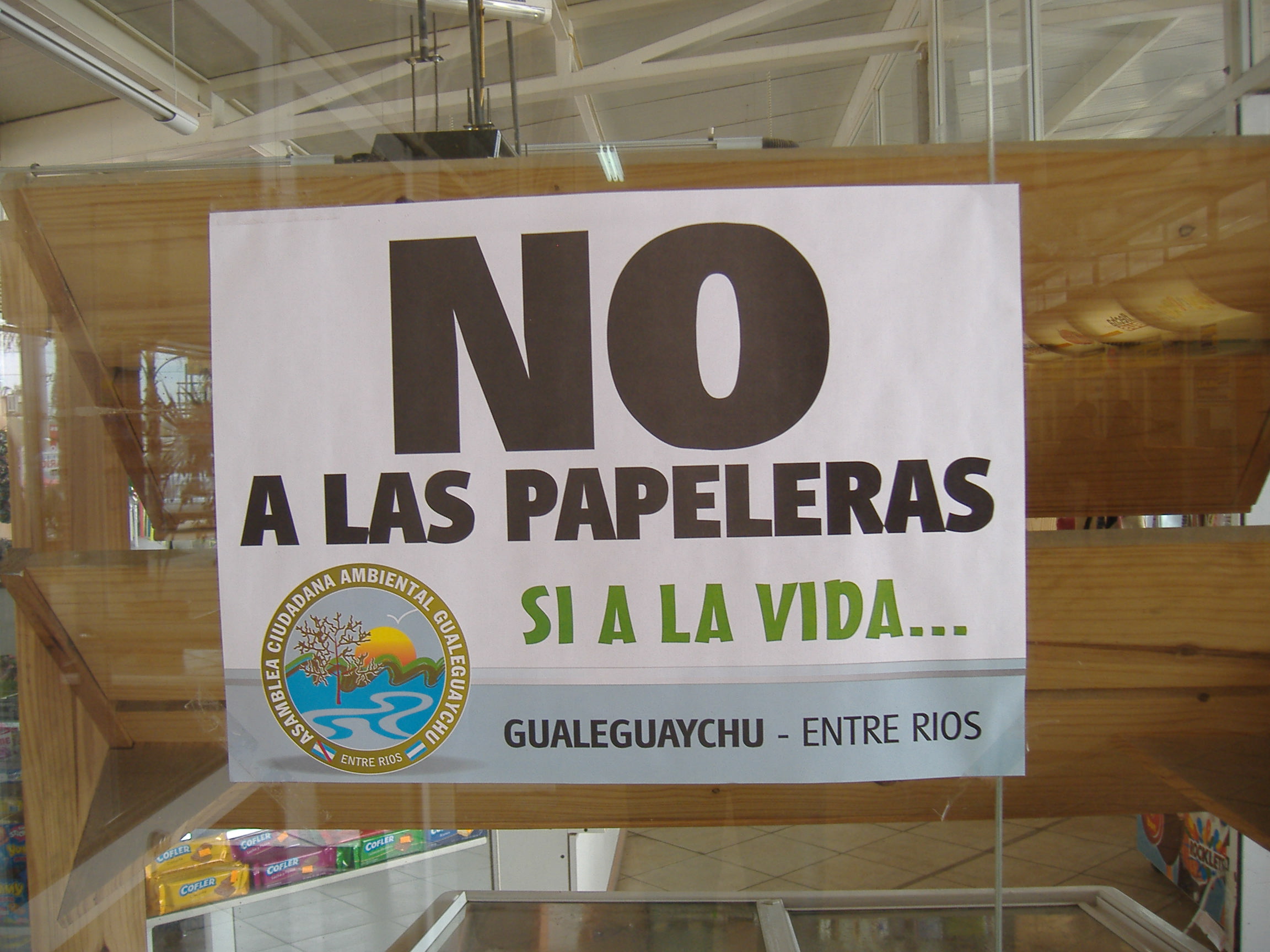
Enter the Gualeguaychú-Fray Bentos cellulose/pulp mill issue, which is really a paragon of ridiculous lack of restraint. The latest development is that, after some of the guys in Gualeguaychú made mild terrorist threats (e.g. "we could cut that cable over there and shut off Uruguay's Internet in a minute"), and considered (but rejected for the moment) the possibility of going over to protest directly in Fray Bentos, the president of Uruguay signed an order to provide military custody to Botnia's cellulose plant. What!? Mr. K said it was an offence that hurt his heart. How moving.

But wait, it gets worse. The possibility of withdrawing Uruguay's ambassador was mentioned. It was rejected, but unfortunately the explanation given by Uruguay was "if we were to solve everything by withdrawing the ambassador, we wouldn't have had [the ambassador in Argentina] since one year and a half". This was the Uruguayan Chancellor, i.e. the head of the foreign relations office. Diplomacy, anyone?

As one of the readers of this rather low-level thread in Yahoo! Answers says, seeing Argentina and Uruguay against each other is like watching a fight of two chihuahuas. The issue is not only international but intranational; the mayor of Colón, north of Gualeguaychú, called their actions "exacerbated extremism", and the Gualeguaychú folks got mad at that. As of now, the international roads passing near both cities are being blocked again. These guys are actually mounting permanent tents by the road, setting up chemical baths, and a "kitchen bus". "If they come to repress us with the police", they said, "we might be forced to move, but in two hours they'll have 30,000 of us protesting in another spot".

The time has come to drop this ridiculous pretense that we're defending ecology as a national cause, and to accept the obvious facts:
  1. The Botnia plant will be built, on time, and in the designated spot, and it will work.
  2. Uruguay cannot make its way out of this. It has a special treaty with Finland that forbids messing up with certain agreed-on investments.
  3. The president of Uruguay cannot and will not lose the rest of its already diminishing popular support. His balls are in the hands of a corporation that's bringing the largest investment in the history of Uruguay. He simply has no room to move.
  4. The Assembly of Gualeguaychú is formed, like most of these movements, by 95% of people who don't have clear justifications for the protest, and 5% of misguided leaders. The withdrawal of official support has only radicalized them.
  5. When-and-if the Assembly commits an actual crime, the Argentine government will have to react but it will be too late.
  6. When-and-if the Argentine government reacts, there will be (as predicted by the Assembly) a horrible mess. This is entirely the government's fault. The clock is ticking.
The solution will not be nice. The authorities (the Gendarmerie or the police) will have to disband them and prevent them from blocking the international pass again. The damage (the sense of betrayal and resentment) will be done, but maybe a normal state of affairs might return in a couple of months. And all throughout the country, we the people will be telling our government "I told you so", as we always have.

30 November 2006

Chile and Argentina

This is my reaction to a post by miss cupcake in her blog, about Chile's cleanliness (in every sense) compared to Argentina. Two caveats apply for the rest of this post: one, I've never been to Chile; and two, this is not intended as criticism but as a complement to what miss cupcake said.

Chile is indeed more orderly, more efficient, less corrupt, and more modern (in some important specific aspects) than Argentina, or most of Latin America for that matter. When Roberto Lavagna, the former Argentine Minister of Economy, saw the return of foreign financial investment to Argentina as an unstabilizing force (due to short-term speculative operations that unbalanced the markets), he looked to Chile for well-tested regulations to deal with that. Chile is also an example of governability and of stable state policies.

Chile is also one of the countries with the most pronounced income inequality on Earth. People who've been there also tell me that social/class inequality is also marked. The same is true in Argentina, of course, but the Chilean disadvantaged classes have never been very organized or combative. Chile was a dictatorship between 1973 and 1990; I guess that the revolutionaries and radicals were either killed or forced to exile, so the Chileans lost their popular leaders and ideologues that could've fought for change. This is also true of Argentina, but then our dictatorship was a series of committees made up of inefficient murderers, it lasted only 6 years, and the dictators ended up discredited and in jail soon enough. In Chile, it was only Pinochet, and he remained in charge of the Army after permitting a democratic government to be elected.

The lower classes in Chile don't seem accustomed to fight for their rights. If you think you saw that in the news, it was students asking for free entrance exams to university; they are part of the minority of the Chilean population who have access to quality education. More education means higher income everywhere, but this is especially true of Chile; and in Chile, you pay to get into school, and you pay to stay there. If you're poor, you can't go to school. This is a direct consequence of the "modernization" policies started by Pinochet, presented as the "Miracle of Chile" (Milton Friedman dixit), and continued up to this day.

Argentina, for all its faults, recognized as early as 1884 that a united country requires free education. The upheavals of economic and political history have never changed that, even as some governments (often, and not coincidentally, the military ones) have tried to make education a privilege for the rich. Despite the lack of funding, the teachers' strikes and the multiple half-thought education programmes sponsored by different rulers, and despite the "modernization" carried out by Carlos Menem, Argentine professionals continue to excel in their fields.

This all goes to say that I prefer to live in Argentina... I've been through rough times and I know for sure I wouldn't be even a struggling middle-class citizen by now if I'd had to pay for my education.

This also goes to say that Chile and Argentina can learn from each other. There's no necessary causal link between free education and corruption, or between clean streets and a military dictatorship in power.

Chronicle of a Death Foretold

Since there is no energy crisis, today's blackout must have been caused by other factors... Maybe a rat chewed on a powerline or something. That has happened. Whatever the reason, 43,000 people were left without power today when part of a power plant in the downtown exploded around 10 PM. Destiny had such a fine aim at me that this came more or less around the time when I was just about to conduct some business on floor #15 of a certain building. News: sedentary work is bad for your physical fitness. If you haven't been jogging or otherwise exercising your legs and your aerobic capacity, climb the stairs slowly or you might die amid painful panting.

Again, this is not part of any hypothetical "energy crisis". It's just a coincidence that blackouts are becoming more and more frequent lately, and even worse as summer approaches and people start turning on their air conditioning. Really.

Seriously: At most, we must concede that the power company guys' denial is not groundless. Part of this is not caused by a higher demand of electric power, but by sheer neglect and incompetence.

28 November 2006

Techno-yerba

This is actually weird, and we're talking about a place where presidents comparing themselves to pharaohs are not considered weird. Yerba mate has had many properties attributed to it, mostly related to its stimulant effects and the ritualistic nature of its drinking as mate, Argentina's national drink (sharing a place with Fernet con Coca), but never in the field of medical imaging.

Well, believe it or not, yerba mate has been shown to be useful as a negative contrast material for the imaging of the bile ducts. Such imaging is normally done by sedating the patient and injecting radiologically opaque (iodine-based) contrast material into the duodenum (this is called an endoscopic retrograde cholangiopancreatography or ERCP). As someone who used to work in the imaging department of a hospital, I know that this process is long and messy. With yerba mate, you only need to drink mate and get a much faster, more precise and non-invasive RMI scan. The radiologists discovered this as they were looking to achieve the effect with pineapple juice (!) -- some of the test subjects had drunk mate before. It was introduced to the medical community during the recently held 52th Argentine Congress of Radiology.

Will yerba displace iodine-based contrast materials from other niches? You know, a bunch of companies make huge profits out of those horrible substances. And they feed the companies that manufacture anti-allergic medicines and corticosteroids, as intravenous iodine tends to anger the immunological system of a significant number of people. Will the Big Corporations kidnap the yerba mate radiologists or buy their silence? Will they lobby against yerba mate for medicinal use?? Will they maybe set fire to yerba mate plantations and make it look like accidents??? They made the water engine disappear after all...

27 November 2006

Ripples of 11/15

The hailstorm brought out a lot of things, and the repercusions and associations keep coming in waves. This will be history.

Remember the accusations that people benefitted with relief packages were reselling their corrugated metal sheets? Well, yesterday I said there was only one such incident confirmed. The person in question was arrested. But it appears there were more than a few others, and not only metal sheets but also mattresses were sold for a few pesos by avivados, mostly to other poor people who lost their roof and their bedroom furniture too, but who were forgotten by the authorities. To make things worse, it continued to rain today. The storm brought out the worst from the sewers and from some of the people.

On the other hand, good ideas can also come from catastrophes. Rosario has a municipal program of organic vegetable gardens, grown in small lots in the suburbs, by hand and without any pesticides. These gardens were severely affected by the hail, so the Urban Agriculture Programme launched the Vale Verde, a bill worth 10 pesos in vegetables from these gardens (at 2 pesos per kilo). The Vale Verde is sold at Rosario's Vegetable Fairs and will be exchanged between 15 February and 15 April 2007; by buying beforehand, you can help the gardeners cope with the lack of cash during the summer months.

Yet on the other hand, the taxi drivers (and more so the taxi owners) are showing their complete lack of empathy with the rest of the population of Rosario in not one, not two, but three different ways. First, they got mad at the idea of the municipality of licensing 500 more cabs to increase the offer (this after they judicially blocked a bill forcing taxi owners to hire new employees so as to work the service 16 out of 24 hours per day). Second, they demanded a fee increase of 50% (@#!?), mere months after getting a 30% increase, taking it to the levels of Buenos Aires (though in BA taxis do work). And third, they had the gall to ask for government money to repair the cabs damaged by the hail, and they're complaining that they didn't get it. Of course, they want a higher fee and free repairs not to provide a better service, but to stay as they are, comfortably living off a high-demand market.

Finally, the latest "ripple effect" of the hail is something I'd mentioned briefly before, which is that it's become easier to start a conversation with anyone, provided you haven't seen them since before that Black Wednesday. You only have to ask casually, "So, what did the hail do to you?". It's not a pick-up line or anything but it does break the ice... No pun intended.

26 November 2006

The first victim of the hail

A bit more about the aftermath of the hail. It appears that the blockades set up in the streets to demand "disaster relief" are now mostly gone, and the government's strategy of doing nothing (save keeping some policemen in the distance), which I criticized in a previous post of mine, was eventually correct. With the rain that's been falling since yesterday night and all through Sunday (it's 6:20 PM now), and since relief has been provided and the problems caused by the blocks have been addressed, they became pointless and unsustainable.


Some had suspected that there are political and pseudo-political movements out there trying to incite disorder; the mayor said it, and now the provincial police has obtained proof of at least one such attempts: several calls were made by two men last Friday to provincial and city government offices, to four schools, to radio stations and other places, warning that looting had started in parts of southern Rosario (rekindling the fears of 1989 and 2001). Fortunately, this disinformation campaign failed, mostly. If this had been 1989 (with hyperinflation and shortage of food in supermarkets) or 2001 (with peak unemployment, recession and a crippling shortage of cash), it might have worked. Mind you, the news about Argentina's spectacular economic recovery are all written from the advantageous POV of middle-class society and up; but the poor are not that many or that desperate today.

More disinformation was spread by the media (I'm not blaming them, as they're only as good as their worst sources) in the last few days. For example, there was the repeated denunciation that some recipients of relief were selling their new corrugated metal sheets -- which was true, but so far I've only read one proven account of this. There was also the radio announcement (multipled by word-of-mouth) that there had been hail in several small towns and cities around Rosario, the idea being that we were in for another catastrophe while the mess was still incompletely cleaned up; it was all false.

We had some, light hail yesterday afternoon (nothing like the other day), and then after dark there was a lot of rain that continued thorought the night. I had to brave it for four blocks as I went from a friend's house to the bus stop, hopping over puddles and over streets turned rivers, but it was nothing serious. We're going to have much rain this summer, I guess.

24 November 2006

Good news in short

Last week's news are like a parade of horrors, and I haven't mentioned half of them. So we need some good news.

  • Tomorrow it will be (according to the National Meteorological Service) hot as hell in Rosario, but Sunday it will be cool (cooler than spring should be, but let that be a lesson on how we mustn't put away coats and long-sleeve shirts).
  • Argentina will earn more from foreign tourists coming to the country than it loses from Argentinians spending money abroad for the first time this year, since those statistics are compiled (1992).
  • In a brave display of imagination that we almost never witness in a politician, Deputy Mónica Prato of Córdoba will protest the lack of compliance of Córdoba Province's government with the national law that mandates free (as in beer and as in speech) tubal ligation for all women. She will do this by going to two public hospitals and requesting that her tubes are tied, threatening to go to court if her request is not granted. Good for her.
  • Yesterday the sky turned ominously dark and people got scared. Everybody drove their cars under cover and lowered their blinders, waiting for the coup de grace..., but it didn't hail again.
  • Bailando por un sueño will have a "blond vs. brunette" dancing duel live with Eliana Guercio and Evangelina Carrozzo, which is good news for some, but more importantly, I can watch another channel -- I don't have to stupefy my brains to endure such a horrid display of bad taste, and I can see non-paid girls far more beautiful and less disgracefully slutty than those two by just taking a walk downtown.
That's it. It's a bit sad that I had to look around for good news (yes, there's that journalist maxim that says "good news is no news"), but I did collect enough for one blog post. Cheers!

23 November 2006

Aftermath of the hail

This is the story of a still unfolding tragedy. You've already watched the first act, but there's sadly much more.

Act 1: a horrible hail storm hits Rosario. People get hurt, windows get smashed, precarious homes get destroyed. Damages for US$270 million.

Act 2: While people with cars and windows line up before glass shops and get charged suddenly increased prices, people with no cars and no windows desperately ask for help from the government (tin roofs to repair their homes, mattresses to replace those ruined by the rain, etc.).

Act 3: Government workers are sent to assess the damages in the poor neighbourhoods, and the requirements of their residents are recorded and forewarded to the authorities. Surprisingly, the goods are delivered more or less in time.

Act 4: Unsatisfied because they want more or angry because they've been ignored, groups of poor people set up pickets blocking important roads in the peripherical areas of Rosario. Other groups move from their old homes and squat on abandoned public and private lands.

Act 5: A policeman trying to redirect traffic at a busy intersection blocked by a picket is hit by a car and dies a few days later. People in charge of the emergency relief operation report that the pickets are making it impossible to distribute the goods. Indignant neighbours denounce that some are selling their relief packages instead of using it.

This is about the point up to where this tragedy has devolved. Mayor Liftschitz said today, probably with reason, that the picketeers are being (at least) encouraged, if not led, by minority political factions. We've come to know those; they're the kind that always emerge when it's time to burn tires, and who pass as defenders of the poor, when they're in fact borderline criminals with nothing better to do and a very, very skewed left-wing ideology.

The provincial government, which manages the police, has stated through the Government Minister Roberto Rosúa that the street blocks will be handled "through consensus and peaceful means", only employing police force in the case of crimes committed by the picketeers, such as charging cars with a "toll fee" to let them pass unscathed through the blockades. Rosúa, who has excelled at being useless in several ministries under two administrations, seems not to notice that blocking a street with burning tires is a crime. Like the national government in the case of Gualeguaychú, the Santa Fe Provincial Government prefers to look away, fearful of legitimate repression (maybe because they did engage in illegitimate repression not so long ago and were exposed). Or may it be because problems in Rosario make the ruling Socialist Party administration look bad?

In case you haven't noticed already, I consider myself a leftist. I was born under the shadow of the latest dictatorship, which used violence against popular dissidence of any kind, and I hate the use of force against the weak and the poor. I also know that the Argentine police, all of it, is corrupt, brutal, tainted with all sorts of human rights abuses not committed then, but being committed now, everywhere. And I, yes, I want the police to suffocate those pickets, to look for their leaders and bring them to justice. This is not a protest, it's some greedy lowlife politician wannabe rallying the ignorant to see if s/he can get money and goods from the government. This could be done today or tomorrow in an hour, without firing a single bullet, and the money and the goods could reach those who really need it -- 10% of the population of Rosario lives in shanty towns, and they're not all disrupting traffic and threatening drivers. Why do we still put up with this?

22 November 2006

Mindless road rage

The folks in Gualeguaychú are blocking the international route to Uruguay again, after the World Bank announced it would grant a $170 million loan to the Finnish company Metsä-Botnia to continue building its cellulose and woodpulp mill on the Uruguay River. If this is already looking like useless repetition leading to a dead end to you, it must be because it is. The mill will be built, and it will pollute the Uruguay River as little or as much as it was supposed to, and we'll have to live with it. We'll survive and Gualeguaychú probably will too, but I'm not sure the traditional friendship between Argentina and Uruguay, as of late rather strained, will survive as well.

I couldn't possibly be more sympathetic to the inhabitants of this beautiful city that lives in part thanks to tourism and in turn thanks to its wide, brown-colored river. But after months of intermitent blockades, diplomatic negotiations, a good amount of political dance, media attention, and a model in a bikini parading a "NO TO THE PULP MILLS" sign in front of a dozen of presidents, the blockade tactic is not only stale and useless, but pathetic and counter-productive.

On TV I saw an Argentine motorist stopped by the blockade, arguing with the protestors to let him pass through, telling one of them that he was not fooling around as a tourist but he was a working Argentinian; and the protestor told him "I don't think you're an Argentinian". When it's come to this irrational us-vs.-them feeling, can we doubt that these people are horribly wrong, even as we know that their cause is just?

The pulp mills will pollute, as they do everywhere. They will emit a foul stench of rotten eggs and they'll taint the waters. They'll do just the same as each and every paper and pulp mill in Argentina, only producing much less pollution, because they have modern First World technology. The battle is already lost; the protestors in Gualeguaychú just haven't heard the retreat order -- and it is the Argentine government's fault that they haven't, because near election time nobody wants to give up on a national cause which was embraced in a hurry only months ago, and least of all sending the police or the Gendarmerie to clear the international pass.

The protestors clearly know this. One of them, in the latest assembly, demanded action from the authorities: "[They should] either come and beat us up, or come and lead our fight!". They're ready to ask the people of Colón and Concordia to block the international bridges located north of Gualeguaychú, thus completely cutting off Uruguay's land access from Argentina. This will reach a critical point soon..., and then what?

21 November 2006

The Christ in the Picture

I'm not one to engage in criticism of religious beliefs in the personal level (not anymore); I do breach the subject when it comes to religion intruding in my private life or in public policy, for example. I'm sincerely baffled about this, though, so that's why. It's about the story of my co-worker and her lovely granddaughter. My co-worker (let's call her Ms. A) is convinced that her 15-month-old granddaughter (I'll call her Little N) has come to know Jesus instinctively and in spite of her parents' lack of belief. As far as I can tell, her father (Ms. A's son) is not very religious, and her mother is agnostic.

Little N has developed a fixation with a picture of Jesus. During a visit, grandma saw the poor thing's eyes intently fixed on the image, and she told Little N who that man was, and taught her a children's prayer. Little N can barely say "Jesus" but she does stare happily at the picture, and she waves and smiles at it whenever she toddles past it. So far, so good, a little religious indoctrination. Only now Ms. A is convinced that her granddaughter really sees something in the picture, that she recognizes Jesus. My other co-workers, women in their 50s mostly, agree that Little N must be seeing something we spoiled adults cannot see. The girl's parents decided not to baptize her, so this must be Little N's way of "asking for baptism". It's "really incredible, but then children know". One of these women, speaking from a fairly typical, incoherently sincretic view, opines that the baby "doesn't see that picture (of Jesus) as we do, but she sees the energy". They also believe that Little N "might bridge the separation between their parents and God".

They kept on this line of discussion, turning then into the individual stories of their children's loss of religious practice. Most people in Argentina are Catholics that have never practiced; many of us attend church only as long as our parents take us, or when forced for some other reason, until we become teenagers or a bit longer. Then, it's only weddings, First Communions, baptisms, and even more rarely, on Easter Sunday and the like. Will this be the future of Little N? Will she turn into a skeptic at an early age? Will she become a prophet of the Christ in the Picture?

I didn't open my mouth during the discussion and definitely closed my ears to the last part I've just revisited, since time and experience have taught me that nothing good comes from discussing religion. I've been an atheist and a skeptic since 21; I lost years of my life coping with the progressive loss of the hollow faith I was raised in, and revisiting my arguments for people who've never bothered to examine their own beliefs would be a waste of time. I only wish Little N is given the space and the education that she will need to think about it and to reach her own conclussions in time.

20 November 2006

Concordia, Entre Ríos

Concordia surprised me, in the positive sense. People had told me some discouraging things about it: "one of the poorest cities in the country", "not much to see", but they were wrong.

I arrived last Saturday morning at about 8, after a 7-hour night trip that really did nothing for me; I dozed off, woke up, got half-asleep, woke up, etc. in irregular intervals a dozen times in my semicama bus. Exiting Rosario, the bus takes the Rosario-Victoria bridge, jumps 600 m over the Paraná River, and then crosses over the myriad islets and streams of the river's floodplain, arriving at the tiny bus station in Victoria one hour later. Then it's east to Nogoyá, Rosario del Tala, Basavilbaso, and encountering the Uruguay River and the Argentina-Uruguay border in Concepción del Uruguay (which is not in Uruguay but in the Uruguay Department of Entre Ríos Province), it heads north to Colón, San José, and finally Concordia. Of all the important cities along the Uruguay River, Concordia is possibly the least touristy. Gualeguaychú is looks much bigger (even though it's half the size of Concordia) and has a huge carnival season and commercial movement; Colón is more small-town-minded but has a cozy Hostelling International hostel (where I had the pleasure to stay for four days back in July) and the benefit of being the "base camp" for people heading to the El Palmar National Park; and Federación (up north) is a tourist resort revolving around its hot springs.

Concordia does have hot springs but they're not as famed, and its riverside facilities are not well-developed. If anything, it has the Salto Grande Dam, but that's 20 km north of the city proper, and you only get to tour it comfortably if you're driving your own car. The huge reservoir is therefore wasted here; it's Federación (upstream) that reaps all the benefits.

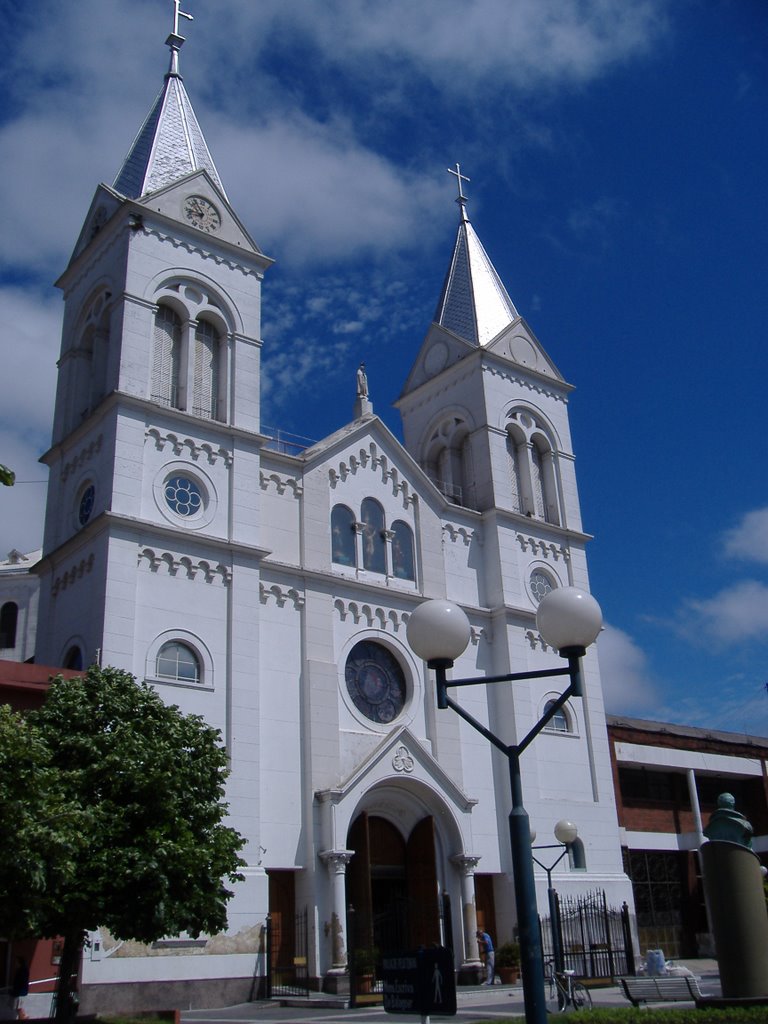
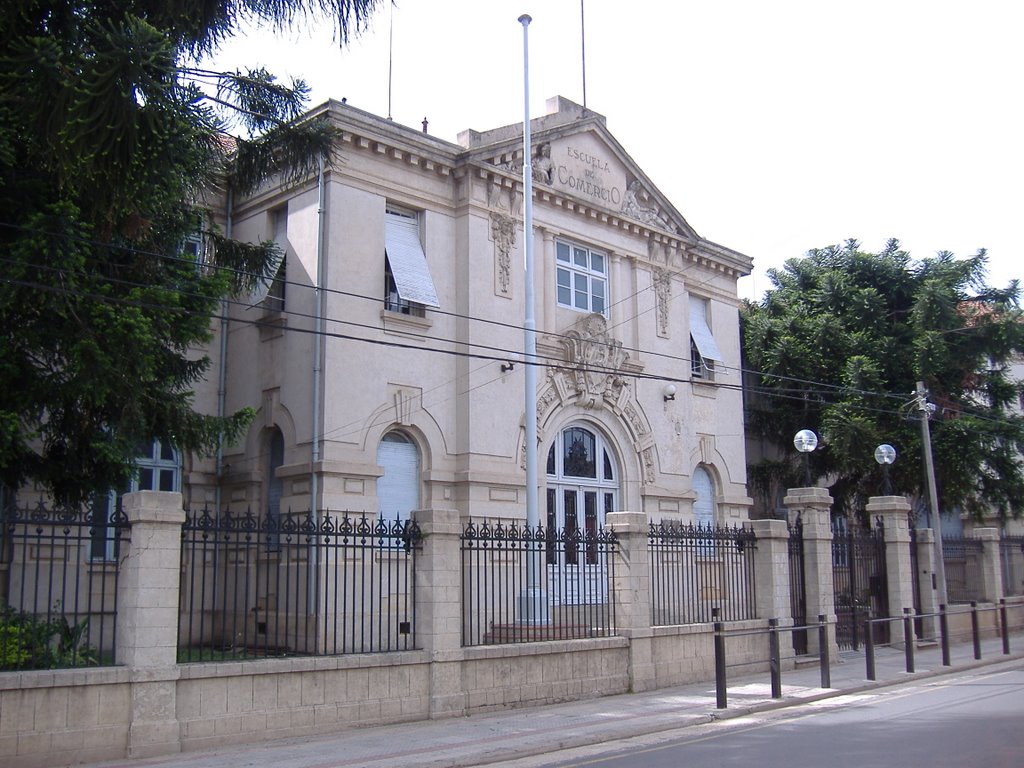
However, Concordia is not a poor, backward town as I'd pictured. It has a true fairly large downtown area, with narrow streets and avenues lined with many trees (not unlike Rosario). Naturally, there are no high-rise buildings. Old architecture (mostly 1900s) abounds, though it's not that well preserved or taken care of. The streets are well-paved and the sidewalks are clean. There are two main squares, Plaza Urquiza and Plaza 25 de Mayo, and a cathedral, not really impressive but all in all nice for a comparatively modern building. There's also the impressive Arruabarrena Palace in the corner of Entre Ríos and Ramírez -- I'll let you judge from the pictures, since I lack the vocabulary to describe that luxurious façade.

So I got off the bus at 8 AM, took a taxi, and 10 minutes later I was checking in at El Quijote, a hostel-type lodging in the outskirts. Problems with El Quijote include the presence of small children who scream and cry while you're trying to sleep, and the fact that the kitchenette (where people speak loudly and said children run around playing) is next to your room (if yours is room 11). OK, I didn't pay for it so I shouldn't complain.

I took to the streets, discovered the things above about the city, and walked my feet off around town until noon. By then the sky was looking rather menacing and my legs were failing me, so I sat down with a sandwich in a bench opposite the cathedral. Then I asked around, took a decrepit urban bus (with fileteados and all), and returned to El Quijote for a nap (punctuated by the aforementioned crying child). Come the afternoon, and as my roommates had not come yet, I walked back to the city and explored a bit more, with the help of a stick of orange icecream. When I got back everybody was there already, so we took baths, changed into our suits, and off we went to witness yet another farce of Catholic wedding at the Cathedral; the priest reminded the bride that her duty was to produce her share of Catholic offspring, the groom nervously agreed to do what was necessary for that, and off again we went to an establishment in the suburbs. Everything was OK there, with the (big) exception of the timing; for some reason, the main course was served only after long hours of dancing music. By the time, me and my table companions were in a truly fearsome mood, as is to be expected for young healthy men who've had nothing to eat by 2 AM. The food was good (if you don't like fancy stuff, which is fine by me) and the drinks were nice and plenty. Come the morning, I left my friends waiting for the van to pick them up and take them to Rosario, while I walked back to El Quijote, freezing my nose off in the cold. Collapsed in bed, woke up once at 10:30, then again at 11:30. We packed, got a ride to the bus station, and then off to Rosario in another semicama. I wasn't that sleepy then, so I read a chapter of Kalpa imperial (by Angélica Gorodischer) and took pictures of a couple of places... All in all I got 200 pictures in less than 36 hours, so I'd call it a good photo safari, if nothing else.

I need to catch up with the news, so you'll be having that again soon. My post about the hail storm was referenced by another blogger who was caught right there in the middle of it, and then by another one; Accuweather covered it, and many people took pictures of it.

17 November 2006

In a hurry

Did I say Coronda? I meant Concordia. I'm heading for Concordia, Entre Ríos, by the lovely Uruguay River. I've packed a few things including a suit, since this is for a wedding party, but I'll be arriving 12 hours before so I think I'll have time to check out the scenery. Not that Concordia has a lot of it, I'm told, but there must be something. In short, don't expect me blogging from there, or until Monday. (The van that was supposed to take me there failed me! I'm taking a bus that will take me across the completely homogeneous landscape of Entre Ríos, along a highly twisted route, stopping at each and every town, and taking 7 hours for a 5-hour trip. Sigh. And I can't sleep in buses...)

16 November 2006

Hail hell in Rosario

After the storm (I)
Rosario woke up today licking its wounds after the worst hailstorm anyone can remember. After days of abnormally high temperatures, yesterday the weather turned overcast, then wind started to blow. Faraway thunder could be heard, and lightning flashed behind a veil of black clouds. My cat came up sniffing the air intently, her body tense and ready to escape, and then disappeared somewhere... At about 5:30 PM, before any rain had fallen, hail the size of billiard balls started pounding roofs and windows. That lasted 10 minutes. Rain joined in soon, winds up to 115 km/h propelling it (and the hail) almost horizontally at times. It stopped soon enough, and then, an hour or so later, it started again.

Right before the beginning of the storm, power went out in my house and around. We took out candles and matches, unplugged all the electrical appliances, and waited. The hail was a surprise, though. I initially heard some horrific pounding on nearby roofs, a sound of broken glass here and there, and then it come in full force; I had just enough time to lower all the metal blinders to protect the windows.

After the stormSomeone got a battery-powered radio and we listened to the disaster report. One hundred people wounded, hospitals' ERs full, buildings' glass facades completely destroyed, pigeons falling dead from trees like leaves. Fixed telephone lines were down in many places, the cell phone network collapsed by message traffic. One fourth of the city's buses, tens of taxis, ambulances and power company vans, out of order because of broken glasses (and of course, queues in front of glass shops). Trees severely damaged or uprooted. Sewers blocked by branches and leaves, streets turned into streams of dirty water. Precarious roofs punctured by hail or simply blown off. Forty-thousand people without power. One person dead, hit by a car in a hurry to escape. And, as of the latest update, between 30 and 100% losses in wheat, corn and soybean crops in the region.

La Capital gave it a special cover and titled it Tarde de terror ("Afternoon of terror"). El Ciudadano, somewhat more imaginatively (if with a bit of misplaced humour) Ira de hielo ("Wrath of ice", a play on Era de Hielo, "Ice Age"). Rosario/12 named it Ciudad azotada ("Scourged city").

Sunset after the hail
So today there are no classes in public and private schools, as many are without power, others are being used to held refugees, and some got all their glasses broken and/or were flooded. The mayor, the vice-governor and other authorities gathered a Crisis Committee. The mayor commented that his office's windows were broken and he'd never seen anything like this in 50 years (my father claims "this was nothing compared to the storm I saw when I was 20", but then, he says that about everything). Even Buenos Aires newspapers mentioned the storm, which is extremely unusual (given that anything beyond Greater Buenos Aires is considered less than their backyard by porteños).

The hail was up to 10 cm in diameter, and we can count ourselves fortunate that the storm laster only 10 minutes. I feel fortunate in particular because if my Japanese class had started two hours before, I would've been caught right in the middle of hell. My brother came home after it; it took him one hour (rather than the usual 40 minutes) in an over-full bus that had to take detours and drive very carefully.
Tormenta sobre Rosario
I left home this morning for work (still without power) and I found the sidewalks covered with Platanus leaves. A couple of windows in my office had broken and some rain got into a monitor and a power plug, so we waited a bit before trying to turn anything on. One of my co-workers got her appartment's windows shattered; another one, who teaches in a university, says a roof there collapsed. Nobody got hurt, fortunately.

I wrote this in my office, I power has not returned at home (I just checked with my brother -- at least the phone works!). We often have these blackouts, but they usually last only a few hours. It's entirely possible that this may last a lot more. I'm now uploading at a cybercafé. (Sounds like a battlefield report, doesn't it?). I have some pictures taken at home yesterday, but they'll be locked up in my camera for a while.

PS: Power's back! Wow, 10 hours without electricity seems like eternity. I'm adding some pictures of mine and others.

PPS: And here's a video:

14 November 2006

Travel by VandalBus!

A couple of weeks ago I wrote about violence in Argentine football and why nothing's being done to stop it. After that, new violent incidents have continued and the media have taken note and labeled the "new" situation as VIOLENCIA EN EL FÚTBOL, and some politicians have made sure that their excuses are heard. Then some players of the Gimnasia y Esgrima club admitted that they'd been threatened by the barra brava of Boca Juniors. One of them, at least, said on the record that one of the barrabravas had told him he was going to get shot in the leg if he didn't stay put.

Gimnasia and Boca had had a match in September suspended in mid-time because of violent incidents; the second half was played afterwards, and Gimnasia lost 4-1, rather obviously on purpose. As a result, Boca, already hovering around the top of the championship scores, took a step ahead of all the other teams. The threats were known and the match was so blatant bought up that a judge called Gimnasia's players, coach, staff and managers to declare what had happened. Gimnasia's president Juan José Muñoz, who gained notoriety precisely because he was the cause of the Boca-Gimnasia suspension (he went into Boca's lockerroom in the mid-time and threatened Boca's coach to kill him), denied everything: the boys didn't tell me anything, I don't think anybody threatened anybody, it's all OK as far as I know. The players and the staff said more or less the same and tried to escape the journalists' notice.

The only result of this was the Ministry of Security of Buenos Aires Province has announced that police guard operations will no longer be set up to "custody" the attendants of football matches that travel from one place in the province to another in buses. That is, no longer will hundreds of security agents be taken from their due place to smooth out the depredations of intoxicated mobs that basically hijack public-use buses. The MoS has even suggested that they might deny police custody to the stadiums during matches, which amounts to suspending them altogether.

Similar measures were timidly proposed in Santa Fe Province, where the issue is no less grave, but our enlightened authorities have other ideas. It's well-known that when one of their teams, Unión and Colón, plays, the hinchas board buses without paying, rob the other passengers, make the driver stop whenever they feel like getting more wine from stores, get high on all sorts of drugs, and leave the bus half-destroyed. The solution: give them a special bus service! I almost choked on that one. The municipality of Santa Fe and the police organized this for last weekend. They claim it went well..., the police only had to arrest nine people.

13 November 2006

Scandalous! Outrageous!

Believe it or not, only now have the media and the good part of society discovered that, yes, there are minors watching (and participating) in erotic shows. First it was in Neuquén, and now in Rosario. The horror!

Come on! Erotic shows including softcore pseudo-lesbianism and partial stripping (the latter featuring both men and women) have been en vogue for years, and many perfectly respectable adult citizens have witnessed and enjoyed them, with very well-disguised guilt or embarrassment or without anything of the sort, in discos and resto-bars. And I don't mean only friendly gangs of horny 20-somethings, but also perfectly plain girls and middle-aged couples as well. Did they think the children would miss them? Did they think regulations would stop entertainment establishments from staging some light porn?

Is it a good idea? Probably not. Is it degrading? Being a feminist myself, I'd say yes, but it's not my call anyway. Is it harmful to the sexual development of minors to watch this overtly fake eroticism? Maybe. Is it ridiculous to make a big fuss out of this while ignoring the fact that these minors were also killing their own brain cells with alcohol, and their own lungs with tobacco smoke (first- or second-hand) in the very same establishment, where it is illegal but widely tolerated? Definitely.

In 1961, science-fiction author Theodore Sturgeon wrote a short story called If All Men Were Brothers, Would You Let One Marry Your Sister?. It was about an isolated planetary human culture which allowed consensual incest between adults. The story appeared in a collection called Dangerous Visions, compiled by Harlan Ellison, and Sturgeon added an afterword where he marvelled at the human capacity for closed-mindedness, saying most people simply consider that certain stuff is bad, and once established that as if it were fact, further avenues of thought and inquiry are shut off. He gave porn as an example, noting that very few people go past the criticism of porn as smut/garbage. These few might admit they don't like porn out in the open because kids can eventually "get their hands on it". Of these, only a few, if pressured, might admit that that is in turn bad because it gets the kids horny. Only but a handful will admit that they don't like the idea of kids being sexually aroused, and basically none will stand being pressured to come up with a reason why sexual arousal is bad for the kids (where it comes from is another matter). These attitudes have changed a bit since 1961, but the holier-than-thou attitude mostly persists.

Yes, fake eroticism fed to an alcohol-stupefied young mind is probably not a good idea. But let's cut the moral outrage.

11 November 2006

Fried skin, roasted brains

Today I read a report about the controls (or, rather, lack thereof) on tanning beds (camas solares here) in Rosario. It's not really something that I pay much attention to, I mean the complete lack of regulations (and enforcement thereof!) in this or that aspect of private enterprise that may be horribly harmful to us. We grow up with it. But reading a few lines after the title I found this terrible confession...

I had already read a fellow blogger's assessment of the tanning fashion in Argentina. This last week, also, we were very slightly shaken by news of a woman who got trapped inside a sunbed and burnt her arm. In Buenos Aires, the law doesn't consider sunbed facilities a critical area, so inspections are not made on a regular basis. Moreover, sunbeds fall under "cosmetic treatment", not medical issues, according to ANMAT (the equivalent of the U.S. FDA).

All that aside, one would expect a large sunbed franchise to consider some security measures to avoid frying their customers or turning them into leather bags, but "the customer is always right" is not a philosophy widely spoused over here, except at McDonalds' and other international chains (where the result is truly creepy).

The reason of this post, however, is this article about sunbeds in Rosario that I found. Nothing really strange (nobody controls them, they're even worse than the sun, they cause cancer, etc.), until you get to the part where Gisela, 16, confesses that she's been doing the sunbed for two years now, without knowledge of her mother (who rightly fears its effects). Gisela told Rosario3 that she started when she was about to turn 15 (the traditional age-of-becoming for girls) because she wanted to be "splendid" for the night of the party. "Then I couldn't stop because I couldn't bear being pale for my girlfriends' parties", she explains.

I wonder what Gisela will do to keep splendid, and how she will react (being so incredibly vain), when she reaches 30 and her skin looks like 45; I have to wonder, also, whether her mother keeps any checks on how she spends her parents' money (since sunbed sessions are not cheap), and how on earth everybody around her turns a blind eye to the fact that her skin is darker than it should. I mean, do they believe she bathes in the sun for hours? And if she has time for that, why does she use the sunbed?

Moreover, why do people believe being well-tanned is compulsory? A number of guys don't like extremely pale features, but those girls who are naturally so are a minority in this country, which has been blessed with genetic diversity ranging from indigenous inhabitants to Mediterranean to Scandinavian types. Is it all due to competition, to peer pressure? I confess I don't take proper care of my skin when I'm out in the sun without cover (in January I returned from my vacations in Mendoza chocolate-brown). But paying to lie down in an ultraviolet sarcophagus for half an hour? What kind of twisted justifications do you need to make up to accept that?

No, I don't have a closing for this, except maybe cursing the memory of Coco Chanel for starting this madness...

10 November 2006

Getting all springy

Blooming Jacarandas
OK, so I got a bit jealous of Robert and Miss Cupcake and went to take my own pictures of Blue Jacarandas in bloom. What you see on the left is Belgrano Avenue in Rosario; a few blocks behind the place is the Flag Memorial, and to its left (100 m away) the Paraná River. And living in the buildings you see across the avenue is very, very expensive. Of course, everyone loves being near the busy downtown but not in it, and enjoying a view of the wide river, so construction companies with a lot of money to invest are trying to get their hands into this part of the city before anyone else, as you can see in the other picture. That's the Torre Aqualina, the newest and most ambitious development in town, where the high price of real estate has caused a construction boom; in some parts of downtown you need to watch out all the time for things falling from the heights of a building under construction (or demolition) and walk on the street because the sidewalk is completely blocked by debris, tools and trucks unloading bricks.
Torre Aqualina
Regardless of this mess, the city is looking good... in parts, and everyone's happy with this except, probably, the owners of the apartments located in the building just west of the Aqualina Tower (no more vista al río for you!). Spring, which makes a messy city all the more bearable (works for me at least), is coming with ups and downs; after days of intense heat, a sort of tropical storm comes and everything becomes gray and wet and suffocating, then the skies clear, cold weather sets in for a week..., and now it's getting hot again. You absolutely need something on your back in the early morning besides a T-shirt, and you absolutely need to remove it by noon. With those changes in temperature plus the pollen of many species floating around, I'm happily sneezing and with a runny nose the whole day, but hey, it's spring.

08 November 2006

Ironies and bad losers

The irony is that, although there is no (repeat, no) energy crisis, the Casa Rosada had a power failure for 30 minutes this afternoon... The prez wasn't there, fortunately.

Another irony is how seemingly tough politicians can be made to retreat by public opinion, when clear enough, as governor Felipe Solá did a couple of days ago. When Misiones Province governor Carlos Rovira tried to get re-elected forever through a disgraceful campaign, and was crushed by a loose coalition led by a retired bishop, that sent ripples far away. Solá was trying the same, though using slightly less dirty means (instead of paying poor people to vote for him, he asked judges to bend the electoral law). Always a big macho in words, he waited a few days, then was invited to the Casa Rosada to set things straight. He emerged visibly agitated and announced that he in no way desired to be eternally seated in the governor's office. He later said, rancorously, that the opposition just "needed to take him out". So much for a bad loser.

There's also a kind of irony in how former president Duhalde is saying that Rovira's thing was gross (as in a gross mistake). Duhalde, who was vice-president of Carlos Menem and then ruled the province of Buenos Aires (and with it its hyper-corrupt police force, complete with arms dealing, drug dealing, prostitution networks, illegal gambling, and a well-oiled industry of stolen car parts) and then was a presidential candidate (who lost to Fernando de la Rúa in 1999), well, this guy is talking about Rovira's attempt at indefinite re-election. You'd think he has no moral stature to do that... However, it must be said that Duhalde was also interim president of Argentina during the horrendous days of 2002 and up to 2003. He presented Néstor Kirchner to public opinion, he propped him up and lent Kirchner his large political machine, hoping to get a puppet into the big office... only to see Kirchner emerge with as yet unknown strength, on his own, and turn against his former ally. Duhalde, not a great man but at least honest to himself, saw very clearly that people were fed up with old-time politicians, and promised from the start that he would end his interim term and never attempt to run for the presidency again. He could've won that; somehow he managed to stabilize Argentina in little more than a year. Now he emerges here and there to speak as a statesman. Like the old-time mafia boss he really is, he usually knows what he's talking about... and he knows this will only make Kirchner foam at the mouth a bit more.

Jujuy governor Eduardo Fellner also ditched his re-election. That's three Kirchnerist governors who will leave their seats next years.

Make no mistake, I'd rather have Kirchner in charge, and strong, than any of the opposition leaders. I just wish he could break with the legacy of Peronism, which is above all a movement based on blind loyalty to whoever brings votes or grants favours. Solá and Fellner left their dreams of re-election behind because they were ordered by Kirchner to do so. Kirchner supported Rovira because Rovira had campaigned (bought wills) for him in 2003, when he ran against fellow Peronist (!) Carlos Menem; and he stopped supporting these other two only when he saw that the shit would land on his image as well. That's a shame, and it's also a shame that Kirchner himself hasn't said a word about Rovira, and that his ministers have reacted with the equivalent of "OK, fine, since you're being so nasty -- see, I dumped it! Are you happy now?!". The national government is becoming over-sensitive and paranoid, and doesn't care what enemies it makes, or whether the reason is sound, and Kirchner reminds me more and more every day of the first government of Perón. Which didn't end well...

07 November 2006

Different flags, same country

United I
That was just an example of the Colectividades. Once a year, in November, people and organizations representing the largest of many ethnic and national communities that helped form Argentina gather together to showcase their dances, food and customs. Mostly food, really, but the dances can be quite good as well. You can sometimes guess at the relative size and wealth of the community in question by looking at their stands and tents. Catalonia (Catalunya!), for example, has a huge lot with several tents, neon signs, and painted signs where this part of Spain is proudly called un país, a country. The other Spanish communities have separate lots as well. On the other hand, there's also the case of nations that have split into several countries after they came to Argentina, as you can see above...

Even as the world is tearing itself apart, it is refreshing for me to see a state-sponsored celebration of immigration and diversity that has never, ever, been marred by ethnic or racial conflicts. Consider how today, in the US, many people are voting based with their minds focused on that issue. I took the following picture thinking about that. It's not good, but check the small flags and see who's standing next to who, back there on the left.

United II

Yes, those are Lebanon, Iran and Syria, lined up after Japan. If anything, this is why I'd stay in Argentina, where (90% of the time) ethnicity is no more than a fact of life. We have precious little to celebrate, but this surely counts.

06 November 2006

Packed weekend

Well, I missed the photo safari at the Parque Independencia organized by the Rosarigasinos, but things turned out different. I got a call from a friend asking me to gather at the comic-scifi-anime convention Leyendas in order to, among other things, put our heads together to decide on some details for Pato's bachelor party, and on our transportation two weeks from now for his wedding party (to be celebrated in uncomfortably faraway Coronda). The latest is especially important because there's only one bus per day that goes there, only one of us has a car, and in any case nobody likes to drive three hours during a hot spring Sunday with a hangover. Such is the nature of wedding parties.
Furry and foxy
As it turned out, one of the three missed the appointment and Leyendas was rather boring, so I left in mid-afternoon, as soon as my friend and I came to the conclusion that we had no clue what to do about the above issues, and after a brief freak-sighting tour, which included a rather unpleasant furry surprise (see picture, right).

Anyway, we spotted a lot of idle teenagers and older, usually male, shabby and with untended beards, and a few girls (they're fewer every year in Leyendas; boys, you must realize you're doing something wrong!). The atypical attraction, a girl that comes every year to the costume/cosplay contest wearing nothing but the lower part of a bikini and with her skin entirely painted in green (or Mystique-like blue), did not appear this time.

As I said, given this desolate outlook, and still fearing I might run into the guy with a fox tail coming out of his pants, I left, after watching the incredibly goofy pilot/trailer of the upcoming live-action Aquaman movie, which I'm sure will be a box hit, since it combines all the clichés that the public loves, with the blond pretty-face surfer/actor, the female partner that reluctantly falls in love with the hero, and the magical negro tough mentor.

All in all it wasn't a loss since I also got to take pictures of the tents and kiosks of the Colectividades, but that will have to wait a bit. The issue of the bachelor party was solved quickly enough... by going along completely without any sort of planning (don't ask), and as for the wedding, the groom turned out to have kindly booked a Trafic for twenty (well, not actually a Trafic but a van -- but that's what we call anything more than a car and less than a bus) which will come fetching us and then, after the party, pick us up to take us back to Rosario.

04 November 2006

The Wall

The Gualeguaychú Environmental Assembly has gone a step further in its protest against the cellullose and pulp mills to be installed on the Uruguay River. During this weekend they've erected a wall blocking International Route 136 that goes from Gualeguaychú, over a bridge, to Fray Bentos in Uruguay. The wall is 1.8 meters tall, made of hollow bricks, and one of its sides is covered by a poster that reads EI SELLULOOSA - NO TO THE PULP MILL (in --probably bad-- Finnish and in English). In Montevideo, the 16th Iberoamerican Summit is being held and the head of the Spanish government José Luis Rodríguez Zapatero is trying to get Kirchner and Tabaré together for some talk, although the Uruguayan president has already said that he won't speak about anything while the road is blocked.

As mostly anybody around here thinks that this protest has spiralled out of control and rationality, I wonder why the government doesn't do anything to fix it. I'd be the last to suggest that the protesters' claims are baseless or exaggerated, but some kinds of protest actions should only be used for media effect for a very short time -- blocked roads are not something that authorities should ignore.

I found some reading from the other side of the border which I though I could share, From Uruguay -- like this one, a blog in English written by a native Spanish speaker, and several times dealing with the issue. I agree with part of the reasoning, though I can't agree with the idea that ecology in developing countries is a luxury we sometimes can't afford. I'm usually pragmatic, but then, we've all been pretty fucked up by that kind of pragmatism, and by its inherent assumption that things will eventually be OK for us to take care of the details.

02 November 2006

The equal sex

The Argentine Senate has just ratified the CEDAW (UN Convention on the Elimination of All Forms of Discrimination Against Women). It's not that things are going to change overnight for discriminated women in Argentina, but it's something. Passing through the Senate was a major obstacle, but 32 out of 44 Senators were in favour. The ones against were following the line of the Catholic Church, which also sent letters pressuring more progressive legislators to block the ratification of the CEDAW, calling it "abortionist". Octopus Dei member Senator Liliana Negre de Alonso practically repeated a note sent to other Senators by the Episcopal Conference in 2002, which contained a number of inaccuracies (these were promptly refuted by another Senator).

Argentina is a weird beast when it comes to religion; it's not your typical Latin American red-blooded Catholic country; the framers of the modern state were liberal to the point that they appropriated all the lands owned by the Church, passed a fully non-religious education law as far back as 1884, and though usually what we'd call elitist and conservative, they wanted a powerful national state and viewed the Church as a competitor. There was never a "wall of separation" between Church and State in Argentina. The seemingly paradoxical result of this is that over time the Church has became just another political actor and lost most of its spiritual appeal. It still has some sort of moral authority for many, but most Argentinians are no-nonsense regarding religiously motivated ideologies. Let me explain...

People in Argentina (mostly) don't approve of abortion. They don't believe embryos and fetuses are just lumps of tissue that women should be able to remove from their bodies at will. They don't believe that the lack of a right to abortion is discrimination against women. But when you tell people that badly-performed illegal abortions kill hundreds of women each year, and when in the streets of any city you can see malnourished 16-year-old mothers pregnant with their second child as they carry their firstborn, most, Catholic or not, think twice. This is why the Catholic Church does not organize massive popular rallies and processions to protest laws giving women the right to decide. At very specific times they gather their bases for minor demonstrations; usually, they only send notes to politicians -- they point directly at the core of power and influence. They address these notes to conservative politicians who will broadcast the ideas of the Church disguised as religiously-neutral legalese, and to progressive politicians who might be led to think that pissing off the Church is a bad idea. Sometimes that works; this protocol first entered the Argentine Congress in 1985...

It's premature to think what this ratification of the CEDAW protocol will do for Argentine women, but a step towards the goal of equal rights is a step no matter what.

01 November 2006

November

October is already behind us. I feel it was gone very fast. Might have been because I was very busy. It's only two months until year's end and of course, many people start reflecting on broken plans and unfulfilled dreams at this time of the year, just before they let that aside to start making new plans and dreaming up new fantasies. I'm trying to stay out of that... November is already too much work.

  • I have to go to the ATM to get my money. Woo, money! Governor Obeid just announced a one-time AR$300 supplement to state workers to be paid in the second week of December with the aguinaldo. I'm very glad and thankful for this absolutely non-electoralist measure.
  • Colectividades starts this Friday 3th (the ethnic/immigrant communities in Rosario and its area put up tents and stands in the Flag Memorial Park and display their diversity... mostly by selling overpriced food). I think I've successfully dodged the hints addressed to me by my Japanese sensei with regards to helping (for free) on Saturday night at the Japanese tent, but I still need to decide if I'll skip the party altogether, or if I'll go sample some mass-made yakisoba or deliciously liver-kicking tempura.
  • I need to study Japanese. A lot. I'm going to Buenos Aires to take the 日本語能力試験 in a month. I don't like studying. I believe in osmotic learning -- I try to stay close to native Japanese.
  • I don't need a tan, and I don't want a tan, really, but I do need to work out before summertime exposure. For the girls. (Truth: I'm not going to work out -- I'm lazy and it's too hot for that already.)
  • Next Saturday I'm having (as scheduled) a photo safari, an asado, a bachelor party, and a birthday party. One or two of those things will overlap the others and I don't want to leave anyone out. Damn. (In case you were wondering, no, I have nothing else fun to do in the rest of the week; that's the really bad part.)
I have some more nagging to do, but... I'm in a hurry now.