Showing posts with label entre ríos. Show all posts

06 April 2009

Uruguay 2009, part 16: This is the end, my friends

Available in Spanish: Final final 

This is the last post about my Uruguay vacations. I'll make it short because it's been a month and a half since I got back and other things are happening in real life.

As I explained before, there were no Paysandú-Colón-Rosario bus combinations at convenient times. Surprisingly for neighbouring frontier towns (one of which is the second city in its country), there aren't frequent bus routes; maybe the people who move between them are few and/or they do it by car.

That being not our case, we had to get up early and take a stroll with our backpacks up to the Paysandú bus terminal. The bus departed on time, but when we reached the international bridge we had to wait more than half an hour for some guy to take a few glances at each of us as he counted our heads, and for the migrations and customs officers to check our identity papers.

Drawing up a comparison with the more finicky but also much more efficient bureaucracy between Buenos Aires and Colonia, I couldn't help but conclude that it all comes down to money: if you travel on the Buquebús, you're served by shirt-and-tie, smiling employees who try to make things easy for you so nobody gets delayed; if you travel by bus, your time is worthless and the customs staff will waste it as they see fit.

We finally got to Colón and, of course, the bus for Rosario had gone twenty minutes ago. It was 9:30 and we'd have to wait for the next one... departing some time after 2 PM. The ghost of Valle Edén's nightmare reared its head, but in the end it wasn't such a big deal: Colón's bus terminal was relatively cool, there were toilets, a bar, and benches. In a languid state we let the hours go by, and weren't totally fed up by the time our transportation arrived.

We crossed Entre Ríos from east to west — a geographical ode to boredom — until we reached Victoria. Then a leap of six hundred metres over the Paraná, and we were in Rosario, some five hours after leaving Colón, and almost ten after departing from Paysandú. It was still day. My mother and my brother had come to welcome us back. As if trying to forget that this was the end of our vacations, we said goodbye quickly, quickly, and went away, each of us following their own path.

And thus is finished the story of our travels in Uruguay.

29 September 2008

Ship parade against the fires

Caravana náutica II Last Saturday, September 27, there was a "ship parade" to protest the fires on the islands of the Paraná river's delta, opposite Rosario. The municipality organized it, and called all the people without a boat to participate by staying beside the river and waving.

Since I've written about the island fires before, I won't explain it all over again in detail. In short: farmer needs place for cattle; government of Entre Ríos Province lets farmer buy island; farmer cheaply clears island scrub by setting fire to it; drought makes fire worse; smoke blows away, blocks traffic, irritates people's eyes and noses; ash rains on Rosario; wetland ecosystem is destroyed; Entre Ríos government does nothing; neighbouring Santa Fe government gets angry; Rosario sues.

The ship parade was the last move of Rosario's municipal government, one week after a gathering and a declaration against the unchecked burning on the islands and for the creation of a natural reserve.

You wouldn't believe the kind of bullshit we've been getting from the government of Entre Ríos and the municipality of Victoria, under whose jurisdiction the nearby islands are. This has worked against them, as more and more facts are uncovered. Entre Ríos, we learned, gets some good money from leasing fiscal land plots on the islands to cattle farmers. And the mayor of Victoria, Entre Ríos, approved the establishment of a meat processing plant there as well, even after the town council rejected it because of the highly suspect credentials of its owner.

It's clear these guys have some business going on on the islands. The governor of Entre Ríos was livid when he learned that Santa Fe's senators were requesting the creation of a protected area. Right now, Entre Ríos and Victoria can say they are unable to stop the fires, with what the drought and their lack of economic resources, and that anyway it's private land; but a protected area under federal jurisdiction would force the national government to preserve the ecosystem from such destruction.

The fact that Cristina Kirchner's government has done almost nothing to stop the fires, except when the smoke reached Buenos Aires, and that Environment Secretary Romina Picolotti might as well be a wooden lamppost for all the effort she's put into this issue, is also a cause for more anger here in Rosario. We've always taken this sort of local pride on being a "self-made city", so if Entre Ríos can't or won't solve it and Cristina doesn't feel like it, let them hand the islands over to us, and we'll surely do a better job keeping one of South America's largest wetlands and most fragile ecosystems from being burned to the ground for short-term profit.

If you read Spanish, keep up with the news and activism reading my blog Sin calma: No a la quema.

08 August 2008

Rosario sues over the smoke

A nuestra derecha, el incendio The municipality of Rosario is taking the case of the smoke coming from the islands to the Supreme Court. As I've reported on several occasions, people who own fields on the islands on the Paraná river's floodplain have been setting the scrub on fire, a traditional and cheap way to clear the land that has gotten out of control. The reason why the fires are so widespread is that farmers are moving all their cattle to the islands and keeping their good fields elsewhere for much more profittable soybean, wheat and sunflower.

Not only is the environmental damage considerable, but the smoke raising from the burning islands decreases the visibility on major road corridors (the Buenos Aires–Rosario Highway and the Rosario–Victoria Bridge), and the falling ashes create health problems.

The islands opposite Rosario are under the jurisdiction of the municipality of Victoria, Entre Ríos. Further south, the delta comes under the jurisdiction of Buenos Aires Province.

After years of putting up with the smoke and seeing how nobody does anything to stop it (except the feverish but insufficient joint operation mounted by the national government through the Environment Secretariat a few months ago when the smoke reached the Center of the Universe, i. e. the City of Buenos Aires), mayor Miguel Lifschitz decided to sue the provinces of Entre Ríos and Buenos Aires, not asking for monetary reparation but to get the authorities to stop the burning, monitor the area, and control its development.

I think this is good idea, seeing how all the friendly talks and meetings have failed.

22 April 2008

Smoked: It's blame time!

The authorities are saying that 60–80% of the fires on the islands of the Paraná river delta are under control, and given the expected wind patterns Buenos Aires is unlikely to be covered by smoke again (though some say Buenos Aires is likely to be covered by smoke again!).

Here in Rosario we've seen no more of it after the ash-filled smelly cloud that appeared last Friday evening and stayed until Saturday afternoon, though there was some smoke blowing in again on Monday evening.

Se vino el humo II

The eastern and southern horizons continue to be covered with an almost uniform smoky blanket, gray during the day and turning a sick shadow of purple before sunset. It goes south, mostly, but as soon as the wind shifts it will surely come back. As I write this, National Route 9 is closed to traffic because of the smoke and an accident involving three trucks, and the Rosario–Victoria Bridge is, once again, closed as well. People keep complaining of eye and throat irritation. The fires near Victoria, across the delta, are still far from contained.

The smoke is not merely smelly, dirty or irritating, since it's not just burning plant matter — there are about 220 thousand head of cattle on the islands, each producing 21 times as much waste as a human being. All that dung is burning and raining on an area shaped like an elongated trapezoid, its shorter base, between Rosario and Victoria, being 60 km wide, and the longer one, located 300 km south-southwest at the mouth of the Río de la Plata, about double or triple that width.

Now the Uruguayans are also mad at us — first we block their international bridges in protest for a paper mill that was supposed to pollute our air and water, and, while said paper mill cleanly and flawlessly works as it should, we sit idly as the whole delta of the Paraná turns into smoke and sends that smoke their way, and then we realize the situation is grave (i.e. the smoke has reached the upper-class neighbourhoods of Buenos Aires) and desperately start trying to put the fire out with more courage than equipment.

The fires, as an official conservative estimate, have devastated 70,000 hectares (700 km² or 173,000 acres) of the delta's islands. The government of Santa Fe wants to turn the Paraná's islands and wetlands into a protected area, like a national park. Governor Hermes Binner has demanded that Sergio Urribarri, governor of Entre Ríos, do something about the whole issue, because that's their jurisdiction, and they're the ones who allowed ranchers to overpopulate the islands and burn them to clear the scrub. Binner ironically repeated what Rosario's mayor had said about the smoke — "We've lived with these problems every year. Fortunately this time the smoke reached Buenos Aires, so it's everybody's concern now."

The fires aren't just a source of smoke, but they've also killed off the whole ecosystem. Of course grass will grow again; that's the purpose of the fires. But the islands are (were) much more than simply grassy plains for cows to graze on. The destruction originally began when the numbers of cattle multiplied by 15 in a matter of years. Those cows' excrement and urine are full of nutrients that the environment cannot absorb properly. When algae get hold of them, they choke the streams where they grow, then die and rot, and this causes a proliferation of bacteria that consume all the oxygen dissolved in the water, killing the fish and the rest of the aquatic fauna (the process is called eutrophication).

A lawyer is accusing Romina Picolotti, Secretary of the Environment, for her handling (or lack thereof) of the problem. Picolotti is an environmentalist who used to counsel the Gualeguaychú Assembly regarding the Uruguayan pulp mills (remember?), and I thought she would be at least alarmed, but she acts like a bureaucrat and seems to have blended extremely well into the state of general indifference to real problems that characterizes the Argentine government. Like somebody said (I overheard on TV) she realized there was a problem when the smoke started coming in through her windows.

Among the impending failure of the negotiations with the agricultural producers, the governments has resorted to finger pointing, accusing farmers of burning fields with no regard for human life only to reap more money from crops. This is strictly true, but then the majority of the farmers who've done nothing wrong were justly enraged. The government was unsubtly trying to shift all the blame on their chosen enemies of the day.

Yesterday, grassroots agro-leader Alfredo De Angeli remarked that, back when the roads were blocked, the people were armed so as to defend themselves in case the truck drivers sent by Hugo Moyano (head of the truckers' union, allied to the government) tried to force them out. Within hours, prosecutor Guillermo Marijuán filed an accusation against De Angeli for "inciting violence". Marijuán being usually independent, one must wonder whether he sold out, or was pressured by the government, or was simply stupid. De Angeli is an aggressive activist, to be sure, but his comment was a description of the tense environment of the road block, not a call to arms.

The last ridiculous development on this sad story is the indictment of a rural worker who was found setting fields on fire. This person couldn't possibly do much on his own, and certainly not without orders from an employer or permission from the owner of the field. In our slang this is called a perejil — a kind of scapegoat, but one specifically chosen due to his complete lack of power to influence the big picture (like a street drug dealer that gets jail time because of an ounce of marijuana, while the one that brings the dope in by tons stays free).

My own impression is that the national administration is lost and, faced by problems on several fronts, behaves like a caged tiger, almost blind with fury. Ten days from now the farmers' "truce" will end, and it's quite possible that the fires, or the problems caused by them, won't have been extinguished by then. In the meantime, Secretary of Commerce Guillermo Moreno wants to seize cattle from their owners to sell on the market and keep the price down. Inflation continues to rise, and the government stays on denial. They're going to indebt the country heavily to build a bullet train that only rich people will be able to afford. Our capacity to produce electricity and natural gas is strained. The power fees are going to rise soon. Paraguay's new president wants to renegotiate the price of the energy from Yacyretá they sell to Argentina.

11 June 2007

Boat tour


I went on a tour boat last Saturday! The venerable Barco Ciudad de Rosario I looks like new and it's very well kept. It does a couple of tours a day on Saturdays, Sundays and holidays, departing from the former Fluvial Station (in front of the Flag Memorial). I remember going on the boat when I was a child once or twice, and then about six or seven years ago when an Argentine expat friend came from Germany to visit the old hometown. Back then I don't remember having so much fun. Saturday was different for at least three reasons: one, I had a beautiful companion (if not very talkative); two, the weather was nice as well; three, I had my camera with me, so I could indulge in my photographic vice.

The boat is medium-sized, with an open air terrace and a smaller open space on the prow, plus another open deck beneath that, and a closed space at the bottom. The guide is informative, highlighting different parts of the tour, and the music changes accordingly.

So me and Miss Enigmatic Orient paid ten pesos, climbed on the boat and waited for a while, until it was departure time (2:30 PM). It was hot under the sun, only mitigated a bit by this incredible fog we've been having at all times for like a week (not so much as in Buenos Aires, but noticeable). The boat finally left, headed for the islands, and then an old lady somewhere decided to get sick and the boat had to turn back and leave her and her worried folks on dry land. Off again we went, and once we reached the islands, the boat entered an arm of the river and then another. We saw many people in kayaks, canoes, sailboats, and motorboats; houses on wooden pillars, cows pleasantly grazing on the wild grass in tiny islets, and many, many tree tops coming out of the water, since the river hasn't gone down to the pre-flood levels. The islanders waved at us, and other boats passed by.

We exited the last arm of the river right in front of the Rosario-Victoria Bridge and went near it, passing under its shadow. I'd never been there myself. There were a few tourists, I guess, that had actually never seen any part of the bridge up close, so there were ohs and ahs all around. It's a great piece of architecture.

The boat then turned round and took us to the main course of the Paraná, along the northern coast of Rosario, and then the downtown. There are many things you can't see from land: old piers, rusty cranes, crumbling storehouses.

Well, all in all I took 120 pictures (including some nice skylines) and I spent the whole afternoon thinking in Japanese, so it was all amusing and educational at the same time. I'm still wondering what she got from it. After we disembarked we climbed along Córdoba St. and ended up in front of the Cathedral... right when the Archbishop was celebrating the open-air Corpus Christi mass. Really scary — lots of fervorous Catholics with banners and standards, chanting and clapping, and many of them young, too. Felt as if I could be burned at the stake at any moment.

So that was my day, and a very good one it was. If you come to Rosario, be sure to do this tour, or you'll be missing a lot.

02 December 2006

Overreactions: Argentina vs. Uruguay

Everybody seems to be on edge these days, haven't you noticed? And moderation seems to have gone out the window together with restraint and sense of proportion. Some examples:

  • Months ago, a double-decker interurban bus had an accident. Many passengers, mostly children, died. They said it may be due to bad balance and wind (driving a tall narrow bus with strong side winds may be dangerous, understandably). Almost instantly there were people demanding that double-decker buses be forbidden. What?
  • The hail caused property damage and losses. Some said it was the government's fault for not releasing a proper alert. The government agency in charge of weather prediction should have had something like alarm sirens set up in all the cities and towns and should have been able to broadcast an alert within minutes of discovering that hail was likely, the kind of alert that no-one can ignore (the TV, the radio and the Internet are not enough). It didn't, so it should pay for the repairs to my car. What?
Enter the Gualeguaychú-Fray Bentos cellulose/pulp mill issue, which is really a paragon of ridiculous lack of restraint. The latest development is that, after some of the guys in Gualeguaychú made mild terrorist threats (e.g. "we could cut that cable over there and shut off Uruguay's Internet in a minute"), and considered (but rejected for the moment) the possibility of going over to protest directly in Fray Bentos, the president of Uruguay signed an order to provide military custody to Botnia's cellulose plant. What!? Mr. K said it was an offence that hurt his heart. How moving.

But wait, it gets worse. The possibility of withdrawing Uruguay's ambassador was mentioned. It was rejected, but unfortunately the explanation given by Uruguay was "if we were to solve everything by withdrawing the ambassador, we wouldn't have had [the ambassador in Argentina] since one year and a half". This was the Uruguayan Chancellor, i.e. the head of the foreign relations office. Diplomacy, anyone?

As one of the readers of this rather low-level thread in Yahoo! Answers says, seeing Argentina and Uruguay against each other is like watching a fight of two chihuahuas. The issue is not only international but intranational; the mayor of Colón, north of Gualeguaychú, called their actions "exacerbated extremism", and the Gualeguaychú folks got mad at that. As of now, the international roads passing near both cities are being blocked again. These guys are actually mounting permanent tents by the road, setting up chemical baths, and a "kitchen bus". "If they come to repress us with the police", they said, "we might be forced to move, but in two hours they'll have 30,000 of us protesting in another spot".

The time has come to drop this ridiculous pretense that we're defending ecology as a national cause, and to accept the obvious facts:
  1. The Botnia plant will be built, on time, and in the designated spot, and it will work.
  2. Uruguay cannot make its way out of this. It has a special treaty with Finland that forbids messing up with certain agreed-on investments.
  3. The president of Uruguay cannot and will not lose the rest of its already diminishing popular support. His balls are in the hands of a corporation that's bringing the largest investment in the history of Uruguay. He simply has no room to move.
  4. The Assembly of Gualeguaychú is formed, like most of these movements, by 95% of people who don't have clear justifications for the protest, and 5% of misguided leaders. The withdrawal of official support has only radicalized them.
  5. When-and-if the Assembly commits an actual crime, the Argentine government will have to react but it will be too late.
  6. When-and-if the Argentine government reacts, there will be (as predicted by the Assembly) a horrible mess. This is entirely the government's fault. The clock is ticking.
The solution will not be nice. The authorities (the Gendarmerie or the police) will have to disband them and prevent them from blocking the international pass again. The damage (the sense of betrayal and resentment) will be done, but maybe a normal state of affairs might return in a couple of months. And all throughout the country, we the people will be telling our government "I told you so", as we always have.

20 November 2006

Concordia, Entre Ríos

Concordia surprised me, in the positive sense. People had told me some discouraging things about it: "one of the poorest cities in the country", "not much to see", but they were wrong.

I arrived last Saturday morning at about 8, after a 7-hour night trip that really did nothing for me; I dozed off, woke up, got half-asleep, woke up, etc. in irregular intervals a dozen times in my semicama bus. Exiting Rosario, the bus takes the Rosario-Victoria bridge, jumps 600 m over the Paraná River, and then crosses over the myriad islets and streams of the river's floodplain, arriving at the tiny bus station in Victoria one hour later. Then it's east to Nogoyá, Rosario del Tala, Basavilbaso, and encountering the Uruguay River and the Argentina-Uruguay border in Concepción del Uruguay (which is not in Uruguay but in the Uruguay Department of Entre Ríos Province), it heads north to Colón, San José, and finally Concordia. Of all the important cities along the Uruguay River, Concordia is possibly the least touristy. Gualeguaychú is looks much bigger (even though it's half the size of Concordia) and has a huge carnival season and commercial movement; Colón is more small-town-minded but has a cozy Hostelling International hostel (where I had the pleasure to stay for four days back in July) and the benefit of being the "base camp" for people heading to the El Palmar National Park; and Federación (up north) is a tourist resort revolving around its hot springs.

Concordia does have hot springs but they're not as famed, and its riverside facilities are not well-developed. If anything, it has the Salto Grande Dam, but that's 20 km north of the city proper, and you only get to tour it comfortably if you're driving your own car. The huge reservoir is therefore wasted here; it's Federación (upstream) that reaps all the benefits.

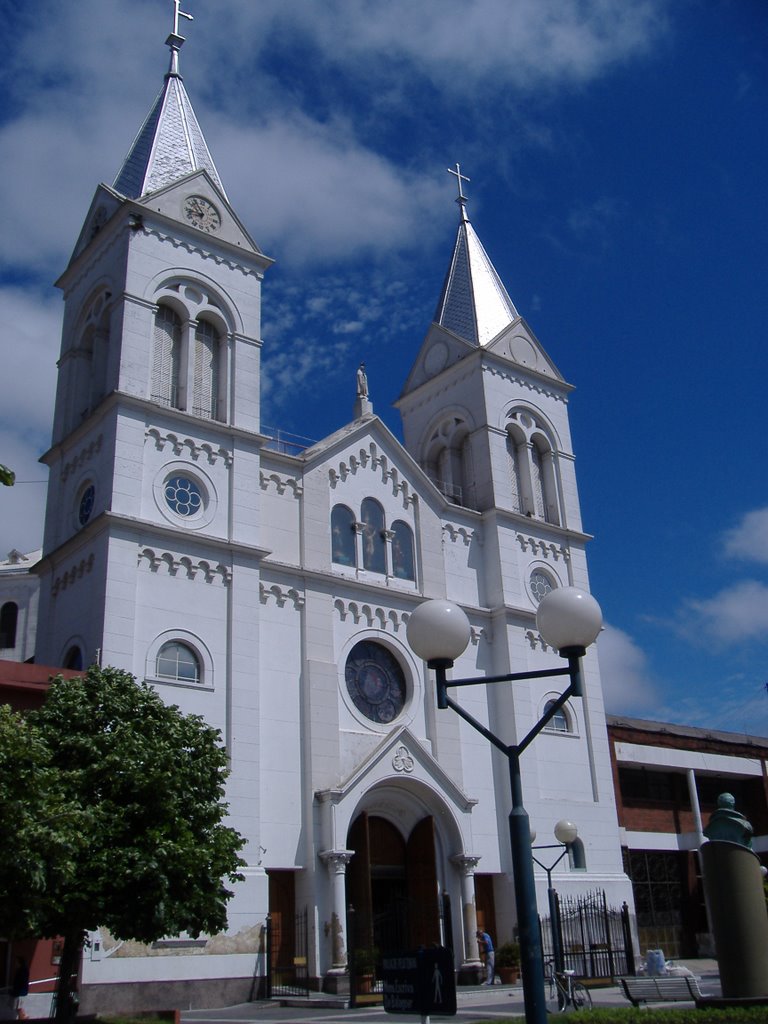
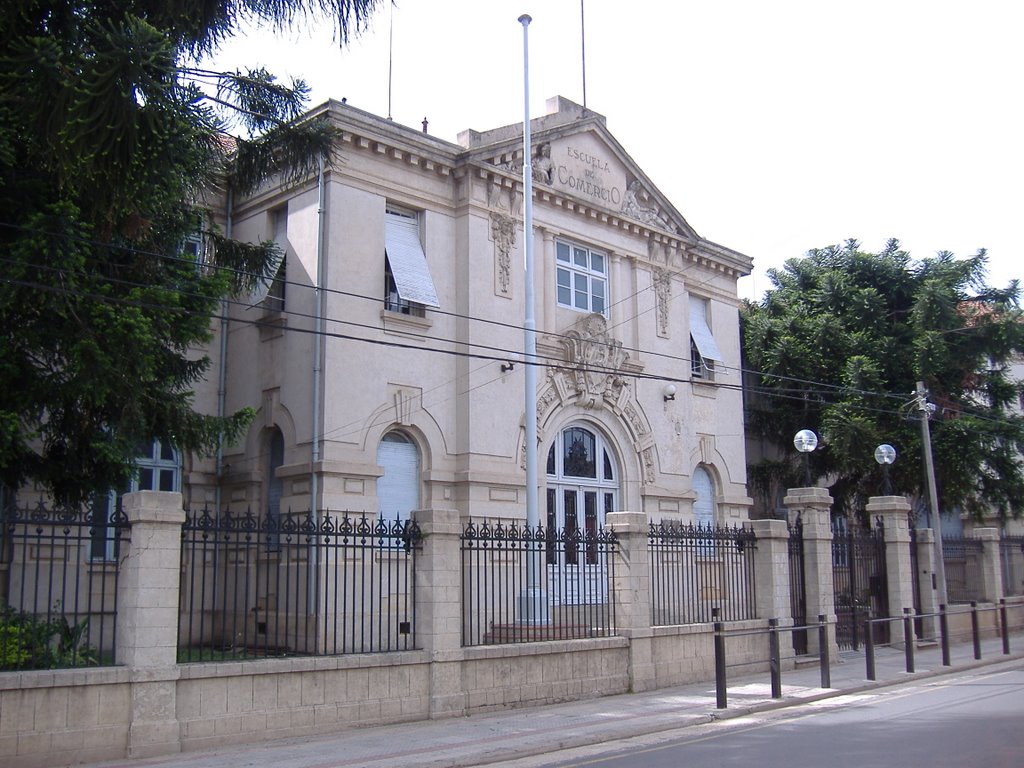
However, Concordia is not a poor, backward town as I'd pictured. It has a true fairly large downtown area, with narrow streets and avenues lined with many trees (not unlike Rosario). Naturally, there are no high-rise buildings. Old architecture (mostly 1900s) abounds, though it's not that well preserved or taken care of. The streets are well-paved and the sidewalks are clean. There are two main squares, Plaza Urquiza and Plaza 25 de Mayo, and a cathedral, not really impressive but all in all nice for a comparatively modern building. There's also the impressive Arruabarrena Palace in the corner of Entre Ríos and Ramírez -- I'll let you judge from the pictures, since I lack the vocabulary to describe that luxurious façade.

So I got off the bus at 8 AM, took a taxi, and 10 minutes later I was checking in at El Quijote, a hostel-type lodging in the outskirts. Problems with El Quijote include the presence of small children who scream and cry while you're trying to sleep, and the fact that the kitchenette (where people speak loudly and said children run around playing) is next to your room (if yours is room 11). OK, I didn't pay for it so I shouldn't complain.

I took to the streets, discovered the things above about the city, and walked my feet off around town until noon. By then the sky was looking rather menacing and my legs were failing me, so I sat down with a sandwich in a bench opposite the cathedral. Then I asked around, took a decrepit urban bus (with fileteados and all), and returned to El Quijote for a nap (punctuated by the aforementioned crying child). Come the afternoon, and as my roommates had not come yet, I walked back to the city and explored a bit more, with the help of a stick of orange icecream. When I got back everybody was there already, so we took baths, changed into our suits, and off we went to witness yet another farce of Catholic wedding at the Cathedral; the priest reminded the bride that her duty was to produce her share of Catholic offspring, the groom nervously agreed to do what was necessary for that, and off again we went to an establishment in the suburbs. Everything was OK there, with the (big) exception of the timing; for some reason, the main course was served only after long hours of dancing music. By the time, me and my table companions were in a truly fearsome mood, as is to be expected for young healthy men who've had nothing to eat by 2 AM. The food was good (if you don't like fancy stuff, which is fine by me) and the drinks were nice and plenty. Come the morning, I left my friends waiting for the van to pick them up and take them to Rosario, while I walked back to El Quijote, freezing my nose off in the cold. Collapsed in bed, woke up once at 10:30, then again at 11:30. We packed, got a ride to the bus station, and then off to Rosario in another semicama. I wasn't that sleepy then, so I read a chapter of Kalpa imperial (by Angélica Gorodischer) and took pictures of a couple of places... All in all I got 200 pictures in less than 36 hours, so I'd call it a good photo safari, if nothing else.

I need to catch up with the news, so you'll be having that again soon. My post about the hail storm was referenced by another blogger who was caught right there in the middle of it, and then by another one; Accuweather covered it, and many people took pictures of it.

17 November 2006

In a hurry

Did I say Coronda? I meant Concordia. I'm heading for Concordia, Entre Ríos, by the lovely Uruguay River. I've packed a few things including a suit, since this is for a wedding party, but I'll be arriving 12 hours before so I think I'll have time to check out the scenery. Not that Concordia has a lot of it, I'm told, but there must be something. In short, don't expect me blogging from there, or until Monday. (The van that was supposed to take me there failed me! I'm taking a bus that will take me across the completely homogeneous landscape of Entre Ríos, along a highly twisted route, stopping at each and every town, and taking 7 hours for a 5-hour trip. Sigh. And I can't sleep in buses...)