Showing posts with label media. Show all posts

27 May 2008

May 25 in Rosario and Cristina Kirchner: Complain, deny, repeat

I was speaking, yesterday, of the meeting called by the agricultural organizations in Rosario last Sunday, May 25, to protest the export taxes and the government's handling of agriculture and cattle farming (from now on "the meeting of the campo"). In passing I mentioned the media coverage.


It appears that hundreds of reporters and photojournalists came to Rosario, and the meeting was, of course, in the cover of every newspaper the next day. The coverage itself was varied. La Nación, predictably, gave a lot of space to old-fashioned "common man in the street" personal testimonies, and romanticized the whole thing as an epic march of the dignified rural middle class. Both La Nación and Clarín supplied a lot of video and audio, and gloated over the defeat of the government strategy. Página/12, also predictably, attacked the meeting with irony, noting how some people who protest against taxes came to Rosario flying their own airplanes or driving brand-new SUVs.

Página also did another thing, which to me was an echo of the Kirchnerist model — denial and repetition. The online edition devoted more than 50% of its content to reposting old op-ed pieces dating from the beginning of the government-vs.-campo crisis. Some were brilliant, valuable arguments for the export taxes; some were sectarian, sentimental, others cold and technical; but they were all old. Pertinent, maybe, but old. Repeated. Why republish them?

That curious fact immediately reminded me of the Kirchnerist government's insistence on certain issues to the exclusion of a reality that's biting them in the nose — the grown-up equivalent of a child closing her eyes, covering her ears and shouting "la la la I can't hear you". Kirchner (Cristina/Néstor) doesn't want to see reality. That's why Cristina had thousands of people brought to her speech in Salta, and for that audience she reveled on her husband's administration's socioeconomic achievements. This time she kept it short. She's been known to go at it for an hour. Néstor Kirchner himself never tired of congratulating himself about the economy on every single speech he gave. Repetition, noise, a mantra of figures of poverty, GDP, employment, exports, industrial production. Nonsense. Even the true parts.

Why nonsense? Argentina is doing badly on many respects. It's much, much better than six years ago, but it's not better than 15 years ago. There are problems. When the people insist that there are problems, the president can't tell them to shut up. She can't tell them to value what they've got and thank their stars they have such a good, progressive, popular government, and act offended when some dare complain about an issue. A government is not to the people what a a father is to his son — we're all adults here. The government additionally has the responsibility of keeping the high moral ground.

Of course, when a crypto-fascist movement like Peronism is in power, citizens are treated like children. Though Kirchnerism doesn't really have a cult of personality, the purposefully crafted mannerisms Cristina employs to resemble Evita Perón are rather obvious.

Now, a good father may occasionally display frustration or sadness when his children don't appreciate his efforts, but eventually he'll stop whining and do what must be done. Cristina Kirchner isn't even up to that role. She has complained about her children's lack of love for what she did for them, she has repeated ad nauseam that she's doing her best and wants to be everyone's good mother (if only us children would obey!), she's yelled at us a little, and after that, sensing no response, she has frozen. She doesn't know what to do next. She's surrounded by powerful, violent, resentful people, and she knows she has to take them into account. They put her where she is now, after all. One of them even sleeps with her (we presume) and presides over her political party. What to do? Cristina doesn't know.

14 May 2008

Crazy Argentina, take 1

Just a news scoop from today's online newspapers, since time doesn't permit anything else...

From Clarín, the new enemy of the people according to Kirchnerist doctrine: the government reports poverty in Argentina is down to 20.7%, while private estimates (where the price of the food basket used to calculate the poverty line is not grossly fudged) place it at close to 30%, and in the meantime, the census bureau INDEC suddenly announces that it won't take into account the measurements of inflation outside the Greater Buenos Aires area, where the fudging is effected. In fact, the Kirchnerist mayors of Greater Buenos Aires have been ordered to send inspectors to check prices in the field and report to Commerce Secretary Guillermo Moreno, in case these "deviations from the ideal" have to be, let's say, corrected. And while the anti-inflation brigades keep prices down in the cities, piquetero leader Luis D'Elía says he's taking his guys to the countryside to defend the government against the evil machinations of coup-inciting farmers on strike.

From Crítica Digital we also learn that members of three different gangs groups of piqueteros K attacked Luciano Miguens, head of the Sociedad Rural Argentina (i.e. the Argentine Rural Society, aka "the Oligarchy"), the police being suspiciously absent at the time, and the Jóvenes K (that is, the Kirchnerist Youth) protested at Clarín's kiosk at the Buenos Aires Book Fair.

From Página/12, recently remade as the government's official press organ, we hear nothing of all this. How many fingers am I holding up, Winston?

09 April 2008

Eye of the storm II: The papers

A few more things about the farmers' strike, or as Página/12 calls it, the agricultural businessmen's lockout. The strike, lockout, or whatever you call it, is now on hold while the leaders of the movement wait for their call to negotiate with the government.


Página/12 cover, March 26, 2008

La Nación cover, March 26, 2008

Covers of Página/12 and La Nación for March 26 (the day after Cristina's inflammatory first speech, the cacerolazos in upper-class Buenos Aires, and the disbanding of Plaza de Mayo demonstrators by Luis D'Elía's thugs).

Since the subject of Página/12's word choice came up, here's something I meant to say before. I was appalled by Página's coverage of the conflict. I'm well aware that Página is a leftist newspaper, and like all media, they select news and editorialize on them from that perspective. I'm a lefty myself, not a radical, but in general I'm in agreement with that perspective.

Sometimes Página's op-eds go over the top and I don't like that; I don't like how certain people in their staff see 1970s' politics, or class struggle, or whatever their pet subject, in every bit of current news. To balance that, I read La Nación, which is right-wing and anti-government, but also has a few really good writers, alongside some whose opinions make my stomach turn.

Well, my discovery these days was that Página/12 is obviously, visibly, on the pay of the national government. Página's coverage of the strike/lockout was so deliberately skewed, so unctuously pro-government, so grossly anti-strike, so monolithically defensive of Cristina, that I can't be convinced that ideology alone is responsible. I felt angry. The rest of the media coverage was sloppy, partial, sensationalist, sentimental..., as usual. Even La Nación didn't dig so much in the trash. Página's was a pro-government campaign, almost as subtle as Luis D'Elía screaming his hate for the rich.

The fact is, I'm a "salad bar"-type political pragmatist. I tend to distrust and discount the opinions of people who are in the extremes, but outside of those, I applaud anyone, from the left or the right, who comes up with a good idea, or something that looks like a good idea. I had a deep distrust of Néstor Kirchner when he ran for president. I changed my mind as he did some really cool things, like renewing the Supreme Court, facing up to the utility companies that wanted to triple their fees, maneuvering around the defaulted bond-holders who would see the country broke to get paid, and repealing the laws that prevented the torturers and murderers of the last dictatorship from being tried. Then he started channeling Juan Domingo Perón or something (that is, Perón minus the articulateness and good diction in speeches) and the worst elements in his government acquired power, and then he passed it all on to Cristina, who has been doing exactly the opposite of what should be done since Day 1.

All this time (getting back to the subject) I heard Néstor and Cristina criticizing the media for this and that. Néstor K once said the media should inform objectively instead of doing opposition politics (that is, kill the editorial section, kill political analysis — just repeat whatever the government officially communicates to the press), and more than once he pointed at specific journalists and specific papers. Cristina is even worse. For all her supposed communicational talents, she sounded remarkably stupid, to me at least, when she tried to make a sarcastic comment — "It seems as if the media were forbidden from printing good news." The Kirchners never understood journalism, maybe because in Santa Cruz the media were few and were controlled by their friends and cronies.

Up to the export tax crisis, Página/12 was (so it seemed to me) rather neutral, not in the sense that it didn't editorialize, but in the sense that it wasn't systematically putting out an apology of the government. La Nación, on the other hand (so it seemed to me) was always trying to poke holes in everything the government did. Granted, as of late Página would have real trouble finding something good to say about the government, and the ideological strain was showing; and La Nación was enjoying a free ride on the scandal rollercoaster, so it came out as more objective (negative spin wasn't necessary) and didn't look so clearly anti-government.

When the countryside rose, Página/12 suddenly shifted gears (or so it seemed to me...) and launched an all-out offensive against the critics of the Kirchner administration. Even the witty Rudy & Paz comics became bitter, unfunny attacks on the "oligarchy". You could count a half-dozen headlines each day, every one of them a long editorial piece, pointing out the many sins, past and present, of the participants in the protest — and not one objective criticism of the idiotic measure taken by the Ministry of Economy which had caused all the trouble in the first place.

It got me really mad. I've gone mad with La Nación over the coverage of certain episodes by specific writers, here and there, and I'm accustomed to see through its supposed objectivity into its rotten conservative heart. But I didn't expect this from Página: a whole paper, which used to cover a variety of topics seriously when appropriate, or with well-placed irony and sarcasm in other cases, turned overnight into a government propaganda machine. Not for a left-wing government, but for an administration that's fast turning us back to old-style fascism. I can barely read it anymore. In fact, since the campo crisis started, I almost don't read about it in the papers — I pick and choose only the shorter informative articles, and quickly skip over the editorials.

It's all bare ideology out there now. Dialogue, compromise and solutions seem to have been banished.

01 December 2007

Flickr Places

37 days
till vacation
Just thought I'd let you know, even though this is not one of those blogs. Flickr has just launched Flickr Places, a service that collects and displays pictures taken in specific locations (as long as they're geotagged, of course). I almost always geotag my pics, so you can see them, and those of many people I know, in Flickr Places Rosario. The system chooses some good photos, a couple of "featured photographers", and groups about Rosario. These things rotate every now and then. As I write this, one of the selected pictures is mine:

Espejo de agua

— coincidentally the one that I have as my desktop wallpaper. As a bonus, Flickr Places gives you a little map and the current temperature.

30 October 2007

Rule Cristina

To those who thought my post-election post was depressing, I have a few bits to justify my despair. This is from an interview with Joaquín Morales Solá, reprinted in La Nación — the first Cristina Fernández de Kirchner has given since she was elected, and in fact one of the very few interviews she's ever given to anyone.

  • Cristina's dreams: "I'd like us to be an exporting country like Germany." (Yes, Cristina, and I'd like to be a tall golden-haired Germanic god and drive a Mercedes. I think you got Botox into a place you shouldn't.)
  • About inflation: "There was an overreaction to the issue, to be expected during an election season." (The opposition bought up all the tomatoes in the country to make the price go up, I guess.)
  • The interviewer asks: "Were you disappointed at the vote of [people in the large] urban centers?". Cristina: "I think an urban center par excellence [= a prime example of an urban center] is Mendoza. It's a society with a very strong middle class. We won there by a very wide margin. There's also a middle class in Greater Tucumán, which we won by a lot, and in the first urban ring outside Buenos Aires City." (Ahem. Buenos Aires, Rosario, Córdoba? Filthy, stinking nests of neoliberal anti-Peronism!!!)
  • Interviewer: "What's your relation to the press going to be?" Cristina: "If [the press] goes back to being a means of communication and not of opposition, it's going to be perfect."
Cristina is going to keep Alberto Fernández, quite possibly the most aggressively ignorant and intolerant minister Argentina has ever had, as Chief of Cabinet cum presidential spokesman. One can only hope he'll have less to talk, if at least because Cristina (unlike her husband) can compose coherent sentences on the fly and so should be speaking by herself more often.

Most of the other ministers will remain the same, except for Infrastructure's Julio De Vido, who'll go away after the summer because Alberto Fernández has had a grudge against him for years. This is what A.F. said about Cristina's performance in Argentina's largest city.
  • Alberto Fernández: "I ask porteños to stop voting and thinking as if they were an island." (Yes, you people — you damn party poopers!)
I rest my case.

22 August 2007

Nacho Suriani

The journalist Ignacio Nacho Suriani died of a heart failure today. This is not going to make headlines anywhere but here, but I'm sure almost everybody in Rosario with the absolute minimum exposure to the news already knows Nacho is gone, much as it happened when Roberto Fontanarrosa passed away last month. (Each person walking into my office begins by anxiously asking, "Do you know already...?")

Suriani was 73 (he was turning 74 next Saturday) and, for decades, he'd been doing a daily radio show called Tempranísimo on Radio 2, from 6 to 9 AM. Many of us have, at one point or other in our lives, had breakfast before school, college or work listening to his raspy voice, to his feigned old-fashioned, "macho lady-killer"-type reflections on women (he called himself a feminist), to both the taunts and compliments he joyfully directed at his co-hostess Mirta Andrín, to the measured verbal attacks he used in conversations with politicians and the rest of the assorted scum of the city.

I can't say he was a good journalist (who's to say?), but he sure was something you couldn't miss. He was a part of the urban landscape, something we were accustomed to, even myself (I'm not a radio listener; I just want some voice to talk to me while I have breakfast), and his absense will be noted. Three hours in the morning without that familiar voice is too much.

In the media:

15 June 2007

National pride

Is it an inferiority complex? Is it a need to justify ourselves? Why do we Argentinians need to look for approval from abroad? Do we secretly consider ourselves less than the rest of the world? Good questions, I'd say, even if they're mine. They're not all mine — I've spoken to many people who wonder like this. The latest cause, for me at least: the fuss about the San Antonio Spurs winning its fourth NBA title.

I've never understood why people get passionate about sports. I must lack a gene or something. I can get passionate about a lot of things, I can even get some thrill from a good sports match, but drooling over teams' and individual athletes' performance is for me akin to the adoration of dogs for their masters. (You can tell I'm a cat person from that, too.) So back to San Antonio, why the fuss? Why, because it's an Argentine team!

The San Antonio Spurs have two Argentinians playing for them, Emanuel Ginóbili and Fabricio Oberto. Nice people, no doubt, and very good at what they do. They deserve praise for their athletic prowess. But they don't play in Argentina. They don't live in Argentina, or pay taxes in Argentina, or lend their talents to an Argentine team. They're expats. They've chosen to go for the best play, for the good money and for the fame abroad. They don't contribute at all with Argentina's wellbeing... Well, they do donate 1/1000 of their multimillion-dollar earnings to Argentine charities and foundations and things like that — but then so does Bill Gates, and he's like the devil to everyone. Do we need to throw a party when the Spurs win? Ginóbili and Oberto play well because they trained for it, not because they're Argentinians. Their glory isn't shared with us. What on Earth are cheering about?

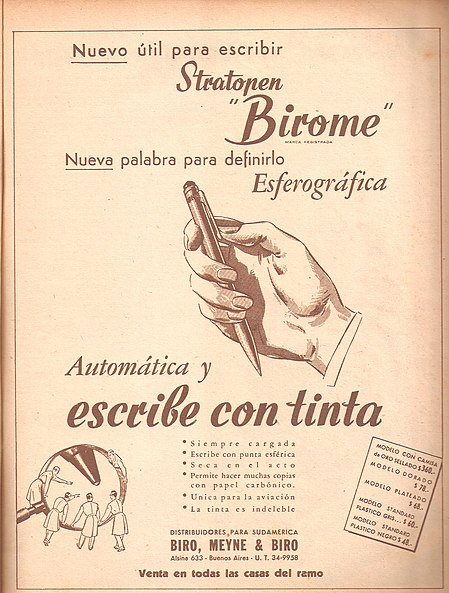
We're always unduly happy when one of our compatriots is at least partly responsible for doing something spectacular before the whole world. That should be a clear measure of our self-esteem. Ask any Argentinian what we've done for the world. "We invented the ballpoint pen" will be among the first answers, if it's not the first. Well, a Hungarian named László Bíró invented it; he moved to Argentina and (after many efforts caused by the Argentine bureaucracy) he got a patent and sold a lot of them — to the British Royal Air Force. What else? "We got some Nobel Prizes." The last one, in Medicine/Physiology, was César Milstein — who was Argentinian, unlike Bíró. He was a typical outstanding product of an Argentine university: studied hard, learned a lot, and after graduating, he moved to Cambridge, where he could research in peace and get paid properly, and stayed there until he died.

Examples abound. It's not that Argentina hasn't contributed to the world at all; it's world-famous glamorous people we lack, with the exception of Che Guevara (a bit stale by now) and possibly Diego Maradona (but overweight addicts are not glamorous anymore after Elvis). We make do with inventors and hard-working scholars, but we want more. We want to show the world we're fabulous, and we want to believe it ourselves. The latter is more difficult; we battle against reality every day, and our media are glad to help, cheering us up whenever something remotely connected to us gives us a chance to borrow a spark of glory. If you've heard the Argentine ego is so high you can commit suicide by jumping from the top of it, think twice.

28 May 2007

Soldiers at school

The Ministry of Defense hasn't been looking all that well lately, with what military-supervised airplanes being always late and/or missing each other by inches, and Minister Nilda Garré unsuccessfully trying to bend reality with her mind to negate the problem... but here's a good one for her. Also late, but you can't have everything. The MoD is changing the curricula of military education, and more: not only will there be humanistic subjects, but also new teachers and instructors coming from (civilian) universities. The pupils will learn about human rights, international law and Latin American integration, as well as a more current version of Argentine history.

If this doesn't make many a dead general spin in his grave (deservedly), I don't know what will. The notion of human rights has never been popular with any military force, ever, anywhere, but in Argentina just speaking aloud in favour of human rights has literally taken people to the bottom of the sea. Latin American integration, too, sounds positively misplaced in this context, where the usual teaching has been patriotism = nationalism = xenophobia... no matter how much our national heroes supported such an integration; today that sounds dangerously close to the "Bolivarian alternative" sponsored by Hugo Chávez or, if we're thinking of the religious side, the typical discourse of those irresponsible lefties of the Liberation Theology movement, which our most Catholic generals have always abhorred and our Holy (and Conservative) Father has so rightly condemned.

Above: The head of the future generation
of Argentine military instructors.


A few months ago, in one of those K-style spasmic bursts of decission-making that we've come to love and dread, there was a government idea of closing down all the military lyceums, which are colleges that give military instruction along with the common curricula and produce reserve officers. The plan was scrapped, and they came up with this, more sensible and less drastic measure, which will be implemented starting in August.

Thus far, the main report in La Nación, and a good one it was. Yet if you were starting to wonder whatever happened to the venerable paper's hypocritically ambiguous pro-dictatorship slant, a sub-article linked from this one will clear your doubts. It's called "A fractured ministry", it's written by María Elena Polack, and it comments on the internal conflicts of the MoD, where Minister Garré is (allegedly) trying to solve the structural problems of the military while the human rights department (the one in charge of the education curricula) is actually planning on "dismantling the very heart of the spirit of military education" by selecting instructors (committed to human rights, one guesses) that will teach the future officers, instead of letting the military themselves transmit the "values" they've been receiving from the previous generations.

Above: Benevolent dictator Rafael Videla speaks
about the moral value of sports (and how you
mustn't pay other teams to lose in the World Cup).

The rhetorical question near the end of the article cannot pass as innocuous to anyone with a mild grasp of Argentine political discourse: "Has anybody measured the impact of re-introducing in the military quarters the political debate that has caused so many pains for the country?". To my knowledge, the military have never debated whether violating the Constitution they swore to defend, start a programme of ideologically-motivated extermination of dissidence and state terrorism, and plunder the country's coffers for personal gain, was right or wrong or even justifiable; they've only made up excuses for not cleansing their own ranks in time. Moreover, this debate is not political, in the sense that it's not a matter of whose politics is popular or what politicians want — it's an ethical debate (what do we want our soldiers to believe in?) and it's a debate about justice (who deserves to be punished for the organized criminal group that called itself a government back in 1976?) and many other things.

The "forgive and forget" camp, the supporters of "reconciliation", have always been the same people: the right (not really the extreme right), the hierarchy of the Catholic Church, and the dictators and their accomplices; claiming that this uncomfortable debate is a pain for the country is like saying that speaking of cancer surgery is a pain for the patient... or, we can infer, that ignoring the cancer is actually better than removing it.

13 April 2007

Media is the plural of mediocre

I've often spoken, in passage, about the appalling quality of the media in Argentina, especially TV news coverage. The floods in Santa Fe were only one glaring example; ironically, you didn't get much from me regarding the media coverage because dealing with it would've been as frivolous as the way the topic itself was dealt with on TV.

All the big media are based in Buenos Aires, which can be considered a self-sufficient city-state for all practical purposes except for the generation of primary products, which anyway is usually invisible to the residents of large urban centers (porteño kids probably think eggs are manufactured right there in the back of the supermarket). As such, the media are myopic and extremely parochial. A multiple suicide bombing in Baghdad, an earthquake in Chile, a devastating flood in Córdoba, a minor traffic accident in Palermo and a stray cat in Villa Lugano are treated more or less equally (and the cat will most likely get more air time).

Not that our local Rosario media are better. Worse, they practically don't have a local content production; one of the channels is basically a branch of Telefé (Gran Hermano, cheesy and barely differentiable Colombian/Venezuelan/Mexican telenovelas). They both have news shows, which draw heavily from Buenos Aires channels (Canal 3 gets content from TN's Telenoche; Canal 5 gets Telefé's news). We also get TN, Crónica TV, Canal 9 and América TV by cable.

I usually have breakfast around 6 AM, watching the only moderately ridiculous early morning news on TN. There's just an anchor speaking at that time, who varies from day to day, though none of them seems to have received proper training regarding modulation and pronunciation. They repeat what they're told and do not editorialize. It gets worse after that, as a round table of wannabe journalists gathers to greet those just waking up for their 9-to-5 jobs with all sorts of supposedly funny skits, jokes and puns, before going on to the actual news.

I don't watch Telefé, ever, for my health. I mean, this is the source of such horrors as Susana Giménez, Marcelo Tinelli, Gran Hermano, and some of the worst soap operas ever to defile the small screen. I don't usually watch Canal 9 (too fascist for my taste) and I tend to skip América TV (makes you dumb just by watching). Crónica TV I do sometimes, as it's not only sensationalistically yellow but does also, surprisingly, have a much better coverage of national and international news than multi-awarded TN.

The news today (carried over from the weekend) is that the icebreaker ARA Almirante Irízar (the only icebreaker we, proud, if contested, rulers of a huge chunk of Antarctica, have in stock) is still on fire, its captain still on board waiting for his ship to be towed back to port, some 120 nautical miles south of Puerto Madryn; and that Diego Maradona was again hospitalized due to severe abdominal pains — he had hepatitis some time ago, was released, and now they suspect a pancreatitis. The smoke rising from the Irízar, the rescue of its crew and their safe arrival to port, with the ensuing family reunions, were played and replayed again and again until the whole episode turned into a foul, mushy mass of sentimentaloid infodramatic crap. Maradona, of whom one doctor said he's in trouble because "he thinks he's God", is being worshipped non-stop by followers and media alike, as if it wasn't his fault at all that he's an overweight drug-addicted alcoholic with an ego the size of La Bombonera and the Maracanã put together.

Some of us are tired of this... but hey, whatcha gonna do? Tomorrow another cat will climb a tree it can't get down from, or a cute baby elephant will be born somewhere, or an abandoned storehouse will burn in a suburbs of a suburb of Buenos Aires, and they'll grab the full attention of the cameras again. Let's hope.

26 March 2007

Kirchner vs. the judges

Prompted by an anonymous comment in my post about the 31st anniversary of the last coup d'état, I'll do my best to expound what I know and think about the manner in which things are developing.

During the 1980s, after the end of the military government, it was not at all clear that Argentina had left behind any possibility of falling under their boots. The last junta left the Casa Rosada with a promise that they wouldn't be called to answer for their crimes in the trials to be held soon after. The Trial of the Juntas in 1984 was a major achievement for the new democratic government and they should be considered a source of national pride; Argentina is the only country in the world to have tried and jailed its own dictators almost immediately after they left power, when there could still be a backlash from the military. Then came the embarrassment, the humiliating laws called Punto Final (Full Stop) and Obediencia Debida (Due Obedience), which forced the ongoing investigations to stop.

These laws (some call them the Pardon Laws, others the Impunity Laws) were a terrible blow to the human rights cause. President Alfonsín, who propelled them, was and is still criticized for them. My opinion is mixed. Alfonsín himself has stated that he regrets bowing to the pressure of the military, and acknowledges that the laws were passed basically at gunpoint, He could've been braver. And he could've been overthrown. The former dictators and their minions were invited to conservative TV programmes and defended their hideous acts in magazine interviews. It was still rather acceptable for anyone to ponder on the military as an alternative to a democratic government which was, admittedly, failing. Alfonsín resigned in July 1989; inflation reached a monthly 200% and in Rosario people were rioting and looting for food.

Carlos Menem campaigned on a populist discourse and promised a new beginning, and boy did he deliver. After two years, Domingo Cavallo took up the Ministry of Economy, and Menem started implementing the policies that would change Argentina into a "modern" country. National companies became more productive, exports grew, and everybody was possessed by a consumerist fever. Unemployment started going up, as local industries were brought down by unchecked, and often disloyal, foreign competition. The middle class got indebted in dollars. Economic stagnation and political conformism were celebrated as part of a magical "stability". Nobody wanted to hear about the horrors of the past. When in 1990 Menem pardoned the military leaders of the dictatorship, only a few organizations complained. There were no massive demonstrations protesting the pardon, and nobody in the judiciary coming out forcefully to question the legality of the measure or the ethics of the presidential faculty of pardon itself.

When the illusion of stability vanished in December 2001, something broke. Argentina saw itself as a divided country. The government against the people, the poor against the rich, the politicians and the police against the public. The government ended up led by a strong Peronist leader, Eduardo Duhalde, a man of questionable practices but with a pragmatic vision. Like Alfonsín, he might have done better, and he might have failed disastrously. As it was, he left Argentina in the hands of another president in a better condition that he had found it. He managed the social unrest with appeasement, losing a lot of political capital in the eyes of many who wanted old-style repression. The claim for respect of dissidence and human rights was out in the street.

It was Néstor Kirchner who finally brought a revolutionary change. From the very beginning, he set himself at the fore of the public fight for the punishment of the crimes of the dictatorship. Even his own party companions was surprised. Kirchner was impolite, messy, unashamedly populist, excessively candid regarding certain sacred cows, disrespectful of basic principles of realpolitik.

Note I said "public". Many people have been quietly working for human rights for a longer time, people with much more to lose and much less influence, often trying fruitlessly to be heard. And here we come to the crux of the matter. Many in the human rights camp were delighted to count on the support of no less than the president, who dragged along a lot of legislators and other influential figures who'd never done anything for human rights but had enough cunning to smell the political profit of embracing a popular cause. A few, especially in the far left of the human rights movement, reacted as if human rights were their exclusive property and paradoxically reacted by demanding more and more of the president. The president, of course, cannot and will not cleanse Congress, the judiciary, his own party, and the local institutions of the whole country of all people suspected of not being extra-pure left-wing nutjobs. (The practise of making continuous demands for more extreme ideologically-motivated measures is known as "correr por izquierda" or "correr por derecha", depending on the direction.)

A third camp, represented typically by mildly conformist right-wing people and by critics of Kirchner, like the one that writes that article in La Nación, pretends to be horrified about Kirchner's abuse of power. It's a scandal to hear the president complain that the judges are being slow — the executive asking more of the judiciary is against the constitutionally mandated republican separation of powers. Clarín quotes several other reactions — from the (unfortunately pathetic) opposition and from well-known conservative law experts. Of course, the real reason is they dislike Kirchner and disagree with his ideology.

Not that Kirchner doesn't have a lot of things to dislike. Half the time he's speaking, he should be shutting up. He doesn't tolerate dissent near him, and seems to thrive on adulation. Some of his closest allies should be in jail. Yet if it weren't for him, the investigation of the crimes of the dictatorship may still be paralyzed. One has to have priorities.

Under Kirchner the laws that protected the military from legal persecution were repealed, and the trials began again. Menem's pardons were struck down as well. The Supreme Court, with a majority of new justices appointed by the president, has stated that the heinous deeds of the military, the police forces and their collaborators during the dictatorship are crimes against humanity and do not, therefore, prescribe — that is, they will not be extinguished by the passing of time and can continue to be investigated indefinitely. It's true that the general social and political climate brought these amazing changes to the human rights landscape; but it's also true that much of it has to do with having a strong, vociferous, ill-mannered, meddling president in command. It shouldn't be like that.

The article in La Nación complains about Kirchner's criticism of certain judges that are, it seems, purposefully delaying the processes of investigation and trial of human rights abuses. Four of these judges are now facing the possibility of impeachment. They have well-known personal and ideological connections to members and defenders of the dictatorship. It's terrible to see the president being disrespectful of the Constitution, but I submit that the sight of judges protecting horrible criminals is disgusting and much more a violation of republican principles than a presidential speech. As I said to the anonymous poster that started me thinking on this, never let perfect stand in the way of very good.


By the way, dear Anonymous, if you want to contribute, use a name (any name, as long as it's always the same name) and do it on topic. I'm trying to do serious work and you're dumping Noticias here.


PS: More about Kirchner's speech and the reaction: La Nación, La Nación, Página/12, La Capital, La Capital.

26 November 2006

The first victim of the hail

A bit more about the aftermath of the hail. It appears that the blockades set up in the streets to demand "disaster relief" are now mostly gone, and the government's strategy of doing nothing (save keeping some policemen in the distance), which I criticized in a previous post of mine, was eventually correct. With the rain that's been falling since yesterday night and all through Sunday (it's 6:20 PM now), and since relief has been provided and the problems caused by the blocks have been addressed, they became pointless and unsustainable.


Some had suspected that there are political and pseudo-political movements out there trying to incite disorder; the mayor said it, and now the provincial police has obtained proof of at least one such attempts: several calls were made by two men last Friday to provincial and city government offices, to four schools, to radio stations and other places, warning that looting had started in parts of southern Rosario (rekindling the fears of 1989 and 2001). Fortunately, this disinformation campaign failed, mostly. If this had been 1989 (with hyperinflation and shortage of food in supermarkets) or 2001 (with peak unemployment, recession and a crippling shortage of cash), it might have worked. Mind you, the news about Argentina's spectacular economic recovery are all written from the advantageous POV of middle-class society and up; but the poor are not that many or that desperate today.

More disinformation was spread by the media (I'm not blaming them, as they're only as good as their worst sources) in the last few days. For example, there was the repeated denunciation that some recipients of relief were selling their new corrugated metal sheets -- which was true, but so far I've only read one proven account of this. There was also the radio announcement (multipled by word-of-mouth) that there had been hail in several small towns and cities around Rosario, the idea being that we were in for another catastrophe while the mess was still incompletely cleaned up; it was all false.

We had some, light hail yesterday afternoon (nothing like the other day), and then after dark there was a lot of rain that continued thorought the night. I had to brave it for four blocks as I went from a friend's house to the bus stop, hopping over puddles and over streets turned rivers, but it was nothing serious. We're going to have much rain this summer, I guess.