Showing posts with label exports. Show all posts

08 November 2007

Retentive government

Papa K is raising the export tariffs for grains again. I think export tariffs (not import — export) are a unique phenomenon in the world. Here we call them retenciones, which means retentions. The idea behind not calling them taxes is that the government is not just keeping money for itself, but retaining a part of the "excess profit" that the farmers make thanks to the internationally high prices of commodities and the locally high exchange rate. This "retention" theoretically keeps local prices in check and discourages producers from selling all of it abroad and leaving the local market unsupplied (is that a word?).

That's the theory at least. In truth, what happens is that the farmers, even with a 35% tariff deduced from their sales abroad, are getting filthy rich, while screaming all the time at the top of their lungs that they're desperately poor, and that the big bad government is snatching away the bread from their children's mouths. So desperately sinking into poverty they are, they've been increasing their crops and setting higher yield records every year since 2002. One of these days I think I'll wake up and see my garden turned into a soybean field.

Soybean field, Buenos Aires Province, Argentina
Soybean field in Buenos Aires Province. Original image by Alfonso.

One assumes that, if selling abroad with such high tariffs were no good, then the farmers would stop doing it. The local market is not big enough for soybean and sunflower, but then we do need other stuff. Like tomatoes and potatoes, for example. And beef and milk. You can't have cows munching on expensive high-yield pesticide-resistant transgenic soybean, can you? (Soybean is displacing other crops, as well as cattle farming. It's also displacing natural forests, and is being planted in soils that will quickly deteriorate. See "Argentina: la cuenta regresiva para el granero del mundo" [via Pehuen.org, in turn thanks to Chileno].)

The government is keeping a lot of money that it wouldn't be getting if it weren't for the high exchange rate. If the price of the dollar in pesos went down, the national state would be deprived of much-needed funds (in fact, the fiscal surplus would evaporate), and the farmers would also get a lot less in local currency. Since it's the government that props up the dollar artificially, the perverse scheme at work is transparent. The government and the farmers yell at each other while they support each other at the same time.

I don't have an ideological problem with export tariffs, like many of their critics. I think they're perfectly fine. They should be better implemented, probably, but they're not wrong per se. The rules are not the same here as in developed countries. In a country with a weak currency and a very small and underdeveloped local market, without export taxes, it makes financial sense to screw your own and sell abroad. And if the product has little to no added value, better yet, in the short term. Oh, farmers do have to invest a lot these days, but they're not advancing technology, they're just using top-notch off-the-shelf tech to seed, care for and harvest million of tons of plants. (Argentina builds and exports very fine agricultural machines, too. That's the way to go.) Retenciones make producers think twice and pay a little attention to the local market. In the case of soybean, which is not a local staple, tariffs should serve to stop farmers from turning the whole country into a massive monoculture field.)

The problem with the tariffs is that all that money ends up in the national state's coffers and doesn't go back to where it came from, or to where it's needed most. The crop-producing provinces get nothing for their efforts, and the other provinces (typically poorer) don't see the money of their rich cousins redistributed. Instead, the money funds the government's grandiose public works scheme (plus bribes for the minister in charge and overpriced items for his friends who win the bids) and its political machine.

Last Friday, the government sent AR$140 million (~US$44M) to the municipalities of Greater Buenos Aires, to be used at the discretion of their mayors. Legal (thanks to an obscenely dependent Congress who allowed the budget to be modified freely) but fishy. The GBA has been ruled by these robber barons and virtual mafia bosses since ever, and it was them who gave Cristina half the votes she got (many of which, for all we know, were bought and paid for). The GBA surely needs those funds, being the metropolitan area with the worst quality of life in the country, but it's obvious they're not being used to make life better for the residents. This week Papa K also sent AR$80 million to some provinces. You'll also remember, surely, how K cut ribbons of dozens of public works in various states of completion throughout the campaign.

This is the usual way of favouring your loyal servants before an election, and rewarding them after it. And it's possible only because the national government has a lot of money to spend, while the local governments have little. Santa Fe is among the provinces most harmed by this. Export tariffs are not redistributable by law like other national taxes, so our province, which produces and exports a lot of the country's grains and vegetable oil, is subject to the whims of the national government. Since Santa Fe is comparatively rich, however, it can (politically) afford to be fairly independent of those whims, and it's been punished for that. The new Socialist government, we hope, will protest more than the obedient Peronist one we've had for the last four years.

01 February 2007

Curious Argentine exports

Argentina is doing extremely well in the field of international trade since the end of the fixed peso-dollar exchange era (we might as well call it "Post-Convertibility Era", or PCE, as opposed to "Convertibility Era", or CE). This is due to several factors, first of all to the high exchange rate, with an extremely devalued peso that the monetary authority (the Central Bank) struggles to keep that way (as I explained in an earlier post). The second factor is the ever-increasing demand of commodities from the monstruous Chinese economy, whose GDP is growing at an annual rate of 10% (that means about 7 years to double its size).* China demands precisely one of the things we're best prepared to produce in large amounts: soybean. Other developing countries are doing well and buying our stuff, again, especially soybean (one quarter of our foreign trade by value is made up of that!), so that's the second reason.

The third reason is that Argentine producers and exporters have made an effort to upgrade their facilities and processes, to meet international regulations, and in general to increase their quality. Of course, they're doing it now because it pays to do so, unlike before. Also it's not like quality is less important than price — it's just that, without a good price, nobody will buy your products no matter how well made.

The above is not surprising. What I found interesting is that Argentina is in fact exporting other stuff. We all know about the wine, made possible by the special climate of Mendoza. The small cities in the fertile plains of southern-central Santa Fe (places like Armstrong and Las Parejas) have succeeded in finding a foreign market for agricultural machines. When someone lives in a sea of cereal crops, you tend to pay attention to how they take advantage of that. The north-eastern provinces (especially Misiones), of course, export yerba mate not only to places where Argentinians (and Uruguayans, Paraguayans and Brazilians) may abound, but to the Far East. I heard of a small shop in Buenos Aires Province that exports frozen medialunas (not croissants, but Argentine-style medialunas) to the United States.

The weirdest things are the ones not paid for in foreign currency, the ones that are not commodities or manufactured goods, but services and ideas. Argentina was the initiator of the Cascos Blancos ("White Helmets"), a humanitarian force that works with the UN. Our country has always exported and promoted initiatives about human rights, peacekeeping, and international conflict resolution... Ironically it seems we exported so much of it that we left none of that for ourselves, but that's another matter. Recently I learned that the government of Argentina is about to send economic experts to Ecuador, to help that poor country refinance its external debt, using the experience gained by Argentina. (I refer to Ecuador as "poor country" not condescendingly but with sympathetic pity — they went through problems similar to ours, and their president was a Carlos Menem clone who actually got his way.) The idea is that Ecuador can be empowered to reject part of its debt as usurary and unpayable, like we did. With a new president that is not a Harvard-trained puppet, things may be better for them.

And there's no need to tell about Argentina's copious exports of young brains, which end up often discovering or inventing really interesting stuff, turning into honoured scientists, and even getting Nobel Prizes. Ah well...


* In case you want to know how I calculated this: GDP growth accumulates over the growth of each year, much in the way your savings grow if you add the interest you get from them to the main account. This growth is expressed by the mathematical formula of compound interest: r = (1 + i)^n, where r is the number you have to multiply the initial amount by, i is the interest rate (expressed as e.g. 0.03 = 3%), and n is the number of periods you count (if the period is in years, the rate should be an annual rate, of course). We want to find n, the number of years for a given amount to grow by a certain factor. Since it's a power exponent, we have to use logarithms and apply one of its common properties:

log(r) = log((1 + i)^n)
log(r) = n * log(1 + i)
n = log(r) / log(1 + i)

Now, since we want to find out the time it takes for the amount to double (r = 2) under a rate of 10% (i = 0.1), we can get this immediately (using a calculator for the logarithms):

n = log(2) / log(1.1) = 7.27

21 December 2006

End-of-year potpourri

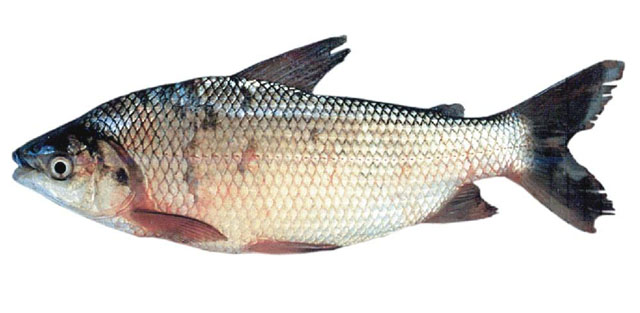
Lots of news today... The end-of-the-year balance is coming for the whole country. Things look better, certainly unimaginably better than they looked five years ago... Exports are up, GDP increase looks like it will be around 9% again, and Argentina is officially out of hell according to K. This exhuberant growth has its downside, like more energy consumption (let's not go there again) and too many fish being fished. With regards to the latter, the government has just banned exports of fish of the Paraná River starting on the first day of 2007 and for eight months. Maybe we can still save those sábalos after all.

Not so far from here, and notwithstanding the outrageous statements of the power company president, the folks at the commune of Armstrong have come up with the idea of generating hydroelectricity on the Carcarañá River. Armstrong is a small city (est. pop. 12,000) with a lot of industries, and the projected hydroplant would supply 40% of its power needs.

On the local front, the Municipality of Rosario got its 2007 budget approved, with a AR$17 million deficit... In the meantime, the legislators voted to study the issue of the urban bus fee, which is AR$0.95 now and could increase to AR$1.20 before March. That's really not good news, but with bus drivers that earn more than lawyers and doctors, there's no simple alternative. The national government subsidizes the fuel for urban buses, but due to a clever manipulation of the formula used to calculate the proportions, most of those subsidies go to Buenos Aires, where bus fees are already ridiculously low. Some nice folks with their faces covered and toting sticks came to the Deliberative Council, defaced it, broke windows and created their usual mess, while the police watched.


This is becoming serious; yesterday a group of protestors hijacked a bus, claiming they had an "agreement" not to pay their tickets, and then blocked the road for hours. Another group planted a picket on the railways and stopped a train (coming from Tucumán and Córdoba, headed for Buenos Aires) for 40 minutes, demanding to be given "Christmas packages".

The people commemorating the 5-year anniversary of the Argentinazo (see my previous post) in Rosario painted all over the local seat of the provincial government, mixing their demands for justice with accusations against former governor Carlos Reutemann (calling him "murderer" for his responsibility in the murder of social worker Pocho Lepratti by the police, and "flooder" for doing nothing to prevent the 2003 flood of Santa Fe). Reutemann was the political child, protégé and faithful disciple of Carlos Menem; a former F1 racecar driver, he was inexplicably popular with the masses but had the charisma and the innovative spirit of an Egyptian mummy; he deserves every epithet -- only there's no need to deface a building to note that.

Back to the protestors -- many of these are piqueteros in general, but that term has become rather vague. The original piqueteros were unemployed people desperately protesting their predicament; these "modern" ones are 95% chronically unemployed bums, welfare mothers with their children, people from the slums who have nothing better to do and are tempted by the possibility of getting free food, and a lot of violent resentful young men with nothing to lose encouraged by the government policy of letting them do whatever they want (short of physically attacking other people, and sometimes even that). They're led by a few talking heads armed with basic Marxist or anarchist rhetoric, and what I'd call low-level politicians -- they can't organize a party, but they can gather a gang under a banner.

The personal front
I'm trying to put this chaotic end of the year into perspective. Somehow news have been piling up on me lately. I'd vowed not to let interesting/important things pass without mentioning them here, so that's why I wrote this post. Maybe I'm forgetting other important things, only because I'm not sure how personal stuff would sit with my readers. What can I say? Apart from the bad taxi service, the blackouts, the politicians, the piqueteros, the heat, and the hail, this has been a good year overall, if anything because I'm learning to cope with the frustration produced by things like the aforementioned, and others which I prefer to stay silent about. That, and I had a superb icecream cone today, at the very hottest time of day. What more can I ask?

05 December 2006

Countryside on strike

The agricultural producers of Argentina are on strike since last Sunday, and boy, the spits of venom are flying all over us. Minister Miceli gave a press conference calling the strike "ideological and political", and dismissed the claims of the producers regarding their contribution to the wellbeing of the country. The government has been intervening in (some would say interfering with) the beef market and, to a lesser extent, with the wheat-flour-bread markets, in order to keep prices from rising; and of course there are the retenciones, or export taxes, in place since the economic crisis exploded.

The economic juggling act is as follows:

  1. Exporters take advantage of the high exchange rate (over 3 pesos/dollar) to sell at internationally competitive prices and gather a good profit. The ones most benefitted by this exchange rate are the agricultural producers.
  2. The Central Bank sucks up the incoming dollars, keeping the exchange rate artificially high (over 3 pesos/dollar), so as to maintain the competitiveness of the exporters.
  3. The government taxes exports, differently according to what exactly is being exported (some things are not taxed, others are taxed 20%). This is how it gets a sizable part of the total tax revenue.
  4. The very success of the above strategy places it in danger, since the more competitive exports are, the more dollars enter the local market, thus pushing down the exchange rate.
  5. Not only that, but the Central Bank has to emit pesos in order to buy dollars. This effectively devalues the peso and expands the monetary base, indirectly fueling inflation.
The problem arises from the fact that the producers would like to charge the same price internally than externally. Absent that possibility (since most Argentinians cannot afford dollar-priced goods while getting salaries in pesos), most producers prefer to export rather than selling within Argentina. The export tax is also an attempt to "convince" them, by making exporting less profitable, but in general, Argentine producers can still get almost 3 times more by leaving the internal market undersupplied and shipping their goods abroad.

The agricultural sector in Argentina, as a whole, has no reason to complain about profits. During the 1990s, when the exchange rate was fixed at 1:1, many invested in imported machines and increased their productivity, but then they went broke as their exports were uncompetitive. Now they have a government that keeps the exchange rate high for them, making it prohibitively expensive for most of us to get certain imported goods, but they still complain.

One of the points of contention is the government doesn't have a plan for the agricultural sector and doesn't help the smaller producers, who are being bought up by their larger fellows. Indeed, the soybean boom has created a depressing landscape in which a few hundred landowners with huge plantations employ sophisticated machinery and very few people to plant any available patch of dirt over millions of hectares with a transgenic monoculture, then to harvest it and sell it to China (mostly), while producers of less-favoured crops (including many regional specialties in the poorer parts of the country) are struggling to keep up, and falling back.

For some reason, the conservative wealthy elite of the countryside have managed to present this strike as a just cause, as the fight of the economic saviours of the country for a free, undistorted market. The truth, of course, is that if they had their way, the national budget would run a huge deficit and we'd be having milk, bread and beef at three times the current price -- those of us who could afford them, and even then, only as much as the producers did not manage to sell abroad (the EU, for example, buys quality Argentine beef at a very good price, but only a small fixed quota; and both the EU and the US burden their imports with tariffs and regulations to protect their own producers). The controversial Secretary of Internal Commerce, Guillermo Moreno (the price control czar, so to speak, of the Argentine government) put it bluntly: "We can't have food at international prices."

The last cause of anger for the countryside folks was the announced decission of the government to employ force should the roads be blocked by the strikers to prevent the traffic of grain and cattle from their sources to the markets (a threat the strikers have already made -- and they already blocked the Rosario-Buenos Aires Highway for a while). The opposition pounced on it, calling it a double standard (which it is), since the government refuses to clear the road blocks set up by the piqueteros in Buenos Aires and by the pulp mill protestors on the roads before the international bridges linking Argentina and Uruguay, which are arguably causing as much trouble, though of a different kind.

This certainly looks like it will be a rough year's end.