05 February 2008

We interrupt this story...

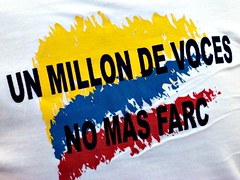
Un millón de voces contra las FARC - Rosario, Argentina ... to bring you the latest news. We'll return to the chronicle of my vacations soon, but in the meantime, a march against the Revolutionary Armed Forces of Colombia (FARC), its largest guerrilla group, took place in Rosario yesterday, February 4. Your host was there, doing some photojournalism at the request of Cristián, a fellow photographer and one of the organizers. I was given a Colombian flag ribbon and balloons of the same colours (yellow, blue, and red).

The FARC are the de facto rulers of a significant part of Colombian territory, and they've been responsible for thousands of kidnappings and many political assassinations in the last ten years. They're considered terrorists by most of the civilized world, as well as by the United States, though not by Brazil or Venezuela. They're known to fund their activities through illegal drugs and weapons dealing.

The march was one of many organized by grassroots groups in Colombia and throughout the world. In Rosario, it was attended by a small but determined group of Colombian immigrants, their families and friends, and other sympathizers of the cause. It went from Plaza Pringles to Plaza 25 de Mayo along Córdoba St., and finished on the courtyard of the Flag Memorial.
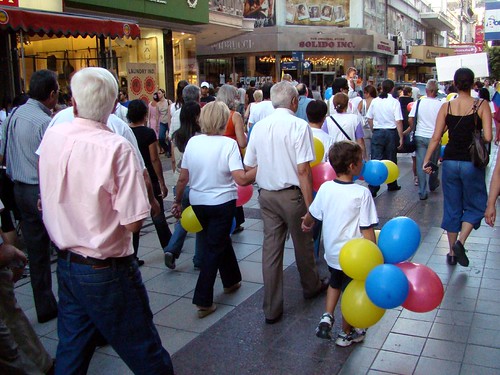
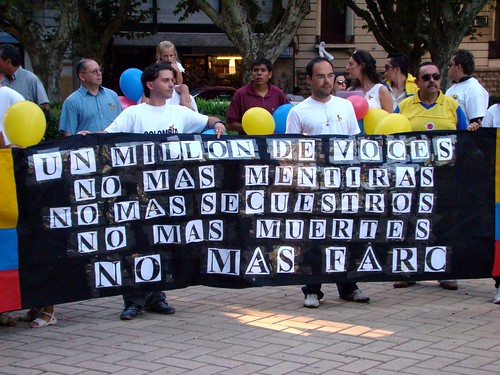
Un millón de voces contra las FARC - Rosario, Argentina


Un millón de voces contra las FARC - Rosario, Argentina

The march was completely peaceful, even when faced with a group of vociferous demonstrators who cheered for "Fidel [Castro], el Che [Guevara], [Hugo] Chávez and Evo [Morales]" and accused U.S. puppet Colombian president Álvaro Uribe of being a "fascist". Uribe tolerates paramilitary groups that are terrorists as much as the FARC, and adheres to the ridiculous "War on Drugs" and "War on Terror" conceptions of the U.S. government and G. W. Bush. For any sensible person who doesn't condone terrorism, of course, this doesn't mean that the FARC are OK just because they oppose Uribe's government and (somehow) Bush's foreign policy — sometimes the enemy of your enemy is not your friend, and sympathy with guerrillas who kidnap, torture and hold people in inhumane conditions for years in the jungle cannot be tolerated. (I'm explaining this simple fact because there are people who seem unable to understand it.)
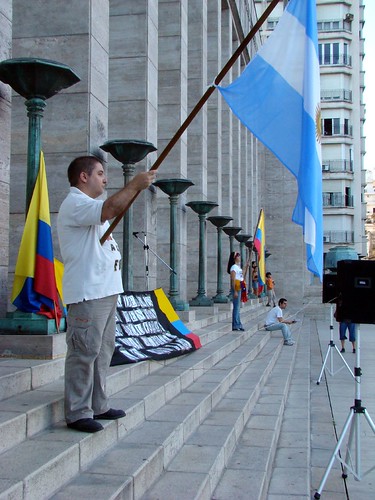
Un millón de voces contra las FARC - Rosario, Argentina

I took a lot of pictures and a few videos. My girlfriend Marisa took a lot of pictures of her own as well, as did Cristián. * At the end the flags of Argentina and Colombia were flown, and their national anthems were sung. There was a speech and a prayer, and then the demonstrators gave people the rest of the pamphlets they'd brought to inform the public about the march. Marisa and I gave away our balloons to happy children, and went to see the sun go down beside the river.

*Links to my videos (Google Video): Video 1 Video 2 Video 3 Video 4. Marisa's photos: Contra las FARC.Cristián's photos: No más FARC.

04 February 2008

Vacations: Our days in Junín de los Andes

The trip from Neuquén to Junín de los Andes (which you saw in pictures in my last post) took about 6 hours. First we went west, into the arid central plain of the province, where pumpjacks stand solitary here and there, bobbing in slow motion. Then southwest, towards the Andes and the Lake District.

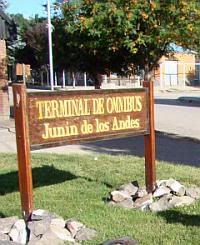
Bus terminal, Junín de los AndesWe arrived around 2 PM into a little bus terminal with a little wooden information booth beside the platforms. There we asked about La Casa de Aldo y Marita ("Aldo & Marita's House"), our chosen place of stay, and were promptly directed there. There was no need of a taxi, because Marita's is only 6 blocks away, one block from the river.
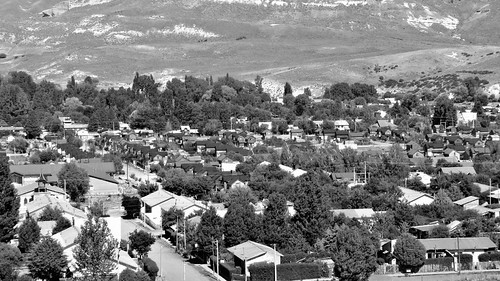
Junín de los Andes lies mostly between National Route 40 and the Chimehuin River, which forms its eastern border. To the west is the Lanín National Park; northwest you have Lake Huechulafquen and, north of it, the volcano that gives the park its name, Lanín, and the Mamuil Malal Pass to Chile.

The city itself is small, a town of about 10,000 residents with a few blocks of well-kept urban features and some commercial activity around a nice main square, plus quiet neighbourhoods of single-story houses and streets that gradually turn to gravel and dirt roads.

Junín de los Andes - Panorámica desde el cerro

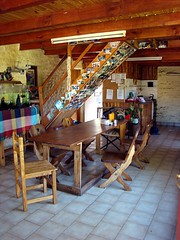
La Casa de Aldo y Marita (by pablodf)Our lodging was a residencial, that is, a kind of hostel that is fashioned out of someone's home. Residenciales tend to be more informal, cheaper, and obviously look more like houses than like hotels.

Aldo and Marita both run the place, but Marita is clearly the one in charge of the house and its temporary residents, while Aldo organizes fly fishing trips on the river and other aquatic entertainments for tourists, not necessarily the ones in the house. Marita also makes smoked trout and venison, which sell for steep prices in small amounts.

The place, as you'll see from the pictures, can only be described as "cozy" and "warm". You have all the things you can expect from a hostel (kitchen, sink, fridge, some supplies for common use, a common table), and one I hadn't seen before: an asador with parrilla, that is, a special brick oven and a grill to prepare and cook asado, inside the main room. On the other hand, Marita doesn't give you breakfast, but that's not that big a problem. The trouble with Marita's House is the wooden stairs and the upper floor in general. The whole house seems to bend and bow and it creaks loudly as you go upstairs to sleep, and once you're in your bed you can clearly hear everything in the common room. So you'd better be really tired when you go to sleep, or you won't be able to.

We stayed five nights, almost six days in Junín de los Andes, so this is only one of several posts, but I'll tell you from the start that I knew the best part of the trip was about to start as soon as I came into Marita's. People will tell you that Junín simply has too little of everything, but if you go there to rest, you'll find one of the most suitable spots for it; and if you're looking for simple adventure, you'll find it as well.

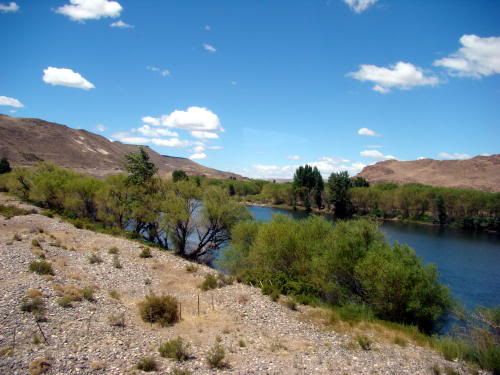
Chimehuin River, from the bus

In practical terms, this whole area and especially Junín de los Andes is suited for budget travelers and backpackers and all others who, like me, don't care for pre-packaged tours. You can find accomodation in dozens of places. Buses come and go, taking you to places where you can experience the majesty of nature firsthand, and back to "civilization", cheaply, safely and quickly. Fellow travelers will engage you in conversation and give you all the best tips and hints. You can choose to walk around, wet your feet in the crystal-clear lakes and quick rivers, climb the hills, or just lie down in the grass. Nature's realm has only recently been invaded by humanity here. True, there are signs and roads, and trash where there shouldn't be, and every now and then a car will come by along the silent road, but that's about it.

Most important for us big-city urban dwellers, who have been increasingly forced to paranoia and mistrust of our fellow citizens, is that this place is one where you can stop looking over your shoulder all the time. You can be sent into a tourist trap by an agency, and you can be scammed, but you can also stay away from that and explore by yourself.

On our first day in Junín de los Andes we just tried to get our bearings — finding out where the center, main square, cybercafés, supermarkets, etc. were. As the sun came down a bit, we hit the square and just lied there with our mate (and my camera). The next day promised to be exciting, our first trip into the real Lake District.

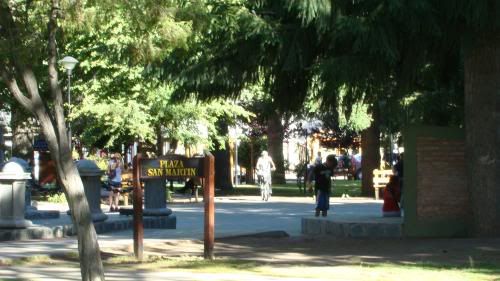
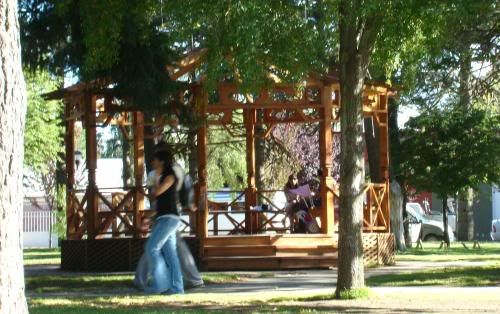
Plaza San Martín, Junín de los Andes' main square

Plaza San Martín, Junín de los Andes' main square

02 February 2008

Vacations: Neuquén: Swimming near the dinosaurs

The day after we arrived in Neuquén, we took a little Cono Sur bus to Villa El Chocón, a town beside the Ezequiel Ramos Mexía reservoir, best known as simply El Chocón, which is the name of the dam rather than the lake. El Chocón is a dam on the Limay River, with a 1,200 MW hydroelectric power plant, the largest in Patagonia.

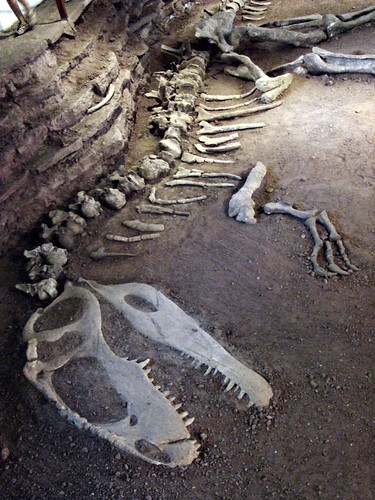
We had two reasons to go there: one, Villa El Chocón has a paleontogical museum, with a small sample of fossils, the star being a reconstruction of Giganotosaurus carolinii, found in Neuquén and advertised as "the largest terrestrial carnivore in the history of Earth", though the more recently found Spinosaurus now seems to bear that title.

Giganotosaurus carolinii

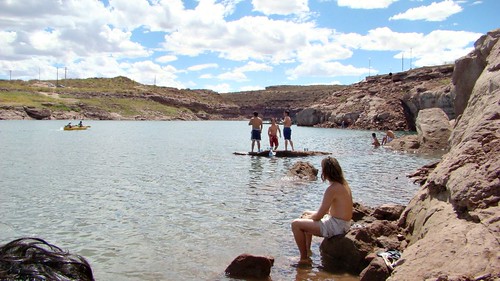
The second reason was the reservoir itself. The lake is an impressive sight, so much emerald water in an otherwise arid landscape, and man-made on top of that. We had to walk a couple of kilometers along the shore, and we came to the "beach resort", which is just an expression because there was no beach, properly speaking, on our side; you just had to climb down the rocks, three or four meters, until you got near the water, and pick a spot where you could leave your stuff.

Neuquén - El Chocón - Bañándose

It was now really hot, at 3 PM in the sun, surrounded by all that rock and sand, so after a short while we all got into the water, which was (no kidding) just above freezing point — remember these are the waters of a river that flows from thawing ice up in the Andes.

I'm no good at swimming and I feared a could get cramps from the cold, but I took the plunge and then followed the coast, stopping from time to time to test the rocks at the bottom and enjoy the cool. When I looked back, my two friends were waving at me from the other side of our branch of the lake, maybe 100 meters away. Being more-or-less in shape, they swam back quickly, though they complained that the cold water made their ears hurt.

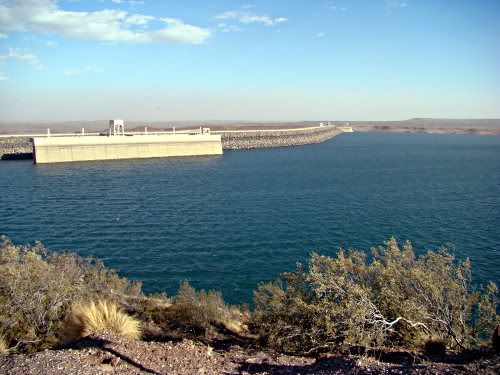
We climbed up to the road after a while, and sat on a bar with a couple of beers. We had plenty time before the last bus came, so we walked along the shore of the reservoir until we could see the dam.

El Chocón dam

Then we came back and sat on the bus stop. We had bought our return tickets in advance, but there were many other people there who hadn't, so when the bus came, we got in and took our seats first, and the driver waited until the bus was full, and left.

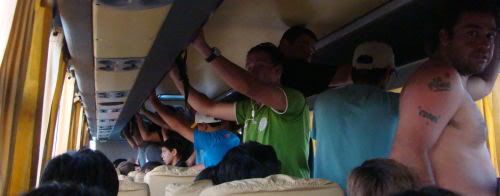
The trip was hellish. The bus was packed, it was hot (around 30 degrees I guess), there was no air conditioning, and the windows were jammed. And this was no short trip; it was 82 km and took an hour and a half on a road that was, mercifully, in good condition.

On the bus from El Chocón to Neuquén

That night we got our bags ready, and got prepared to leave for Junín de los Andes, our next stop, early in the morning.

01 February 2008

Vacations: Into Neuquén

Although in my last post I said "this was our last day in Malargüe", I should've said "our last whole day". We had to go from there to Neuquén, but what should be the most direct path was unavailable — National Route 40, which goes south across the desert, has been in the same sorry state since ever, and you can't use unless you have a special vehicle. So instead of going straight south into Neuquén Province and reach Chos Malal, you have to go north-northeast to San Rafael, and then east and back south along the border of Río Negro, get to Cipolletti, cross the river and then you're in Neuquén City. That's an almost semi-circular route that takes about eight hours for a trip that should take at most five.

So, in order to avoid paying for an extra night and/or arriving at ridiculous times, we stayed in Malargüe half of the next day, then took the 3-hour bus ride to San Rafael, rested a bit there (outside that creepy bus station!), had dinner, and then at about 11 PM boarded the bus to Neuquén. The trip was unenventful. I slept through the night, and woke up at dawn as we arrived in Cinco Saltos, less than an hour before our destination.

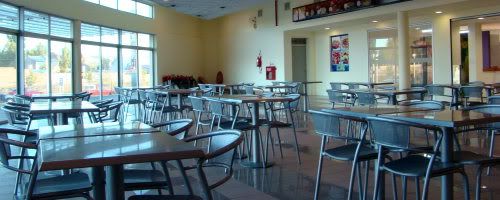
Neuquén's bus terminal station is almost brand-new, and it looks more like an airport, with lettered embark gates and all. Everything seems to be neatly organized, if only a little sterile.

Bar at Neuquén City's bus terminal station

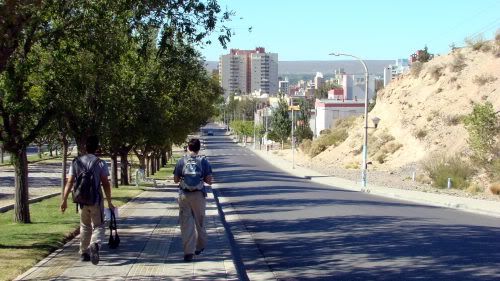
Neuquén itself seems to be a fairly modern city. The downtown area (where I stayed at all times) is within the limits marked by National Route 22 and the river. There are a couple of wide avenues and a lot of trees lining the streets, but no large parks (that I know of). Constant irrigation of grass in public spaces through sprinklers is conspicuous; this is still, after all, semi-arid Patagonia, and only the fact that it's at the junction of two large rivers spares it from being a bone-dry plain.

Visitors looking for historical buildings and sites will also be rather disappointed; even to the untrained eye Neuquén shows a complete lack of old architectural styles. The city looks neat, like its bus station, and much unlike Rosario or Buenos Aires with their layers and layers of new and old dirt and cracks, with their half-visible cycles of destruction and reconstruction.

Main avenue of Neuquén, facing the downtown

Neuquén was a small frontier town when the big cities of central Argentina were already metropolises. It was at the border of civilization, the equivalent of the American Far West, at the beginning of the 20th century, a couple of decades after the "Conquest of the Desert" (i.e. the government-sponsored genocide of the Patagonian natives and the subsequent occupation of their lands, in several waves), and continued to be a small city until oil was discovered in the area in the 1960s.

Well, we found our little hotel quite easily and checked in. It wasn't a pleasant experience. The owner of the hotel was a Polish immigrant who must have seen World War I with her own eyes, a bit hard of hearing to say the least, extremely methodical, rather reserved, and mindful of waste to the point of pasting newspaper articles and warning signs about water and energy conservation. She charged quite a lot for a rather basic service, though in her defence I must say all of Neuquén City is terribly expensive. No kitchen, no space for laundry, no breakfast, and no showers unless you paid an extra fee, and this was more expensive than the (infinitely better) hostel I found in San Martín de los Andes.

Neuquén City seems not to have understood its own touristic potential for budget travelers looking for a conveniently urban base for exploration. If it weren't for the outrageous prices, I would've stayed 4 or 5 days, and explored the whole Alto Valle area of Río Negro and the interior of Neuquén (such as the oil towns of Plaza Huincul/Cutral-Có and Zapala). As it was, we decided to cut it to only 2 nights.

On the first day we decided to do some reconnaisance. We walked around town, I took pictures, we got some information from the tourism office, and we came to the conclusion that trying to move around without a car and without paying ridiculous sums of money to an agency was pointless. This was just not a touristic part of the province, period.

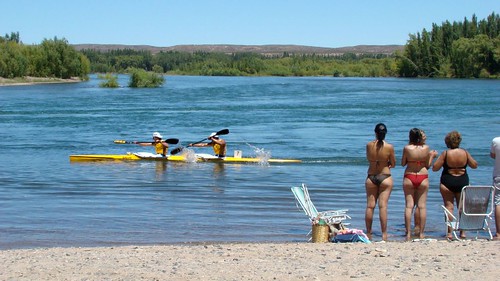
So in the afternoon we followed the tourism office's advice and visited the beach. Neuquén has three public beach resorts, all easily accessible on foot, about 2 km from Route 22. We chose one and settled on the sand. The day was rather hot, so we bathed in the river, and then came back to dry in the sun. By pure luck we caught a kayak regatta in progress (nice colourful pictures for moi).

Neuquén - Regata de kayaks

By this time, incidentally, we'd gotten accustomed to using sunblock all the time we were outdoors. I'd taken the precaution of getting some protective tan before leaving Rosario, but still the Patagonian sun was terrible, and soon we were all quite red, sunblock notwithstanding. I'm naturally dark, so I didn't get burned, but I came back almost chocolate-brown and peeling in a couple of spots.

31 January 2008

Vacations: Malargüe revisited: Last day

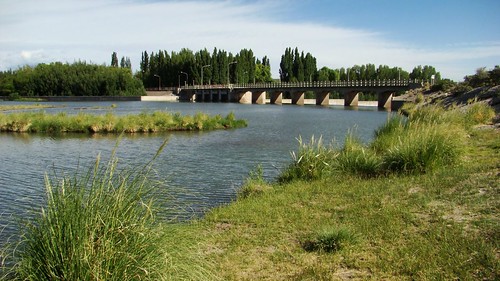
On our last day in Malargüe we repeated last year's trek to the dam on the nearby Malargüe River, 8 km from the hostel, only we set off in the morning, as early as we could manage to get up, after a delicious breakfast of home-made bread and jam. We took a more direct route, so we arrived earlier, but then we spent a lot of time leisurely lying on the grass and sipping mate.

Paz junto al dique

On our way back to the hostel (in fact, right before the entrance gate), we found an overflowing irrigation ditch and had to walk on the little wall that formed the edge of the bridge crossing the ditch. By lack of attention or sheer bad luck, I stepped on the wrong spot and found my right leg sinking into the cold water of the ditch along with half of my body. The other leg must have slipped somehow, though not before my left knee hit the concrete edge. I cried out for help, and my two friends promptly lifted me up. Though I was soaked from the waist down, the water was clear and my backpack got only slightly wet in the bottom. My wallet was miraculously spared, as was the bag with my camera in it. But my knee hurt so much I couldn't stand or walk.

After the initial pain subsided, I managed to stand on my feet, supported on both sides by my pals, and step by step get into the hostel. Once in my room, I changed my clothes and surveyed the damage. I got a few bleeding scrapes and bruises, nothing serious. But the knee was hurting badly, and I was devastated — I thought I'd broken something and this was the end of my vacations.

In the end, I took a Diclofenac pill from one my friends, and plopped into bed for a nap. I felt much relieved (and less desperate) when I woke up.

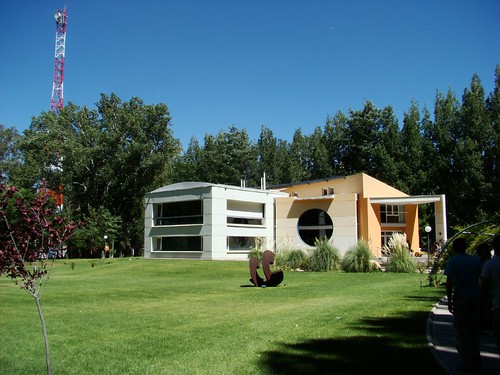
In the late afternoon we took a cab to the city in order to visit the seat of the Pierre Auger Observatory, which is the largest cosmic ray observatory in the world (about 1,500 high-energy particle detectors spread over 3,000 km² in the southern Mendoza desert). We heard a lecture explaining their work and their latest findings.

Malargüe - Observatorio Pierre Auger

(We tried to get into that lecture when we went to Malargüe in 2007, but the facilities had been overwhelmed by a troop of about 20 nuns.) After the observatory, we walked around town looking for places to restock our cooking supplies. We got noodles, rice, oil, some non-perishable vegetables, and a few other things we needed. My knee bothered me all this time, but I could follow, if only at a slow pace.

We had bus tickets for San Rafael, and from there to Neuquén, booked in advance. The next day we left Malargüe.

30 January 2008

Vacations: Malargüe revisited: Valle Hermoso

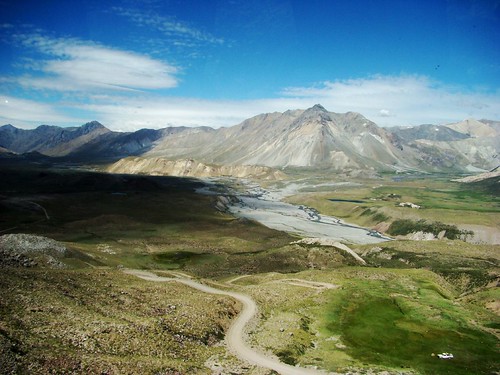
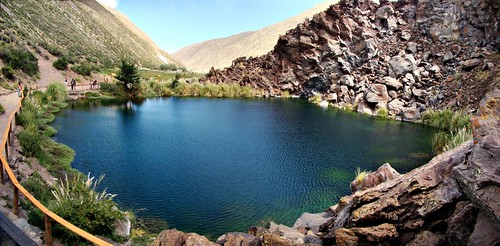
On our second day in Malargüe, we went to Valle Hermoso. This is really a package tour of several locations, with superb-looking landscapes and plenty of opportunities for photography, but not much else. First the van starts climbing and climbing up a dangerously winding dirt road, and (a couple of hours later) you get to see colourful mountains...

Malargüe - Bajando a Laguna Escondida

... and you get to the top of the tour, at about 3,100 m above sea level. You get off to stretch your legs and take pictures, and then you go down for a while and you're taken to the posh ski resort of Las Leñas, where celebrities are said to walk among normal folk without causing so much as a sideways glance.

Las Leñas, though superficially just a bunch of ugly expensive hotels and gift shops parasiting on one of the best places for skiing on Earth, actually owns half of the beautiful landscape around you, including places that no country but a true banana republic like Argentina would ever privatize. Las Leñas is in turn owned by a multinational group rumoured to be led by the president of Malaysia, whoever that is. I wouldn't be surprised to know it's the property of the Reverend Moon or of some other shady religious figure, like G. W. Bush.

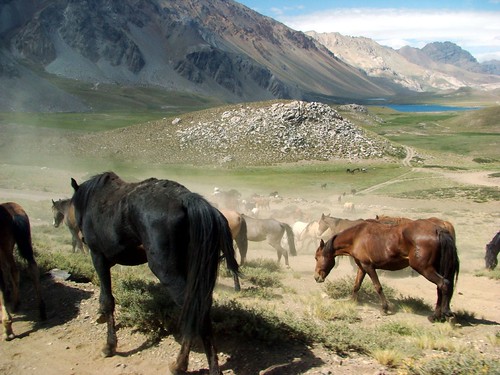
After succesfully making use of Las Leñas for what it was worth (toilets), we took off, climbed again out of the valley, and after a while we started going down again, this time toward our main destination, Laguna Escondida (Hidden Lagoon), a small lake surrounded by a truly dreamy sight (owned by Las Leñas). There were horses being herded, cows grazing on the bottom of the valley, and birds quietly gliding in the wind. It was a bit cold, in fact my first encounter with real cold during the trip, for which I wasn't prepared.

Malargüe - Arreo de caballos

We spent a while beside the lake, watching the campers on the other side (owned by Las Leñas), and then we took off again, now towards Laguna de la Niña Encantada (Haunted Girl's Lagoon), which is more like a big pond of emerald waters. It's protected, so you have to pay a small fee to see it, and you can't even touch the water, but the trip is worth it.

Malargüe - Laguna de la Niña Encantada - Panorama

After a lot of clouds and wind coming and going all day, the weather got really wrong, and it started raining soft, heavy cold drops. It was the end of the tour anyway, so we packed our stuff and left for the hostel.

29 January 2008

Vacations: Malargüe revisited: La Payunia

Since I visited Malargüe last year, I won't describe it all over again. I can't help recommending the place, again, to anybody who wants to sit back and rest and enjoy a very fair climate in the summer, or simply likes the dry Patagonian landscape and doesn't mind long walks. That's your basic Malargüe package if you don't want to spend lots of money.

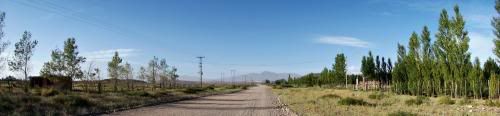
Dirt road in Malargüe

As I explained in my previous post, we lost most of the first day we'd planned to spend in Malargüe because of a delay. We arrived in time to check in to the Hostel Internacional (the same as last year, in the countryside a mile from town), unpack our bags into a room, and cook some rice with vegetables we'd bought in San Rafael for dinner.

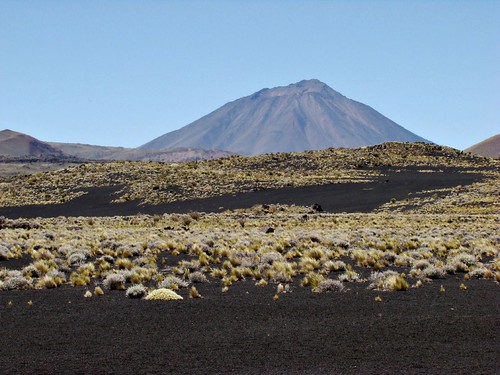
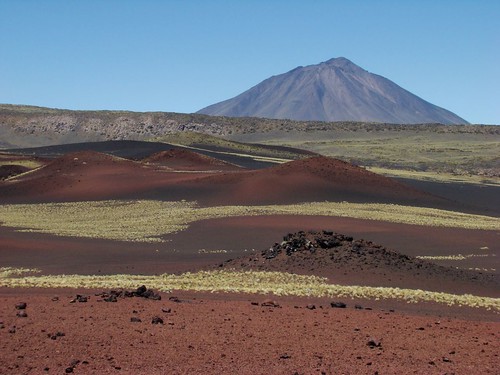
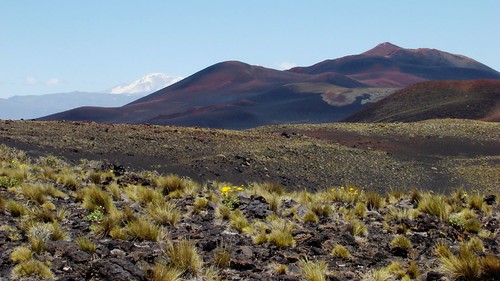
For the following day (Tuesday, January 8) we booked a trip to La Payunia, a nature reserve that consists of a huge volcanic plain in the middle of the desert, dotted with volcanoes of all the types known on Earth, placed together for our enjoyment by the mysterious forces of geology.

Malargüe - La Payunia - Colores

Malargüe - La Payunia - Vista general

Malargüe - La Payunia - Volcán Payún Liso


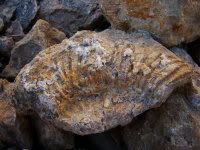
Fossil ammoniteThis area was formerly under the sea. The waters covered all of what today is northern Patagonia, which is why you can found ammonite fossils and others in abundance just by looking around your feet in certain places beside the road. When the Andes rose they lifted up the whole area. At present this is over 1,200 meters above sea level (I think La Payunia is even higher). The volcanoes came later. The Payún Liso (the one with the prototypical conical shape in the pictures) is about 3,600 m high.

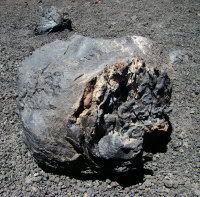
Volcanic bombThe soil, as you can see, has several different colours. They correspond to different compositions of lava and ejecta from the volcanoes. None of them is truly inactive, but I gathered the last eruptions took place millennia ago. Today the visitor walks on a mixture of small porous stones and lava ground to dust, plus volcanic bombs (the one in the picture is about the size of a human head).

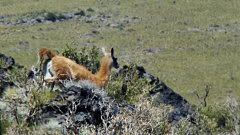
Payunia is a nature reserve, so visitors cannot alter it in any way. You can't leave or take anything from there (I did take a couple of small rocks). The only way to get there is by a suitable vehicle on a very, very bumpy dirt road, which takes three to four hours, and once within the reserve's limits the vehicle must follow the paths already marked by previous visitors; there are no actual roads of any kind. I don't think it rains often. GuanacoThe wind blows all the time with great force — the typical strong Patagonian wind at ground level, and a extremely potent wind when you climb the volcanic hills (our guide took us to a fairly low hill and told us to crawl, not stand up, once we reached the top, since a gust of wind over 100 km/h might easily send a person flying and falling down the volcanic cone). Almost nothing lives here besides a few hardy species of plants, and guanacos, which are protected and, as expected of wild animals, generally don't like people around.

Now my advice for photographers is — take good care of your camera. Mine came back full of dust and is still behaving a bit funny; I'd say a reflex with interchangeable lenses is absolutely out of the question, unless you have some magic way to deflect dust, or restrict yourself to one lens for all shots and have it ready in place before you step out the vehicle.

The Payunia package was one of the two things I couldn't do when I went to Malargüe in 2007 (the other was the Valle Hermoso trip, which I'll come to next). It isn't cheap, and it will take you no less than 10 to 12 hours, which is basically your whole day, but if you go to Malargüe, you absolutely must go. You won't get this for less, and you won't get it anywhere else like this. The place is immense, awe-inspiring, and otherwordly — change the colours of the sky, forget the spiny bushes here and there, and you could very well be in Mars. And yet this is truly Earth — in fact it's among the purest manifestations of the forces that made Earth.

Malargüe - La Payunia - Peregrinos

28 January 2008

Vacations: Getting there is half the fun

On the Chevallier bus, near San RafaelThe title is ironic, of course. The weather was oppressive the day when we departed from Rosario. We took the Chevallier bus to San Rafael, Mendoza, at 8 PM (in full afternoon glory, thanks to our crazy DST scheme). There's no direct bus from Rosario to tiny Malargüe so we had to make a combination.

Off we went, west and south. Some time afterwards it began raining lightly, and then a T-storm broke out. Nothing serious. Around 1 AM, near Venado Tuerto (I'm guessing), the bus stopped. A tree or a branch or something had fallen over the road, so all traffic was stuck.

At first nobody told the passengers what had happened, so we speculated it was a car crash. Then we learned about the tree and started waiting for whoever was in charge of removing it.
We stayed there for over an hour, possibly an hour and a half. I slept in short stretches, while the rain continued. Finally we resumed the trip, but instead of arriving at 9:15 as scheduled, we got to San Rafael around 11 AM. We missed the bus we could've boarded at 10:15, and the rest were all full. The next available bus departed at 6 PM. We were faced with the choice of taking that bus (spending 7 hours in San Rafael) or looking for emergency cheap accomodation in San Rafael for the night.

Now San Rafael is a nice city, but not particularly attractive, and we were after all carrying our huge travel bags, so we couldn't possibly just take a walk around and do sightseeing. And San Rafael's bus terminus is truly creepy, a cramped half-block with dirty platforms and unpleasant-looking little shops, with some people looking as if they either want to rob you or sell you a fake Rolex, to the point it reminded me of Paraguay.

The alternative, however, wasn't really for us. We didn't want to spend a night in San Rafael, but anyway finding accomodation was hopeless, and it entailed losing the day completely, as well as a night's expenditure. So we dragged our bags from the terminus to a nearby public square, and I set off looking for two things: a phone to call the hostel's folks in Malargüe to ask them not to cancel our booking, and something to eat for lunch. I got an OK from Malargüe, and got us the ingredients for sandwiches. After those, we sat there sipping mate, getting suntanned, and generally looking like out-of-luck bums.

The bus finally came in time, and after almost three hours of travelling south with several stops seemingly in the middle of nowhere, we reached our destination at about 9 PM (under a Patagonian sun at full blast). I was back in Malargüe at last, after a year of waiting for the peace and quiet of that little corner of Argentina, and 25 hours in the road.
27 January 2008

Back from the south

Here I am! After a three-week break I'm ready to blog again... sort of. I have so many things to recount and so many pictures to display, I don't know how I'm going to handle it. "Begin by the beginning" just doesn't work.

So this is how I'm doing it. First, a general review, and then a few individual posts, and then (if possible) a wrapup. I'll be off the local news/comment topics for a while, but this is worth it. I intend to write a post facto travel diary in Spanish for my own use in parallel, so be patient. I'm still partly over there.

The general review goes as follows: vacation trip to northwestern Patagonia, starting on the late afternoon of Sunday, January 6, ending on the early afternoon of Thursday, January 24. Places where I spent nights (except buses): Malargüe, Neuquén, Junín de los Andes, San Martín de los Andes. Other places where time was spent: the road (of course), San Rafael, Villa El Chocón and the stony beach of its reservoir, the Lanín National Park (lakes Huechulafquen and Paimún), and Hua Hum near the Lácar Lake. Companions: two, male, for most of the duration of the trip, until their desertion three days before my return. Experience gained: lots, very useful for future trips already planned. Money spent: quite a lot for my standards, but well spent and with no regrets. Pictures taken: about 2,400 (including a lot of useless shots and others merely testimonial, obviously).
This doesn't do justice to the trip, but it will do for starters. In the meantime, please check out my Flickr photoset "Vacaciones 2008". I'm uploading the pictures in small batches to avoid clogging the Internets.

04 January 2008

Goodbye for a while

My online life has been pretty much inactive lately because of the holidays, and especially the terrible heat; it's difficult to do anything during the daytime, and for the most part I've been shifting to a routine of sleeping four of five hours at night, going to work, returning home under the scorching sun, having a light lunch and then dragging myself back to my room to get three more hours of sleep and/or reading light fiction while the afternoon rages at temperatures over 35 °C (that's 95 °F in FFU), then sometimes using the small pool in my garden to cool the fire, and finally having dinner as the sun comes down at an artificially late hour. During all that time I don't use the computer much; the room it's in has no air conditioning, so I keep the PC on only as needed, for short periods.

And now, I'm going on vacation next Sunday, so you'll have to learn to live without this blog for about three weeks. I'll begin by revisiting Malargüe in southern Mendoza, and then proceed to Neuquén, Junín de los Andes, and possibly the small town of Piedra del Águila by the Limay River. It's doubtful that I'll have Internet access or the time to use it during that time, except in Neuquén City, so you'll have to wait to read my report and see pictures and stuff. Don't miss me!