I've been busy revamping my website these days, which is why I haven't blogged here at all for a week. It's in Spanish, so that's also why I haven't blogged about it here. Anyway, I'm unveiling an image gallery in order to showcase my photos in a different way from that which Flickr offers. The system is not the best to be found, but I can control it some more. The idea is, I will continue sharing pictures of everything that strikes my fancy on Flickr, but I'll keep the more artistic photos for my gallery. I can't (so far) make a trade out of my photos, but this would be a first step towards establishing an online presence as a photographer with a portfolio.
The gallery can be accesed directly at pedeefe.com.ar/gallery2, or embedded into the website at pedeefe.com.ar/site/?q=gallery; the interface is practically the same. Go check it out and leave comments, critiques, or whatever.

25 October 2008
Image gallery

 Stumble it!
14 July 2008
My pictures of Rosario


Eight months ago (in November 2007) I had the good luck to sign up for a photography workshop organized by the Firma & Odilo Estévez Decorative Art Museum (I mentioned it in passing back then). The goal was twofold: to observe and discuss pictures of old-time downtown Rosario, and to do guided photo tours and take pictures of our own. Then you had the option of submitting pictures for selection, to be part of a joint exhibition. It was planned for April. It was delayed, of course, but the guys at the museum let us all know that they were working on it, and a few days ago I received an e-mail announcing that the exhibition will be held in August at the Center Municipal District Center (the name looks like a joke, but it's the District Center building for the Center District). My pictures are the ones above (click to enlarge).
That workshop and those pictures hold a special meaning to me. It's not just the first time somebody else selects some my pictures to be displayed somewhere. It's that, while on this workshop and while walking down those streets, I met Marisa and talked to her for the first time. Three of her own pictures will share the exhibition room with mine. And to think that we didn't know each other at all when we took them...
02 May 2008
May Day and around
Like I said yesterday, May Day is like a Sunday over here, or it felt like that to me. So maybe it was appropriate for me to post pictures of churches! Of course, I only take pictures of churches from the outside, or else get inside only to snap a few shots.
Labour Day being like Sunday, it was only logical that it and the days before felt like weekend. I don't really have an entertainment schedule on weekdays, because I have to wake up very early to get to work in time, so I can't have a late dinner or stay up after, say, midnight. And I need siesta — a nap, sometimes an hour, an hour and a half, to fill in my daily 8-hour sleep quota.
Last Tuesday, however, I left the office and, feeling that going home would be a waste of a precious sunny afternoon, I went downtown to the Centre Català to visit a model ship exhibition (it was the last day). The lady in charge told me that I had to come after 5 PM. It was 1:30, so I crossed it off. In the meantime, though, I'd passed by a library and bought a book about the evolution of human food habits by Juan Luis Arsuaga, short, at a discounted price. Interesting reading, not dense at all. I have another one of Arsuaga's books, El collar del neandertal, a longer study of the Neandertals he and others studied in Atapuerca, a massive fossil reservoir in Spain. He writes simply, for the general public, yet showing no signs of struggling to popularize (or dumb down) the technical subjects.
After that I proceeded to the local seat of the government of Santa Fe, a massive building that takes up a whole block. In the past it served as a jail, as the police headquarters, and as an illegal detention center during the last dictatorship. Then the government took most of it, a part was set aside as a memorial museum, another section was turned into municipal offices, another one was turned into the new seat of the Natural Sciences Museum (the previous one burned down), and the huge central courtyard was turned into a public square (Plaza Cívica). There's a lot of space still unoccupied, or mostly unused.
I went there to visit a photojournalism exhibition — journalistic pictures taken in Argentina (and around) in 2006. It wasn't the last day to see them, but Wednesday was, and the visiting hours were really inconvenient. That's why Marisa missed it, and I went by myself at 2 PM, when everybody else was either having lunch or already taking a nap or working. It was a fairly large sample. It opened with a very significant picture of the recent past, the infamous shot of Alfredo Yabrán taken on the beach by José Luis Cabezas which probably cost the latter his life. The opening photograph for 2006 was a shot of Julio López facing a policeman, somewhere in court, during the trial of Miguel Etchecolatz. López disappeared, probably kidnapped by (former?) members of the Buenos Aires Provincial Police, the same organization that Etchecolatz used to command and that abducted and tortured López and hundreds of others back in the late 1970s.
The rest of the pictures were varied: a visual document of the ecological disaster that is the basin of the Riachuelo; scenes from the re-burial of Juan Domingo Perón when gangs of members of different unions attacked each other; candid pictures of famous idols/characters (Diego Maradona, Mirtha Legrand, Charly García); poor children washing car windows in Buenos Aires; people who make a living scavenging for food in a trash dump on a daily basis; Evo Morales taking office as president of Bolivia in traditional indigenous garb; Jorge Telerman celebrating something; a woman threatening to kill herself with a knife; penguins in Antarctica; a picture of the Payún Matru volcano in Malargüe, Mendoza, composed exactly the same as one I took last January... I must have been one hour in there. Then I walked around, went up to the third floor, and took more pictures.
In the end I got back home after 4 PM, ravenously hungry and terribly tired. It was too late for a nap. I had to wait till Wednesday for that, and then I could only lie down for an hour; then I met Marisa to go and see another photo exhibition, this time at the Bernardino Rivadavia Cultural Center. It was a very nice sample of black-and-white pictures by Peruvian photographers: study takes of young ladies, a few nudes, pictures of miners, a bishop, a nun, families in their homes, Machu Picchu, doctors, acrobats, funerals, carnival celebrations, indigenous women and men in the Andes, very young drafted soldiers.
I would've liked to see and work with the cameras of those times. The pictures were large but had a definition that digital cameras are attaining only now, and then only if you have the luck to find a good photography shop to print your pictures as they're supposed to be printed.
We topped off the "weekend" with a "Back to the Eighties" party in a disco that used to be in fashion for young teenagers when I was one. It was fun for me to hear all those international hits again, but we discovered we're not made for this. I've always been bothered by the overcrowded, smoke-filled, noise-saturated environment of popular discos, but this time Marisa and I felt it was too much, and our adventure ended soon... True, we'd had no suitable rest, but at 3:30 AM we were so tired we had to leave. A couple of years ago I would've been ashamed of myself if I left a party before it closed down, and furious if someone dared close it down before 5 AM. Sic transit...
13 March 2008
For the photographers: Robert Capa
Last night I got to see a 2003 documentary about the famous photographer Robert Capa, titled Robert Capa: In Love and War. It's a very good exploration of the life of this formidable man, that I knew next to nothing about prior to this. Maybe a bit partial, but then you can't cover a whole life in 90 minutes, least of all such a complex life as Capa's.
The documentary was shown at the Peña Fotográfica Rosarina, and I learned of it through a friend of Marisa's who's a photographer. It was free of charge and anybody could attend, but I felt a bit out of place as I entered the building on Urquiza St. The folks at the Peña are mostly pros or trying to be, and generally they're on the traditional film or the newer digital reflex camp, so they don't commonly mix with us lowly non-reflex users. (I have a bridge camera now, and a couple of my own fellow Rosarigasinos have DSLRs, but still there's an invisible line between us and the Peña's guys.)
Anyway, the environment was friendly enough, and the movie was very nicely done. If you can get it somehow, do yourself a favour and watch it.
10 March 2008
A wedding (and no funeral)

From what I could gather, both would've rather skipped the church altogether, but unfortunately there's not any other comparable single place where you can get together all the people you love. So we all had to sit down and listen to the priest babble about Jesus, the Virgin Mary, the Christian duties of husband and wife, and the absolute requirement for them to bring forth as much Catholic offspring as possible.
I went around the temple taking pictures (the newlyweds, of course, didn't even think of hiring a photographer — they had about a dozen of them doing that work eagerly for free), so I avoided listening to most of the priest's patter. Marisa, who's no more a believer than I am, cried a little (this she had announced before the ceremony as being very likely to happen) and chose to grab a few pictures from her pew, since her camera is not that good to get indoor shots without the insidious flash, and the altar was already crowded. After that we hugged and kissed the newlyweds, and some threw rice at them as tradition demands. (The lady who swept the entrance of the church wasn't happy — Marisa got scolded for her fervorous rice-showering.)
After church we proceeded to Parque Independencia, which has some nice landscaping — a typical place for photo sessions of newlywed couples and quinceañeras, with an artificial lake, a white bridge, colourful trees, a row of columns, and a flower calendar (updated every day by the park's gardeners). The day was gray, with raindrops falling here and there as if ashamed of their solitariness.
Photo advice: a cloudy sky is good for this kind of event photography, because you usually have diffuse lighting coming from all angles, instead of the warmer but harsh light that comes from an unmitigated sun. Strong point-like light sources (e.g. the sun, but also a flash in the darkness) give faces a sharper look, with darker shadows and possibly blown-out highlights. You usually don't want that when you're doing portraits or weddings. The only thing you have to mind in cloudy days is the light coming from the background. You can (and probably should) use fill-in flash to compensate. That is, force your camera to use the flash even it says the amount of light is enough, so that the flash "fills in" the parts of the subject that lie in the shadow. Combine this with a "cloudy day" white balance, and you're set — better than sunlight.

01 December 2007
Flickr Places
till vacation

— coincidentally the one that I have as my desktop wallpaper. As a bonus, Flickr Places gives you a little map and the current temperature.
26 November 2007
Culture and fun weekend
It's a good thing that you can have a culture weekend any time here in Rosario. On Friday I was alerted of an exhibition of photos by Joaquín Chiavazza, a photojournalist of the old La Tribuna newspaper: stunningly well-done black and white pictures from the late 1950s and early 1960s. There were people all dressed up at the then-popular horse track, with horses racing past the camera; images of car and bicycle races, no longer held in the city; picturesque traffic accidents, milkmen and their horse-pulled carts, women in a queue outside a school, waiting to vote for the first time...
This was at the Bernardino Rivadavia by Plaza Montenegro, and I'm told the rest of the photos (many more) are on display at the Museo de la Ciudad, which is not so conveniently placed, but I have a month to check them out (some samples online).
Then on Saturday I went again to the Museo Estévez. I think I didn't explain this before, so just in case, I'm doing a photo workshop there. The people of the museum are trying to expand their activities, and this includes extending their guided tour from the inside of the museum to the surroundings. The Estévez building is possibly the oldest house in Rosario that remains in more-or-less its original condition, and it's located in front of Plaza 25 de Mayo, the main town square of old, so just by walking around you're treading on the very historical core of Rosario. The Estévez decided to join this activity with a photo workshop with a downtown area theme. They'll collect pictures and do an exhibition of a selected group in April 2008.
So we walked a few blocks and learned a few bits of history and took some pictures. I had this nasty problem with my camera's memory card again, which seems to be unfortunately common, judging from the hundreds of complaints I've read about in web forums. Sony must have the worst quality control system in the world. So I took out the card and used the camera's internal memory. It's very weird, this thing when you can't capture any really good image even if you walk around shooting without concern for the space left in your card, and then when you have room for only a dozen shots, you get a few very satisfying pictures.

Cyclists near the stairs leading to the Flag Memorial
On Saturday evening there was a free show by El Choque Urbano at the Flag Memorial. El Choque Urbano are a group of guys who make percussion music using industrial objects, à la Stomp or Mayumana. Their budget's limited compared to Stomp, but they make up for it with very good acting. The show began at sunset before a crowded Flag Memorial courtyard, and lasted about two hours. I sat there with some of the Rosarigasinos and a few thousands of other people and enjoyed it very much.


I need to tell you that I'm madly in love with the Sony H7's hyperzoom. I was like 100 meters away from the stage and I could see El Choque's guys quite clearly. I took a lot more video but I was fearing the battery would die at any moment, and then at home couldn't be bothered to wait for it to upload on my faltering DSL connection.
We had a late dinner after the concert, and there was much rejoicing and dark beer and coffee and then some more coffee. I staggered back to the bus stop and got home at about 4 AM, where I promptly collapsed, only to wake up six hours later to prep an asado for a couple of friends. This kind of full-day fun marathon used to be easy for me to endure. I'm getting so old...
14 November 2007
Bird photography
I'm doing all sorts of experiments with my camera, now that its memory card is working fine. Having a 15× zoom has opened up my field of possibilities. Following the principle that if you paid a lot for it you should use it a lot, I'm taking the camera with me every day and trying to get pictures of things I couldn't picture before, such as birds perched in high branches or just looking around for bugs in the ground.

I'm not a bird fan, really; I can't relate to those little, expressionless beings like I can with mammals. But they do make for good photos, when they stop moving. (This city is just a big little town and people in the street eventually get to know you, and I fear that soon they'll recognize me at once as the guy who walks stealthily and mutters "why can't you stand still, you damn bird!" every time his prey suddenly decides to move.)
Since the only alternative would be shooting stuffed birds in a natural history museum, I can live with those little feathered devils. And they do sometimes manage to be expressive in ways that resemble us higher lifeforms.

Sparrows, doves, ovenbirds and kiskadees make up the bulk of urban species here. I haven't been able to go on a field trip looking out for birds and other wild animals, so mine are all urban specimens. Some (like sparrows) are clearly accustomed to human presence. Others (like kiskadees) seem to flee as soon as they have you in their line of sight, unless you're very far away. These take a lot of zooming power to get a decent picture.

I may have a chance to picture a wider variety of wild birds soon, as we're going on a photo safari to a woods next weekend.
24 October 2007
My new toy
It took me a while to decide, but I finally did it: I bought a new camera. It's a Sony Cyber-shot DSC-H7, a high-end compact camera that was released in February 2007. You can read the technical specs elsewhere; I'm not going to cover them here.
The H7 is not a bargain, but the price is quite acceptable, even accounting for the import taxes we're burdened with here in Argentina. I got it together with a 2 GB Memory Stick, which should be enough for about 600 pictures, so the manual says. I have been shooting at all sorts of stuff since Monday afternoon, but I haven't tested that limit... What I did notice, to my dismay, is the Gimp chokes on these larger images in my comparatively memory-starved PC, especially when I try to work with four or five layers. I also think that I'm going to need a new hard drive if my tendency to produce multiple variations of a picture is not contained.
The H7 is part of the new line of hyperzoom cameras. Most manufacturers went with 12x, but Sony gave the H7 a whooping 15x. You can actually use the camera as a telescope, or to spy on people far away. (Expect to see a proliferation of lunar shots and mist-shrouded buildings on the horizon.) Of course, as is the case with all compact cameras, you'll have chromatic aberration aka "purple fringing" in the extreme settings. Other than that, the camera has a nice array of standard functions to control aperture, shutter speed, exposure, and ISO number (up to ISO 3200 — which lies in the Land of Noise), and a few extras.


I could've gotten a used DSLR for the same money. I actually saw one for sale on MercadoLibre (the Latin American take on eBay, I guess), and spent a lot of time pondering it. My professional photographer friend insisted that I should get a DSLR because "you can't do serious photography without a reflex camera" — she was indignant when I told her I'd decided against her counsel. But the kind of photography I like to do isn't compatible with carrying around a bagful of expensive bulky lenses which you have to mount and dismount and care for as if they were fine diamonds.
Maybe I'm not ready to become a pro, or maybe I think the division between a pro and a skilled amateur is meaningless in this time and age. My friend's firm opinion on photographers who don't have reflex cameras was very close to insult, which I'm sure she didn't notice; if she weren't a true friend that I've known for ages, I would've taken it as such. In any case, I have so much to learn that I feel I can very well survive a couple of years without a DSLR, until I exhaust the possibilities of my not-so-amateur H7.
There are lots of things I couldn't picture the way I like with my old camera, which I can now. So for now, if you notice I'm writing less, it's because I'm out there!
19 October 2007
Days of black and white, and a good hair day
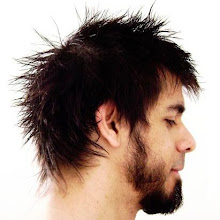
I always knew that growing my hair long again was an experiment... Satisfied with the result (that is, satisfied at the confirmation of what I already thought — that it was going to be a massive bother), I ended this experiment last Tuesday. I didn't dislike the long hair per se, but the time it took to take care of it. I reckon I'm saving ten minutes in the morning, during and after my daily shower; that means ten more minutes for me to enjoy breakfast before leaving for work, or ten more minutes to sleep.
The short hair has this one drawback, which is that it makes me look even younger. If I looked 25 before, I think I could now pass for a somewhat battered 20-year-old (especially if I'm clean-shaven). Countless people have told me (to no avail) that that's going to be a blessing when I'm 40. I guess they're right, unless a gene for wrinkles or baldness springs into action somewhere and decides to catch up.
I've spent considerable time producing pictures and almost none doing anything to them, except posting them to Flickr. I was looking into deviantART as well; it seems more like the kind of exposure I'd like to have for my more artistic pictures, but I'm not sure it's what I want. (I really hesitate on calling some of my pictures "artistic" when a significant part of the work is done by a pre-programmed filter in the Gimp, but many in the deviantART community appear not be bound by such scruples.)
Expect more pictures soon, since I'm going to San Lorenzo with the Rosarigasinos tomorrow. I went to San Lorenzo by myself almost exactly one year ago, and I didn't find it spectacular, but a photo safari is an occasion to socialize, not just to take pictures, and you can always count on someone in the group to direct you to a spot you didn't know before.
08 October 2007
Rosarigasinos on the news
Our little photo exhibition is on the news! Miradas rosarigasinas was featured in Rosario3, NotiExpress, and El Ciudadano.
The rest of the groups arrived shortly, with yerba, a thermos, and a couple of bags with facturas. One of the guys had already gone to the trouble of buying all the equipment and pasting all the photos on white 3mm plastic frames, so we had to hang them. After fumbling with threads and clips for a while, we found a suitable way. The pictures ended up at different heights, but we agreed we couldn't help that and the effect was anarchically modern-artsy anyway.
We had the first and second floors available. There were a total of 63 photos, so we had to think twice about the layout. My three pictures ended up in the second floor, which wasn't that good I think, but I'm told they're going to place signs alerting the people that the exhibition continues upstairs. We also got a couple of posters and some pamphlets. I pasted a couple of mine on the Japanese Association's notice board and I'm going to leave a trail in other places. So we should have a lot of exposure.
We're almost sure that we'll have a place for another exhibition next month, at the Alem Park Culture Center. Even if not so, there are many venues that could take our pictures (for free) in the city. I hope we don't get too famous. If I have to dress up, shake visitors' hands and give away wine, I'll adopt another name and disappear.
02 October 2007

15 September 2007
Photographers' plague reloaded

We've been planning to hold a modest joint exhibition (only 3 pictures per person), and today we wrapped up most of the issues. It'll be held on the 1st and 2nd floors of the Faculty of Biochemistry of the National University of Rosario, which lends the space at no cost to such things, starting on October 8. Matte paper, 15×21 cm, mounted on 3 mm high-impact plastic sheet. The topic is the city, and the name is Mirada Rosarigasina. Not that this advertising will get through to many, but I do what I can.
(I could do some more advertising in the relevant place in my new website, the one you don't know where it is yet, even after I told you specifically to join my three initials —which are the same as the name of a Popular Document Format— with hyphens and add .com.ar.)
After the meeting I had to run to Japanese school to write a composition for a contest. You get dictionaries, a couple of sheets of paper divided into 300 large squares (one per character), and 2 hours to write about some topic. They give you 2 topics to choose from, on the spot. I wrote about "current trends", mentioning the widespread use of mobile phones and computers, the poverty and rudeness of the young generations' language, and the fact that, fortunately, some customs, such as grabbing a quick cup of coffee with a friend, never get out of fashion.
I was relaxed given the occasion — last year I was terribly nervous and made a lot of mistakes, but this time I simply let it flow out without caring too much about using complicated expressions. Better being correct and sound just a bit simple than using a lot of learned words and get them wrong (and let me tell you, Japanese is an irresistible tempter in this regard — for every simple, common concept, the formal register has two or three obscure equivalents that you can misuse horribly without even noticing).
So I wrote, I gave it to my sensei, and now she's sending it to Kyoren in Buenos Aires to be graded. I don't think I'll win a prize, but I came out satisfied with I'd written, so I don't care.
12 September 2007
Website incognito
My website (the one I'm not officially naming here) is up, and though still empty, some sections are already open and being filled in with actual content. Initially, I tried a CMS (content manager system) to organize it all in a standardized fashion with a minimum of coding, but I'm an old-fashioned geek and I missed the freedom that comes with writing your own HTML. Throw in a lot of PHP (chaotically written and rewritten), and I'm in heaven, although (or because?) it all takes four times longer to get done. But the result is exactly as I want, not as the programmers of PHP-Nuke, Joomla! or XOOPS would feel like.
As I said before, I'm trying to stay anonymous for a while, and pointing you directly to the site would defeat the purpose, but you could try some things to find it, such as — I don't know — joining my initials with hyphens, to begin with. (OK, that was silly, but let me play my little game.)
The weather's awful again, so I don't think I'll be able to go jogging this week. Argh! I was about to go yesterday, because at noon the sun had come out; I took a nap and when I woke up it looked like the sky was going to fall down. And I felt more tired than before the nap, though that must've had to do with the atmospheric pressure and the heat. So I stayed, and then it didn't rain at all. Today the sky looks even scarier, but I think I'm going to try a short run (I foresee that I will get soaked and catch a cold).
No luck for the photographer, either. With the website taking up my time, and the weather so menacing, I haven't been out there with the camera, seriously, for a week. Last Sunday I was invited to go on a photo safari to the south of the city, but I went out the night before and that killed the plan. I'm told it went very well. There's a whole sector of the city that I don't know — with old mansions surviving along certain avenues, dating back from better times (when in Rosario la Zona Sur wasn't yet a synonym of No-Man's-Land), and a huge park on the municipal border. Well, that won't go anywhere anytime soon.
This blog will resume its usual boring news mode in a few days. Be patient!
30 August 2007
Photography tricks, part 1
I've taken photography up a notch as a passtime. It's not that I've gotten better at it, or that I'm going professional. I would like to get a DSLR camera and sophisticated gear (last Sunday we were joking about polarizers making you popular), but that would take a lot of money and I'd feel bound to turn photography into a job of some sort to compensate. I have no intention of doing that, since turning anything into a job kills the fun, for me at least. (That's besides the fact that I have other uses in mind for that money.) But I've learned some tricks, both in the field and once the pictures are already in the computer.
I wrote a post about digital photo manipulation some time ago. It concerned border enhancement (especially for buildings) through a process of detecting borders and overlaying them on the original image. Simple and powerful, if done subtly.

That was one of the first steps of the ongoing process of turning a careless point-and-shoot photographer into a semi-literate photo art producer. Again, I'm not turning into one of those self-overrated photographers who excrete string after string of "conceptual art" pictures who are just blobs of colour, or superb black-and-white renditions of garbage and old people's wrinkled faces. I just want my pictures to look nice (I was going to write "stunning", but that would be an exaggeration, and it most surely is a cliché).
Since these posts may sometime turn into a chronicle, and right now this could help someone, I want to document another step.
One of the things I didn't notice at some point (and I do now) is that the human eye can distinguish a lot more degrees of lighting than the camera can capture. Where you see a dark object inside a darker area within a pool of even darker shadows, the camera just sees a black mass. The subtle gradations of a bright cloud look pure white to the lens. Same for colour hues. This can't be helped except by technology and time. The lesson is that you should try to take advantage of all the capacity of your camera, and maximize the contrast — this, unless you're intentionally trying to produce a dull or blurry picture, of course. The image will only have 256 degrees of luminosity per colour channel (red, green, blue), which will give you only 256 degrees of value. You want to stretch those as much as possible.
Check out the tutorial on removing haze from gimpguru.org. This really blew my mind. It's a very easy process that can turn a picture alive.
The idea is simple. First, you don't have luminosity levels to spare, so if there are some dark pixels who look dark enough to you, and there's nothing darker than them in the rest of the picture, just call them black, make them really black, and drag the brighter colours along, making them proportionately darker. Then do the same to bright pixels: just make the brightest of them white, and make the rest brighter. The way you do this, in techspeak, is by clipping both ends of the value histogram of the picture, ignoring the extreme values with smaller frequencies.
If the picture includes a bright sky, the white end of the histogram will be taken up by it. Therefore, the contrast enhancement must exclude the sky and other very bright areas. Here's a before-and-after sample, a view of Avenida Sarmiento in Oberá, Misiones. The problem was partly real haze produced by humidity in the air, and partly also "digital haze" produced by sunlight.
 before |  after |
You can even improve some pictures that look unsalvageable at first. This is Posadas, viewed across the Paraná on the bus returning from Encarnación, at the highest zoom level, on a rainy day:
 before |
 after |
There's more of this kind of stuff where that came from, so stay tuned.
28 August 2007
Photographers' plague, part 2
On Sunday I marched again to gather with a different group of people... mostly friends and acquaintances of a friend of mine, who, coincidentally, were mostly photographers. I was digital, they were analog, but that was it. (I must note that, depending on to the people involved, a digital vs. film discussion may or may not become a religious war.)
We were supposed to gather at the door of the Club Mitre, or Club de Pescadores (Fishermen's Club), which is located on the... I can't call that a beach... let's say at the foot of the ravine of the Paraná River. You come from the city center down Corrientes St., and after passing the Rosario Central Station you are in the Parque de España. There are an elevator and a staircase which take you closer to the water level, where you'll find, on one side, a simple restaurant specialized in local fish, and on the other, an outdoor space with tables, chairs, and asadores with parrillas (that's barbecue platforms with grills).

If you want to eat at the restaurant, you don't pay anything to enter the club, and you can have (for example) a boga for two for 30 pesos, or a parrillada (good for one young male or two non-voracious females, according to the lady in charge) for AR$18.50. If you prefer to use the other facilities, you pay 4 pesos to enter, and you must bring your own food and whatever you're going to use in order to cook it and eat it.
When I showed up, at 11 AM, there were a group of people, some toting humongous cameras, but no sign of my friend. She came a bit later, and together with another friend of mine went to the supermarket to get some hamburgers, bread, tomatoes, lettuce, mayonnaise, and ketchup. That was to be our lunch. It took longer than I expected for such simple arrangements, mainly because there was almost no dry wood and old newspapers to help kindle the fire.
More people came, some went away. It was a peaceful afternoon, which I needed badly. I took pictures... nothing fancy, some of the people, to document the event, and some of the very nice view of the river, and a couple of ship-spotting pictures as well (I saw a LNG carrier!).

 The morning was a bit cold, but sunny. The afternoon alternated between sunny and freezing, following the cloud cover.
We left the club at about 5 PM, and went to see a collective photo exhibition at the Centro de Expresiones Contemporáneas (CEC), which is a group of former port storehouses appropriated by the municipal government and refurbished to serve as a culture center (mainly for low-budget things, fan conventions like Leyendas, and non-massive rock concerts). The pictures on display were 25% good, 50% just (or barely) nice to look at, 25% too artsy or "conceptual" for their own good. We left the CEC as the sun went down.

27 August 2007
Photographers' plague, part 1
Last Saturday was the monthly meeting/safari of the Rosarigasinos photographers' group (pictures?). I think there were about 20 of us this time. It was held in Granadero Baigorria, a city of 45,000 located just north of Rosario, in what a porteño would call el conurbano. We decided on it because it was nearby and there are several baigorrienses in our group. Like a dreadful swarm we descended upon a number of significant spots in the city, including a famed restaurant where we consumed a most welcome pasta lunch. The day was extremely cold and windy. The sun didn't come out from behind the clouds. Much merriment was had, and abundant photo-picturing was achieved, nevertheless.
Our main destination was the natural reserve. Saying it was neglected would be an understatement, unless by "natural" you mean "forgotten by mankind". Despite the garbage and the lack of care, it's a nice little place by the river. Some time ago large numbers of dead fish started appearing in the banks of the Paraná; pollution was blamed, but it turned out that the cold is the real culprit. Persistently cold temperatures made the fish sick and lowered their natural defenses. This happens from time to time.
 |  |
 |  |
We invaded the train station and then toured the main square and took pictures of the church.


We also went to a replica of the Marian shrine of Schoenstatt. I don't really get what use it is to build a copy of a shrine (except as a tourist attraction). Sympathetic magic, maybe. Anyway, I reckon 25% of the group was agnostic or atheist, so this had more photographic and anthropological value than anything else. The shrine was nice enough (better ligthing would've helped).

All in all, a great day and a great place. No major tourist attractions, just gems known to the locals, mostly.
If you're in Rosario, you can get to Granadero Baigorria easily: get out of the center through the Cruce Alberdi, go down Alberdi Ave., then the wide Rondeau Blvd., and then cross the municipal border under the Rosario–Victoria Bridge. That's it. The street changes its name to San Martín Ave., and goes on in a straight line. You'll see a collection of ugly buildings on your left: the Eva Perón Hospital. Keep driving and you'll be in Capitán Bermúdez, and then in Fray Luis Beltrán (these are smaller towns). After Beltrán is San Lorenzo, site of the only battle of the war of independence that was fought inside present-day national territory, and then Puerto General San Martín, and thus ends Greater Rosario.
The photographers' plague repeated itself, in slightly mutated form, the next day. I'll get to it tomorrow.
16 August 2007
Flaneurs benvinguts!
I had promised myself to go check a photo exhibition at the Centre Català that was noted by a fellow photographer. I don't recall ever entering the Centre before; it's a very nice but unremarkable little building on a pothole-ridden Entre Ríos St., right opposite the imponent and very dirty Faculty of Humanities and Art. My dad used to go there to sing in a choir. They have a small café, paintings, nice mosaics on the walls, and a warm Benvinguts ('Welcome') sign. They teach Catalan courses, which I have to try some day because I love how the language sounds. Anyway, the exhibition turned out to be a dozen black-and-white and colour pictures, some interesting, some rather plain. Nothing to go especially there for (is that a weird sentence or not?).
The topic, however, was intriguing. It was flâneur photography, a flâneur being a person that walks around the city to experience it (flâner means 'to stroll' in French). The definition excludes the common tourist and the professional photographer actively trying to get a particular shot, as well as the indifferent citizen. A note on the wall, next to the pictures, remarked that flâneurs are becoming a rare species, given how everybody goes from A to B as quickly as possible and often without a glance sideways, up, or down. I'm an active flâneur whenever I go, so this idea touched me more than the pictures.
It was a bit better than last year, when I gave it an appalling review. The usual pseudoscience and Da Vinci Code-ish crap was restricted to a few specific spots; there was less fiction and more history books, as well as an inordinate amount of space for Marxist literature and, of course, many books by Roberto Fontanarrosa so that people who never knew who he was when he was alive can now buy them and show them off. Everything was terribly expensive, but that's how it usually is.
There was also a huge scale model of Santa Fe La Vieja, or Cayastá, the site of the first settlement of the city of Santa Fe, which had to be moved because, among other things, the nearby San Javier River had a tendency to eat away parts of the town. The provincial government is campaigning for Santa Fe La Vieja to be declared a World Heritage Site by UNESCO, which would mean funds for archaeological exploration and preservation.
My personal agenda for this weekend (agenda means 'schedule' or 'appointment book' in Spanish, being more faithful to the original Latin meaning '[things] to be done') is going to the Kite Festival at Scalabrini Ortiz Park, at least one day (it's a Fri-Sat-Sun event). I'll be there for the pictures only... I think haven't flown a kite in 20 years. Recurrent attenders have recommended it highly; there'll be fireworks, model aircraft, and even rokkaku kite (六角凧) fights.
It's a long weekend, since the holiday of August 17, honouring José de San Martín, is moved to Monday, August 20. So I'll have Sunday for roleplaying (if all of my players are healthy — one was attacked by a fierce Mycoplasma last week!), and Monday... we'll see.
03 August 2007
Cold, dark winter
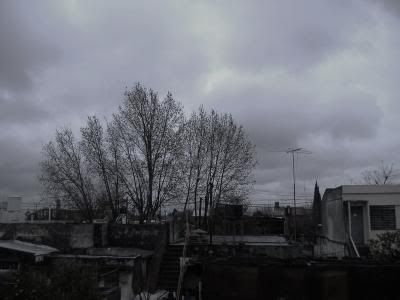
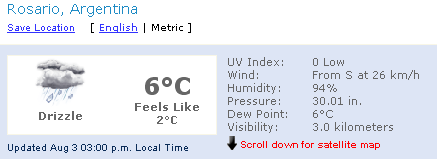
(By the way, do check out Vista Rosario, link to it, mark it as a favorite Technorati blog, StumbleUpon it, etc. It helps. If I don't promote myself, who will? Exactly.)
I've also been reading Douglas Hofstadter's Gödel, Escher, Bach, which is a very fine book, except you need to take it in small doses or your brains will be splattered on the walls. It's about self-reference in fields such as mathematics and logic, though also in other places, such as Johann Sebastian Bach's fugues. A fugue is a piece of music composed of a basic theme repeated over itself in different scales, speeds, and even directions, and Bach was a master at them. I don't dislike math or logic, and I'm just an amateur at music, but it's actually far more entertaining for me to read about Bach's incredible skills than about Gödel's Theorem.
I did not go to see the Simpsons movie, and I think I won't. I'm a huge fan of The Simpsons; I grew up with them and I can pull out Homer's quotes about all sorts of situations in a second... in the Latin American Spanish version, of course. I didn't like how they changed the voices because the Mexican dubbers were asking for a salary raise, but I could live with it. But I couldn't stand by the series when Matt Groening left and it degraded into badly executed fake intellectual comedy. Homer was a nice fool, now he's just stupid, incoherent, and nasty; the kids simply have no character anymore, and the newer episodes usually don't manage to make me laugh — something the old series achieved every ten seconds during whole episodes.
So keeping the good things for the movie while we, the loyal TV followers, are left with the trash, is not OK with me. From what I've heard, the movie is just an overproduced long episode. I'm not going to pay for that. (Maybe when I'm old and President of the Supreme Court, I will allow myself to watch it.)
In short, I think no movies and no strong drinks will make Pablo go crazy. I should go back to my old pictures...
04 July 2007
Photo manipulation
I've been doing some experiments with pseudo-panoramic images and with filters. When I say "pseudo-panoramic" it's because they're not really taken with a wide-angle camera or any sort of special equipment, but assembled by software from a set of overlapping pictures. You just stand in the middle of the scenario you've chosen and take three, four, or a dozen pictures — take one, rotate a few degrees on your axis, take another, etc. Then you dump them on your PC, load them in AutoStitch, and wait for the pattern-matching software to do its thing.
If your camera doesn't have a manual setting, the software will probably have trouble matching the different (automatically adjusted) exposures. If left in automatic (or if there's no alternative), the camera will try to get a picture with a fixed total amount of light. If you have the sun in your picture, most of the light will be there... and the rest of the picture will be too dark. The software cannot match pictures where this light-dark balance is wildly different. There won't be any problem, though, if you just take a view of something far away, ideally with the sun behind you (or not more than 45 degrees to the right or left of the direction directly behind you).
For filters I use The Gimp, an open source program that was originally designed for Linux (the earlier version employed native GTK+ widgets, which looked —and behaved— quite odd in Windows). I've never tried Photoshop, for one reason or another, though mainly because I don't really like to fool around with filters that much, and The Gimp has plenty of them for me as it is.
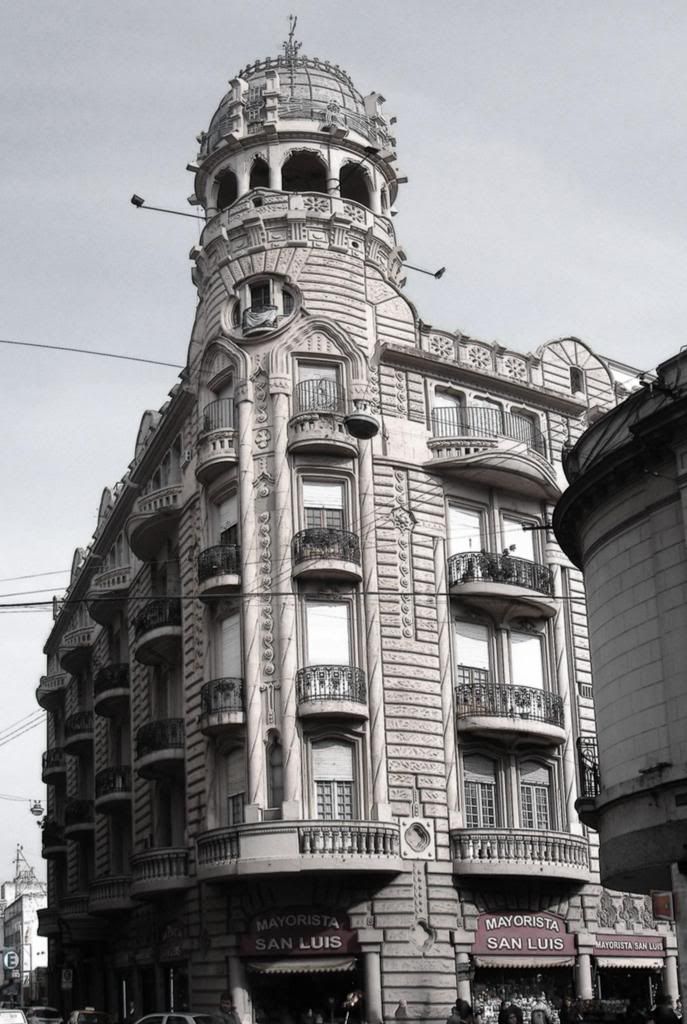
You've seen some of my panoramas here, in Flickr and in Vista Rosario. I haven't posted many retouched pictures anywhere, though, except for some basic clipping, fine-tuned rotation and quick contrast/brightness fixes. However, you can do interesting effects with filters — and I mean interesting, not just funny or "cool". For example, I passed by the Palacio Cabanellas yesterday, on my way to buying a bolso matero (a cross of backpack and purse to carry a mate gear — the gourd itself, a thermos for hot water, and a plastic container for yerba mate). I had some less-than-satisfactory pictures of it... bad lighting, bad time, not the right sunlight angle to bring out the details, ugly cloudy sky... The light looked perfect this time, though, so I defied the nightmare of rush hour in the place with the narrowest sidewalks of the world, and grabbed a set of pictures, including five destined to make up a panorama. Back home I assembled them. The spherical projection made the vault look like a hot air ballon on top of a golf tee, but The Gimp's Perspective tool took care of that. I added a "Detect borders" filters, played with the colour curves, threw in a bump map, and voilà. The result looks retouched but not too much — maybe like something out of an old newspaper, or a very detailed sketch — and the building sticks out from its (depressing) surroundings.
This is a picture you won't get with a common camera; there's simply no room in Rosario downtown to back away and take nice wide shots of tall buildings. And sadly, no amount of photo-tinkering or physical prowess will rid your pictures of aerial wires...